
By: Tope Temokun
The Federal High Court building in Abuja is undeniably beautiful imposing, sophisticated, and befitting of a national institution. It is not merely a court; it is the headquarters. But beyond the aesthetics lies a conversation many are unwilling to have.
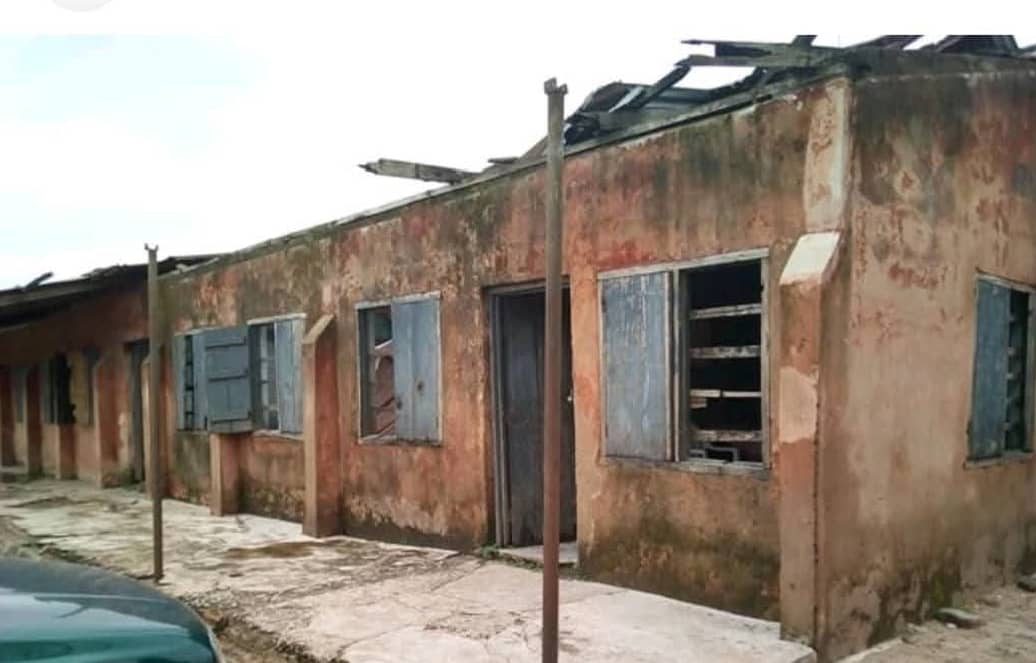
Our collective hypocrisy lies in imagining that every courtroom mirrors the polished grandeur of Abuja. We conveniently forget that across the country exist courtrooms with leaking roofs, flooded floors, broken doors, and dilapidated benches. In some, proceedings are interrupted by rainfall; in others, files are exposed to water, while lawyers and litigants stand in conditions unfit for any institution that dispenses justice. Yet, these too are courts.

If a courtroom is inherently sacred—even in the absence of a sitting judge—does that sacredness extend equally to spaces where rain seeps through the roof and pools on the floor? Or has “sacredness” become a function of aesthetics and geography?
We must ask further: on December 6, 2019, when DSS operatives invaded the Federal High Court in Abuja during proceedings to re-arrest Sowore, was that not within this same “sacred” space?
Those who constantly invoke the “sanctity” of the courtroom often fall into two broad categories.
The first are the traditionally schooled—those trained not to interrogate inherited notions, but to recycle them. Among them are lawyers who, almost reflexively, echo familiar lines about the “sanctity” of the courtroom without pausing to test whether these ideas withstand the realities before us.
The second category consists of beneficiaries of the system—power actors and their eager loyalists—whose reasoning rarely strays beyond the boundaries of their comfort. Their convictions are shaped by proximity to privilege; their intellect, quite literally, follows their daily bread.
Those of us who are trial lawyers know the truth, stripped of pretence. Before the ceremonial three knocks that usher in the judge, a courtroom is often a social space—of gossip, laughter, friendly banter, professional networking, negotiations, last-minute strategy sessions, hurried briefings, corridor settlements, political debates, and, at times, idle chatter. It is simply human. It is within this ordinary setting that Sowore found himself.
Sowore is not a private citizen operating in obscurity; he is a public figure engaged in public advocacy. Media attention is not incidental to his work—it is part of it. Before the court sat, like any other citizen exercising freedom of expression, he used that informal window to respond to journalists—journalists who are themselves documenting his legal struggles within the broader context of nation-building.
To claim that he had no matter in court that day is inaccurate. Cause lists are not drawn up by litigants. Indeed, on that same day, the prosecution formally withdrew the charge, and his passport was released. If the matter was not before the court, how then was it withdrawn that same day?
On the issue of a “press conference,” we must resist the temptation to impose a narrow definition. To some, it is a formal, staged event. To others—particularly those engaged in advocacy—it is simply the act of addressing the press wherever the opportunity presents itself. Not every interaction with journalists requires banners, microphones, or ceremony.
Sowore did not designate the courtroom as a venue for a press event. He was already there, attending to matters of public interest. The presence of journalists in court is neither novel nor improper; they are, after all, the fourth estate—chroniclers of proceedings and custodians of public memory.
To suggest that Sowore invaded the inner Bar or “set up tables” within the courtroom is not merely an overstatement—it is a narrative crafted more for effect than for accuracy.
If the court had not yet sat, and others were engaged in their usual pre-sitting exchanges, on what principled basis should his interaction with the press be singled out as misconduct?
If any conduct was considered inappropriate, it is, at best, subjective. The proper recourse would have been to alert court officials or await the sitting of the judge to formally raise concerns.
I understand, of course, the official position of the NBA. That is the nature of office. But diplomacy must not come at the expense of truth.
Temokun is human rights lawyer and principal counsel of Tope Temokun Chambers.



Leave a Reply