
By Opeyemi Adelakun
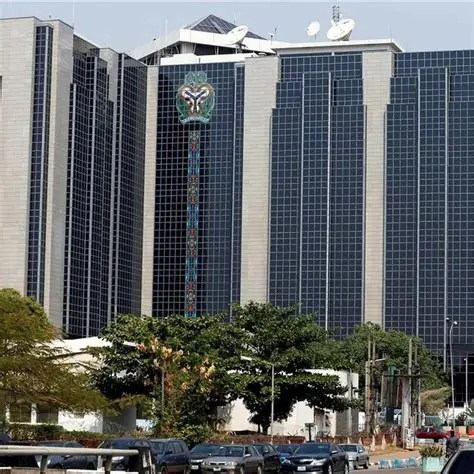
Nigeria’s net foreign reserves have climbed to a record $46 billion, while gross foreign reserves have reached $55 billion, according to Central Bank of Nigeria (CBN) Governor Olayemi Cardoso.
Cardoso disclosed the figures at the Nigeria-Asia Connectivity Dialogue on Thursday, attributing improved investor confidence partly to stability in the foreign exchange market.
The latest net reserves figure represents an increase of about $11.2 billion from the $34.80 billion reported at the end of December 2025, signalling an improvement in the country’s external liquidity position.
“The gross foreign reserves are now at an all-time high of $55 billion. Our net reserves is at US$46 billion. In addition to that, the foreign exchange market is stable. These are the things that give investors confidence. You can plan. You can bring in money and take it out,” Cardoso said.
Net foreign reserves measure the CBN’s foreign currency holdings after deducting certain near-term liabilities, including obligations linked to foreign exchange swaps and forward contracts. The figure provides an indication of the reserves available to meet immediate external obligations.
Cardoso’s latest disclosure marks a major improvement from the position in 2023, when he said net foreign reserves stood at about $3 billion. During the height of the country’s foreign exchange crisis, the figure had fallen below $1 billion.
Gross reserves had also recorded steady growth in 2026, crossing $54 billion in September before rising beyond the $55 billion mark, according to the CBN governor.
The increase has coincided with relative stability in the official foreign exchange market. The naira closed at N1,332.75 per dollar at the Nigerian Foreign Exchange Market on October 7, compared with N1,331.50 per dollar the previous day.
Foreign exchange turnover also reached $1.014 billion on October 6, up from $619.22 million on October 5, reflecting increased trading activity in the market.
The development comes amid an improving economic outlook. The World Bank recently raised its 2026 growth forecast for Nigeria to 4.3 per cent, while projecting growth of 4.4 per cent in 2027 and 2028.
The CBN’s Monetary Policy Committee also reduced the Monetary Policy Rate by 350 basis points to 23 per cent from 26.5 per cent at its September meeting.





Leave a Reply