

By George Omagbemi Sylvester
A murder investigation is underway after 22-year-old Nigerian student, Isaac Satlat, was brutally killed in Moshongo, Attridgeville, just outside Pretoria, in the early hours of Wednesday, February 11, 2026. South African police have opened a homicide case as the Nigerian community demands swift justice.
According to family sources and preliminary community reports, Satlat was hijacked late Tuesday night after closing from school for the day and embarking on his regular Uber side hustle. Although the attackers were reportedly armed with a firearm, he was ultimately strangled with his seat belt. His vehicle was later found abandoned, while his body was discovered some kilometres away in Moshongo.
Community sources say the car was equipped with a camera, which captured two suspects (a man and a woman) believed to be involved in the crime. However, the South African Police Service (SAPS) has not yet released the identities of any suspects, nor has it provided detailed updates on the investigation.
Satlat was a student in South Africa and was due to graduate next month. According to his family, plans were already underway for him to relocate to Canada to continue his studies. Those aspirations were abruptly cut short by the violent attack.
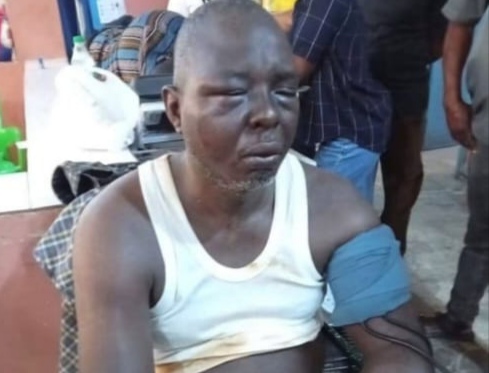
His father, Mr. David Satlat, who lives in South Africa, confirmed the incident after being contacted by community leaders. He was later hospitalized following a sharp rise in blood pressure after identifying his son’s body. Isaac’s mother and siblings remain in Nigeria, now grieving the sudden and tragic loss.
Leaders within the Nigerian diaspora have described the killing as senseless and deeply disturbing, urging authorities to ensure that those responsible are swiftly apprehended and prosecuted.
While the exact motive for the murder remains under investigation, the incident reflects the broader challenge of violent crime in South Africa. The country continues to grapple with high rates of homicide, armed robbery, and car hijacking, with thousands of violent deaths recorded annually. Criminal attacks, particularly at night and in less-secured areas, have remained a persistent threat to both citizens and foreign residents.
Security analysts note that many young migrants and students often take on part-time work, including ride-hailing services, to support themselves-an arrangement that can expose them to heightened risks. As criminologist Prof. Gareth Newham of the Institute for Security Studies has previously observed, “South Africa’s violent crime problem is driven largely by illegal firearms, economic desperation, and weak policing capacity in high-risk areas.”
Migration experts also warn that repeated incidents involving foreign nationals can strain diplomatic ties and erode confidence in South Africa as a destination for education and business. Dr. Loren Landau, a leading migration scholar at the University of the Witwatersrand, has argued that “when migrants perceive that the justice system cannot protect them, it undermines social cohesion and international trust.”
The Nigerian High Commission in Pretoria is expected to follow up on the case as pressure mounts from community organizations demanding transparency and justice. Nigerian associations have also pledged to support the family, both legally and diplomatically, as the investigation proceeds.
For now, the focus remains on the search for the two suspects believed to have been recorded inside the victim’s vehicle. Police are appealing to the public for information that could lead to their arrest.
Isaac Satlat’s death has left a painful void among friends, family, and fellow students. A young man on the brink of graduation and a new chapter abroad has instead become another casualty of violent crime—his life cut short in circumstances that have shaken an entire community. As investigations continue, his family and compatriots are united by one demand: justice must not be delayed, and it must not be denied





Leave a Reply