
By Opeyemi Adelakun
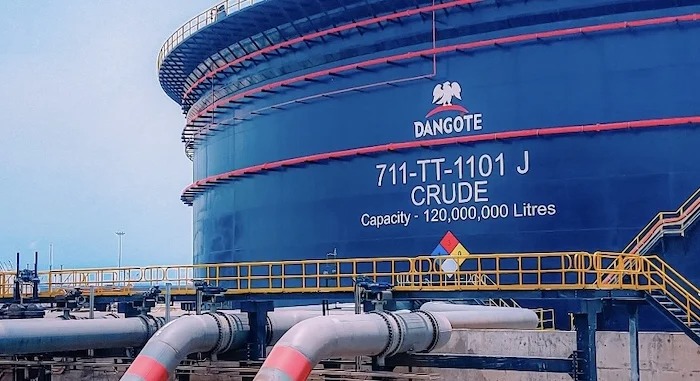
Dangote Refinery has ordered two crude oil cargoes from the United Arab Emirates (UAE), marking the first time the facility will source crude from the Middle East.
The development represents a shift in the refinery’s crude procurement strategy, which has largely relied on Nigerian, African and United States crude grades since operations began.
According to a source familiar with the refinery’s operations, the orders were made following the restoration of oil supply flows from the Middle East after the United States and Iran reached an interim peace agreement that guaranteed safe passage through the Strait of Hormuz.
The agreement has encouraged the return of tankers to the Gulf, increasing the availability of Middle Eastern crude in the global market.
With a refining capacity of 700,000 barrels per day, the Dangote Refinery was originally designed to process Nigeria’s light sweet crude. However, the company has been broadening its feedstock sources as production ramps up.
Earlier this year, Dangote Group President Aliko Dangote and the refinery’s Chief Executive Officer, David Bird, said the refinery planned to process a wider range of crude grades, including heavier and more affordable varieties.
The Abu Dhabi National Oil Company, the UAE’s main crude producer, declined to comment on the transaction.
Despite recent tensions in the Gulf, the UAE continued exporting limited crude volumes from terminals within the Gulf and from the Port of Fujairah.
The country’s major export grades include Murban, Das Blend, Umm Lulu and Upper Zakum crude.
Since the peace agreement, the price of Murban crude has declined significantly. According to S&P Global Platts assessments, the benchmark grade traded at about $66.40 per barrel on June 26, nearly $6 below its pre-conflict level.
Data from S&P Global Commodities at Sea showed that about 70 per cent of the refinery’s crude imports in 2025 came from Nigeria, while approximately 24 per cent originated from the United States.
The refinery has continued to diversify its crude slate in 2026, importing cargoes from Angola, Ghana, Libya and Guyana, in addition to domestic Nigerian supplies.






Leave a Reply