
By Opeyemi Adelakun
Governments and security stakeholders across several states have intensified reliance on hunters, vigilantes and locally recruited forest guards to tackle rising insecurity in Nigeria’s forests, with many arguing that the Federal Government’s proposed deployment of 1,000 forest guards per state will not adequately address the country’s growing security challenges.
The concerns followed President Bola Tinubu’s approval of forest guard recruitment aimed at strengthening security in forest communities, particularly as ungoverned forest corridors continue to serve as hideouts for bandits, kidnappers and terrorist groups.
Across Cross River, Kaduna, Plateau, Taraba, Kwara and Niger states, security experts and government officials described the initiative as a welcome step but insisted that the scale of insecurity requires larger personnel strength, modern surveillance equipment and stronger collaboration with existing community security structures.
In Cross River State, Chairman of the State Forestry Commission, Dr George Oben’etche, warned that the state’s forest reserves remain vulnerable despite having about 300 forest guards already in service.
He urged the Federal Government to extend the initiative nationwide, stressing that criminal groups should not be allowed to establish strongholds before decisive action is taken.
Similarly, the Nigerian Forest Security Service in Cross River said it has over 2,500 personnel ready to support forest security operations, citing recent kidnapping incidents, cross-border crimes and attacks on rural communities as evidence of increasing threats.
Security analyst Rekpen Bassey attributed rising insecurity in forest communities to poor forest management, illegal mining activities, porous borders and weak implementation of security policies, calling for improved funding, retraining and deployment of forest security personnel.
In Kaduna State, retired military and security officers said forests around Birnin Gwari, Kajuru, Chikun, Kagarko and the Kamuku-Rijana corridor remain major bandit hideouts.
They argued that sustained recruitment, specialised training and closer coordination among the military, the Nigeria Security and Civil Defence Corps and other security agencies are essential to securing the affected areas.
Kaduna State Commissioner for Internal Security and Home Affairs, Sule Shu’aibu, disclosed that preparations were underway to begin training 1,000 forest guards recently approved for the state before deploying them to identified security flashpoints.
Plateau State also acknowledged that the approved number of forest guards was inadequate but described the initiative as an important starting point.
The state’s security adviser and Coordinator of Operation Rainbow, retired Brigadier-General Gakji Shipi, confirmed that recruitment and security screening of applicants had commenced.
He noted that vulnerable local government areas such as Wase, Kanam, Bassa, Riyom and Bokkos require increased security presence because of their vast ungoverned spaces.
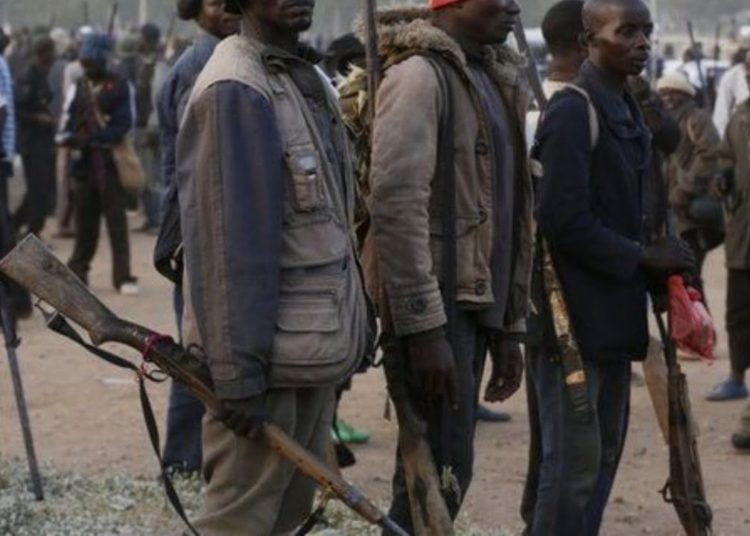
In Taraba State, government officials said they had already strengthened security operations by deploying forest guards alongside hunters and members of the Vigilante Group of Nigeria to patrol forests and remote communities.
The Special Adviser to Governor Agbu Kefas on Security and Intelligence, retired Colonel J.G. Kwelle, disclosed that about 750 forest guards had already been recruited and trained to complement conventional security agencies.
Kwara State has also expanded collaboration with hunters and vigilante groups across several local government areas to improve security around forest communities, particularly within the Kainji Lake National Park axis.
Stakeholders, however, warned that forest guards alone may struggle against heavily armed criminal groups without modern surveillance technology, intelligence gathering and adequate operational equipment.
In Niger State, Governor Mohammed Umaru Bago revealed that the state had already recruited about 1,500 forest guards—exceeding the Federal Government’s proposed figure—as part of efforts to reclaim forests linked to banditry and terrorism.
According to the governor, the recruits are undergoing training and additional personnel will be engaged in phases to strengthen security across vulnerable forest corridors, including the Kamuku-Allawa axis and the Kainji Lake Game Reserve.
Security experts also stressed that improving intelligence gathering, deploying surveillance drones, strengthening inter-agency cooperation and supporting community-based security networks remain critical to addressing the country’s evolving security threats.
Despite welcoming the Federal Government’s initiative, stakeholders across the affected states maintained that lasting success would depend on expanding the number of forest guards, improving welfare and training, adopting modern technology and sustaining partnerships with hunters, vigilantes and other community-based security organisations already operating in vulnerable areas.






Leave a Reply