
By Opeyemi Adelakun
The renewed effort by Nigeria’s opposition parties to form a united political front against President Bola Tinubu in the 2027 presidential election faces a major test as leaders prepare for a crucial summit in Abuja on Monday.
The meeting, being convened by the G-100 under the theme, “A Framework for Opposition Cooperation and Coordination,” is expected to begin the process of establishing structures through which the various opposition parties can negotiate possible cooperation ahead of the election.
However, uncertainty continues to surround the initiative, particularly over the politically sensitive question of how the opposition will eventually produce a single presidential candidate.
The G-100 has clarified that Monday’s meeting is not intended to immediately determine who will carry a joint opposition presidential ticket. Instead, the group says the immediate objective is to create an institutional framework through which such difficult decisions can later be negotiated.
That clarification, however, has not removed the central dilemma confronting the opposition.
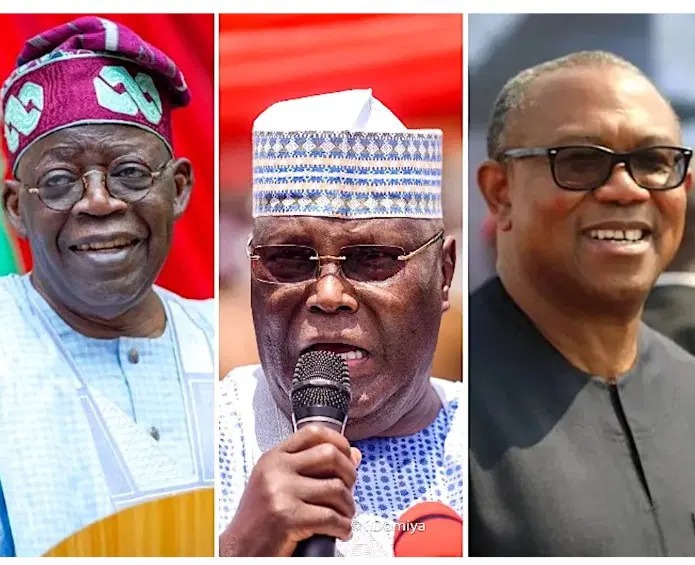
Former Vice President Atiku Abubakar, former Anambra State Governor Peter Obi, former Kano State Governor Rabiu Kwankwaso and Oyo State Governor Seyi Makinde, who were previously associated with a broader opposition coalition effort, are now operating from separate political platforms and pursuing different presidential ambitions.
The development has raised concerns about whether the latest initiative can overcome the same personal and political differences that weakened an earlier attempt.
The G-100, led by former APC North-East Vice Chairman Salihu Lukman, said the summit followed weeks of consultations with the leadership of six opposition parties.
The parties expected to participate include the African Democratic Congress, ADC; Allied Peoples Movement, APM; New Democratic Congress, NDC; Peoples Democratic Party, PDP; Peoples Redemption Party, PRP; and Social Democratic Party, SDP.
The group said national chairmen, party leaders, members of National Working Committees, presidential candidates and running mates, G-100 signatories and members of the House of Representatives Minority Caucus are among those expected at the meeting.
According to the organisers, five specialised working groups could be established after the summit to develop the documents and agreements needed to institutionalise cooperation among the parties.
The groups would be expected to complete their work within four weeks, subject to approval by the participating parties.
The G-100 has also stressed that it is only facilitating the process and will not replace the authority or decision-making structures of the individual political parties.
“Cooperation does not require any party to disappear into another. The first question before party leaders is not who leads the ticket. It is what we are, together, prepared to do for this country,” the group said.
Earlier Coalition Lost Momentum
The latest initiative is coming after an earlier opposition coalition effort failed to maintain its initial momentum.
The idea of a broad opposition alliance gained renewed attention after Atiku, following the 2023 presidential election, repeatedly called for opposition parties to work together against what he described as the growing dominance of the ruling All Progressives Congress.
In November 2024, while receiving members of the Inter-Party Advisory Council, Atiku warned that Nigeria risked sliding towards a one-party system if opposition parties failed to cooperate.
He argued that a fragmented opposition would struggle to provide an effective challenge to the ruling party.
The push later gathered momentum, culminating in an April 25, 2026 meeting involving several opposition parties at the Agodi Government House in Ibadan, Oyo State.
The meeting, hosted by Makinde, ended with a commitment by the participating parties to work towards presenting a joint presidential candidate against the APC in 2027.
But the political configuration changed significantly afterwards.
Obi left the Labour Party and initially joined the ADC in an effort to strengthen the coalition arrangement. He later moved to the NDC, where he emerged as the party’s presidential candidate.
Kwankwaso also joined the NDC and became Obi’s running mate.
Atiku secured the ADC presidential ticket and selected former Rivers State Governor Rotimi Amaechi as his running mate, while Makinde moved from the PDP to the APM and secured its presidential ticket.
The four political figures who once appeared together at the Ibadan gathering are therefore now pursuing their ambitions from different platforms.
‘Who Steps Down For Whom?’
That question remains perhaps the biggest obstacle to a united opposition.
Each of the leading presidential contenders has built a political structure, secured supporters and invested considerable political resources in the 2027 contest.
Analysts therefore believe the real test of any coalition will come when negotiations move beyond broad declarations and begin addressing the distribution of power and the presidential ticket.
At a recent Nigerian Bar Association conference in Port Harcourt, Amaechi acknowledged the difficulty of building a strong opposition coalition, pointing to the competing ambitions of political leaders.
The problem is not simply bringing opposition politicians to the same table. It is convincing powerful contenders to surrender their individual ambitions in favour of another candidate.
Policy differences could also become a major obstacle.
For instance, Obi and Atiku recently disagreed over the removal of fuel subsidy, with Atiku defending the decision while Obi questioned whether the policy was properly implemented and whether the savings were effectively managed.
Such differences demonstrate that defeating the incumbent may not be sufficient to sustain a coalition. The parties must also agree on the policies they intend to pursue if they win power.
Wike Dismisses Opposition Chances
While opposition groups continue their efforts, FCT Minister Nyesom Wike has dismissed the possibility of the coalition defeating Tinubu in 2027.
Wike described the opposition as “crippled and depleted” and predicted that the 2027 presidential election would be the easiest contest of Tinubu’s political career.
He also argued that the opposition was making the mistake of trying to assemble a coalition without having spent sufficient time developing a strong political structure.
“To remove a government, you need a strong, vibrant opposition that has spent over four years planning, not one that is constantly looking for a party to join,” Wike said.
The minister also rejected suggestions that developments in recent governorship elections could be used to predict the outcome of the 2027 presidential contest.
He cited the difference between state and national elections, maintaining that local political factors that influence governorship contests cannot necessarily be replicated at the presidential level.
On Tinubu’s prospects, Wike was emphatic: “If it is the 2027 election against Bola Tinubu, forget it. It is over.”
Despite Wike’s assessment, the opposition has gained some encouragement from its performance in the August 15 governorship election in Osun State.
The victory provides evidence that the ruling party can still be challenged at the state level.
However, the development also illustrates the complicated nature of Nigeria’s political alliances.
Osun Governor-elect Ademola Adeleke is among the political figures associated with the coalition of interests supporting Tinubu’s re-election, demonstrating that alliances at the state level do not necessarily correspond with national presidential alignments.
The APC also retains control of a large number of state governments, giving it significant organisational and political advantages ahead of the 2027 election.
Other Coalition Efforts Emerging
The G-100 initiative is not the only opposition-related coalition effort currently underway.
Presidential hopefuls associated with Accord, the African Action Congress and the SDP have also discussed the possibility of establishing a joint democratic platform.
Figures such as Gbenga Olawepo-Hashim of Accord and Omoyele Sowore of the AAC have featured in that process.
However, the initiative is yet to produce a universally accepted presidential candidate or a fully defined coalition structure.
There are also divisions within some of the parties involved. Accord’s national leadership, for example, has publicly expressed support for Tinubu, illustrating the difficulty of achieving a uniform position even among smaller political parties.
Meanwhile, the faction of the PDP associated with Wike is working on a “National Rainbow Coalition” in support of Tinubu.
The emergence of multiple coalition projects has consequently created a complicated opposition landscape, with different groups pursuing similar political objectives through separate structures.

Leave a Reply