
By Paul Joseph
The Nigerian Meteorological Agency and the Central Bank of Nigeria have signed a landmark Memorandum of Understanding aimed at strengthening data sharing and improving economic decision-making in Nigeria.
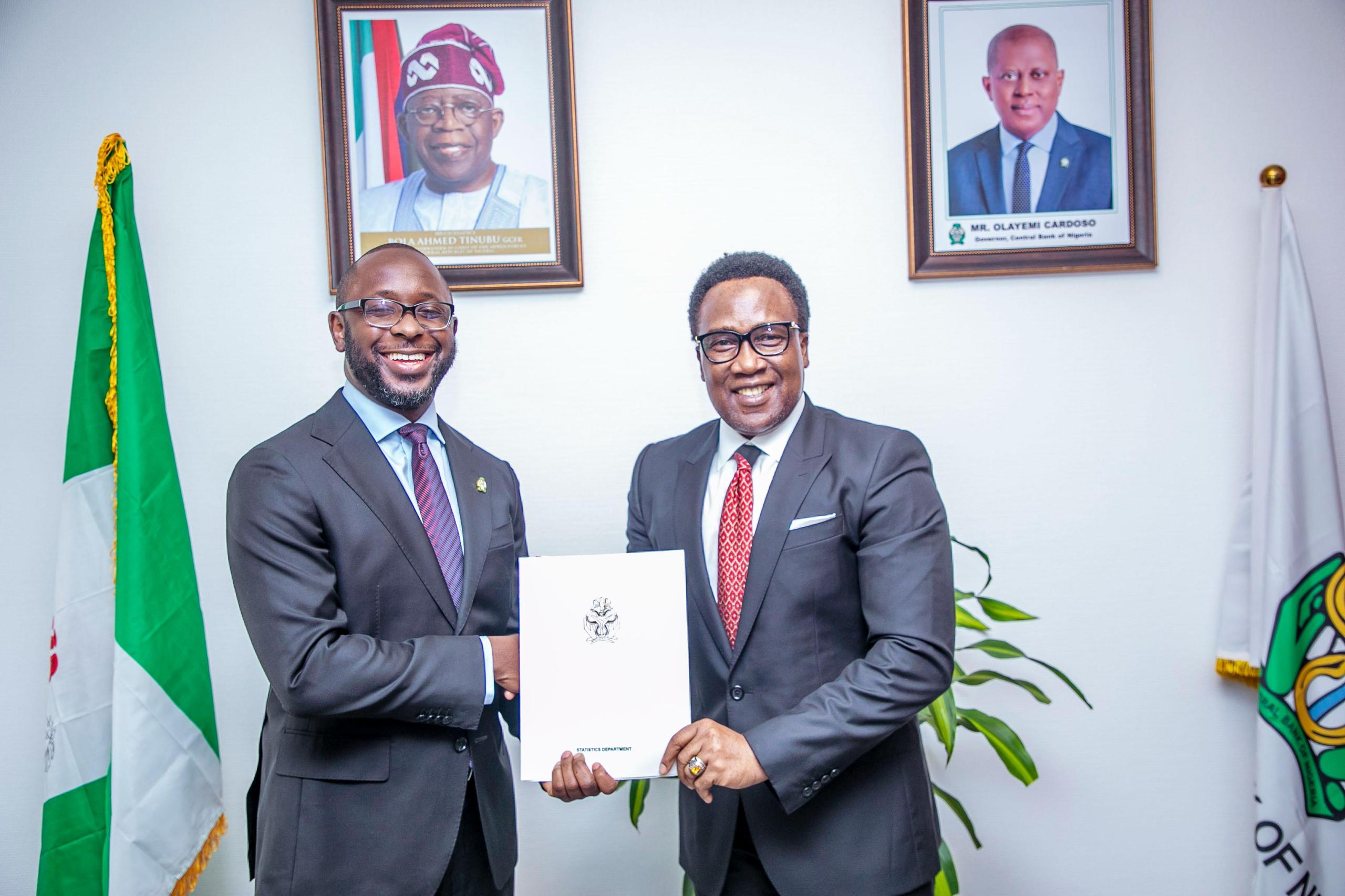
The agreement was signed on Wednesday at the headquarters of the Central Bank of Nigeria in Abuja, with officials from both institutions describing the partnership as a major step toward integrating climate and weather intelligence into national economic planning.
Leading the NiMet delegation was the agency’s Director General and Chief Executive Officer, Charles Anosike, while the CBN team was represented by the Deputy Governor, Economic Policy Directorate, Muhammad Sani Abdullahi.
Speaking during the signing ceremony, Prof. Anosike emphasized the growing importance of weather and climate information in shaping economic policies, particularly in critical sectors such as agriculture, transportation and energy.
According to him, extreme weather events continue to pose serious risks to agricultural productivity and food security, making reliable meteorological data increasingly important for economic forecasting and policy formulation.
He explained that the collaboration between NiMet and the apex bank aligns with the Renewed Hope Agenda of President Bola Ahmed Tinubu, which places strong emphasis on food security and agricultural expansion.
Prof. Anosike noted that the Federal Government’s agricultural plans, including the cultivation of 10 million hectares of land and the deployment of mechanised farming equipment, require accurate weather and climate information to achieve sustainable outcomes.
Citing recent global reports, the NiMet boss said climate change continues to affect food production and economic stability across many regions of the world.
He referenced a 2026 World Bank report indicating that extreme weather conditions have contributed to rising hunger levels, with more than 87 million people affected in East and Southern Africa and another 52 million across West and Central Africa.
He also cited findings from the Berkeley Earth Report 2026, which projected that 2026 could become the fourth warmest year ever recorded globally, a development expected to influence agricultural yields and energy demand patterns.
In his remarks, Dr Muhammad Sani Abdullahi said the MoU represents a significant milestone in the partnership between two strategic national institutions whose responsibilities intersect in data management, research and policy support.
He stressed that accurate and timely data remain essential in navigating the increasingly complex global economic environment.
According to the CBN deputy governor, the Economic Policy Directorate relies heavily on credible statistical information from NiMet to support inflation monitoring, agricultural sector analysis and broader economic advisory functions.
He described the partnership as timely and necessary, adding that stronger institutional collaboration would help deepen evidence-based policymaking and improve the quality of national data systems.
“The signing of this agreement marks an important step in strengthening cooperation between our institutions in the area of research, data exchange and policy support,” Abdullahi said.
The event concluded with the formal signing of the Memorandum of Understanding by Prof. Charles Anosike on behalf of NiMet and Dr Muhammad Sani Abdullahi for the Central Bank of Nigeria.




Leave a Reply