
By Paul Joseph
A deepening wave of violence and abductions across Nigeria is leaving more than shattered communities; it is breaking hearts and reshaping daily life into a struggle defined by fear, grief, and uncertainty.
From remote villages to major highways, and increasingly within school environments, insecurity has tightened its grip, particularly in parts of northern Nigeria.
What were once ordinary routines travelling, farming, or sending children to school have become calculated risks.
For many families, the simple hope of going to bed and waking up safely can no longer be taken for granted.
In affected communities, nights are restless. Residents speak quietly of living in constant anxiety, “sleeping with one eye open,” alert to the slightest sound.
Each morning often brings grim news: another abduction, another killing, another family thrown into mourning.
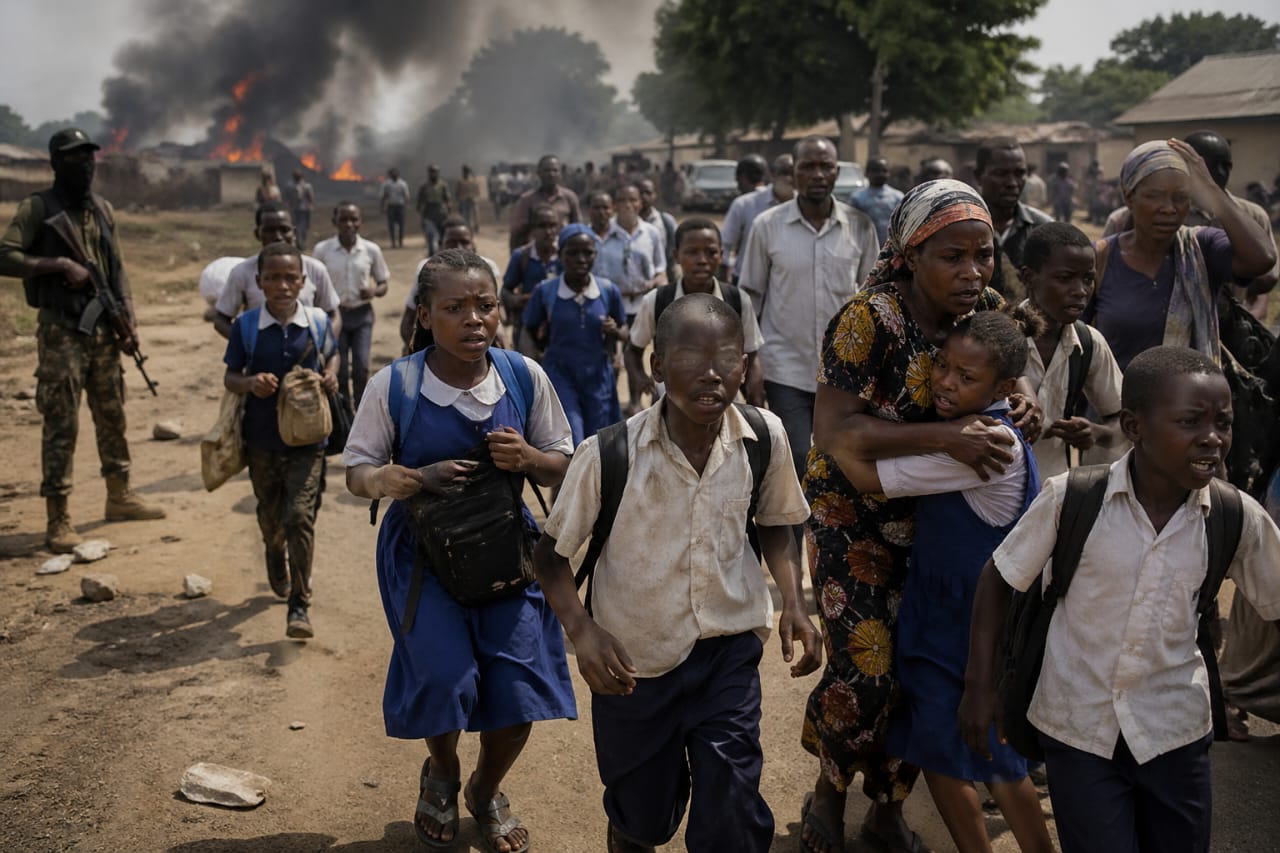
Schools, once seen as safe havens for learning and growth, are now sources of fear for many parents.
Repeated incidents involving students have deepened concerns about safety, with some families withdrawing their children from classrooms altogether.
The human toll is stark and deeply personal. Parents grieve children taken into forests by armed groups, while children are left to navigate life without mothers or fathers.
Entire households have been torn apart, their futures dictated by ransom demands that often run into millions of naira far beyond what most families can afford.
In some cases, communities are left counting dozens of missing persons, with families waiting in anguish for any word.
Survivors of abductions recount traumatic experiences, while relatives of those still in captivity sell property, borrow heavily, or rely on community support in desperate efforts to secure their release.
Security analysts warn that when a government struggles to protect its citizens, the consequences extend far beyond immediate victims.
An environment that is unsafe for the most vulnerable, they note, ultimately becomes unsafe for everyone.
Frustration is mounting among citizens who perceive official responses as slow or insufficient.
The growing sense of abandonment has begun to erode trust in institutions, with some openly questioning whether enough is being done to stem the tide of violence.
“There is a growing feeling that people have been left on their own,” said a community leader in northern Nigeria. “When protection fails, fear takes over and fear is now everywhere.”
Beyond Nigeria, observers argue that the scale of the crisis has not received the sustained international attention it warrants, despite its humanitarian implications.
Experts warn that prolonged neglect could allow the situation to deteriorate further, with potential consequences for regional stability.
The long-term impact is already visible. Education, in particular, faces a severe setback as insecurity forces school closures and discourages attendance.
A generation of young Nigerians risks being caught between disrupted learning and persistent fear.
As the violence continues, calls are intensifying for decisive and coordinated action stronger security measures, better intelligence gathering, and meaningful support for affected communities.
For millions across the country, the hope remains that the cycle of fear, loss, and uncertainty can be broken.
Until then, many Nigerians continue to live cautiously, holding on to resilience while waiting for a day when safety is no longer a privilege, but a basic and guaranteed right.






Leave a Reply