

By Opeyemi Adelakun
Nigeria has climbed four places to eighth position in the latest Bloomberg Economics Investment Risk-O-Meter ranking of Africa’s most investable economies.
The improvement puts Nigeria ahead of Rwanda, Tanzania, Kenya and Namibia in the 2026 ranking, which assesses the relative investment attractiveness of 19 African economies.
According to Bloomberg, Nigeria’s rise was driven by stronger performances in three of the five indicators used in the assessment — economic strength, fiscal strength and external vulnerability.
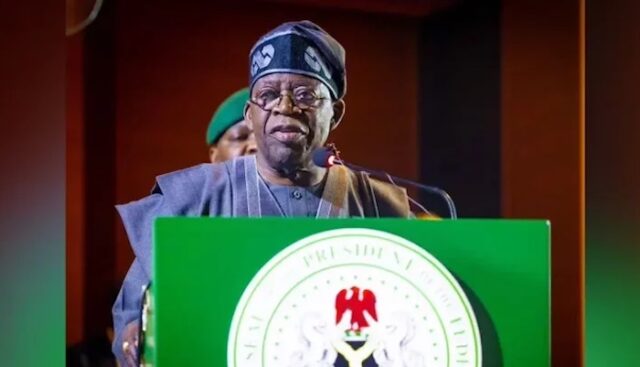
The report linked the development partly to economic reforms implemented under President Bola Tinubu’s administration.
Nigeria’s improved ranking comes despite persistent concerns over inflation, high public debt, infrastructure deficits, cost-of-living pressures and foreign exchange challenges.
Mauritius ranked as Africa’s most investable economy in the latest assessment, while Botswana dropped two places. South Africa, which occupied the top position in the previous edition, also slipped by one place following a weaker economic growth outlook.
Nigeria’s latest performance comes more than three years after Tinubu assumed office and introduced major reforms targeting the country’s fiscal and monetary environment.
Among the key measures were the removal of the petrol subsidy, reforms to the foreign exchange market and adjustments to electricity tariffs.
The Federal Government has maintained that the reforms were necessary to correct economic distortions, strengthen public finances, improve the foreign exchange market and create conditions capable of attracting investment.
However, the policies have also imposed significant adjustment costs on households and businesses, particularly through increased transport, food and energy expenses.
Despite the pressures, Nigeria’s economy has recorded growth during the period covered by the assessment.
Real Gross Domestic Product grew from 2.54 per cent in the third quarter of 2023 to 3.46 per cent in the fourth quarter of the same year.
The economy subsequently expanded by an average of 3.19 per cent in 2024 and accelerated to 3.85 per cent in 2025, its strongest annual growth during the period.
GDP growth stood at 3.89 per cent in the first quarter of 2026, taking average quarterly growth between the third quarter of 2023 and the first quarter of 2026 to about 3.46 per cent.
The government has also pursued measures aimed at increasing revenue, reducing fiscal leakages and attracting investment into critical sectors.
However, Nigeria’s improved position in the investment ranking has coincided with a substantial rise in public debt.
Data from the Debt Management Office showed that total public debt increased from N87.38tn as of June 30, 2023, to N159.28tn by December 31, 2025.
The increase of N71.90tn represents an approximately 82.3 per cent rise over the period. The DMO attributed the increase to new borrowing, foreign exchange adjustments and the securitisation of certain legacy obligations.
Nigeria has historically faced challenges in attracting foreign capital due to exchange-rate instability, policy uncertainty, infrastructure gaps, insecurity and limited fiscal space.
The reforms introduced by the Tinubu administration have sought to address some of these constraints by giving market forces a greater role in determining fuel prices, foreign exchange rates and electricity tariffs.



Leave a Reply