
By Opeyemi Adelekun
Regulatory interventions in Nigeria’s insurance and mortgage finance sectors have left shareholders in eight listed companies exposed to potential losses involving about N45.8 billion in quoted equity value.
The companies are Aso Savings & Loans Plc, Universal Insurance Plc, STACO Insurance Plc, Goldlink Insurance Plc, Niger Insurance Plc, Standard Alliance Insurance Plc, Resort Savings & Loans Plc and Union Homes Savings & Loans Plc.
The regulatory actions, which include licence cancellations, trading suspensions and delistings, followed concerns over insolvency, inadequate capital, regulatory breaches and failure to meet new capital requirements.
Aso Savings & Loans accounted for the largest portion of the affected value, with a market capitalisation of roughly N15.8 billion before the CBN revoked its licence in December 2025.
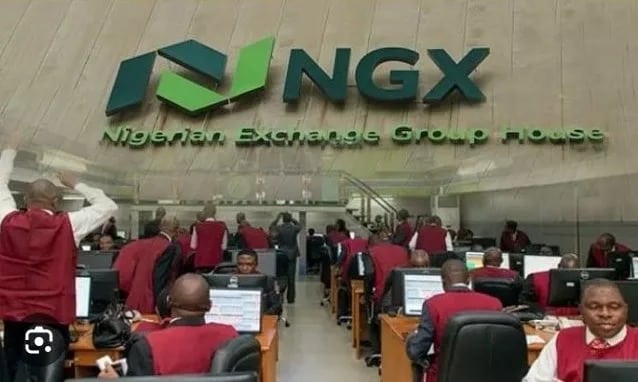
Universal Insurance had a quoted value of approximately N12 billion before trading in its shares was suspended by the NGX from August 20, 2026.
Other affected companies include STACO Insurance, with about N4.5 billion in quoted value; Union Homes, about N3 billion; and Resort Savings & Loans, about N2.3 billion.
Niger Insurance and Standard Alliance Insurance had a combined value of about N4.1 billion when regulatory actions were taken against them.
The situation has heightened concerns among minority investors, particularly over their ability to recover the value of shares held in companies that can no longer operate under their former licences.
Niger Insurance was among the earlier cases. NAICOM cancelled its licence in June 2022 after the company became insolvent and failed to meet verified claims. It had about 7.7 billion shares outstanding, worth roughly N1.5 billion before the company was delisted.
Standard Alliance Insurance also lost its licence in June 2022. The company had about 12.9 billion shares valued at approximately N2.6 billion.
In the mortgage finance industry, the CBN revoked Resort Savings & Loans’ licence in May 2023, while the company was removed from the NGX in July 2024.
Aso Savings & Loans and Union Homes subsequently lost their licences in December 2025 amid concerns over insufficient capital and regulatory violations.
The insurance sector witnessed another major round of licence withdrawals following NAICOM’s recapitalisation programme. Goldlink, STACO and Universal Insurance were among the companies whose licences were revoked after they failed to satisfy the new minimum capital requirements.
The developments reflect the wider financial-sector reforms introduced to improve the resilience of Nigerian financial institutions.
The CBN’s banking recapitalisation programme, launched in March 2024, required banks to increase their minimum capital. By the end of the exercise, banks had raised N4.65 trillion, comprising N3.37 trillion from domestic investors and N1.28 trillion from foreign investors.
The recapitalisation allowed investors in stronger banks to participate in new capital-raising exercises, including rights issues and public offers. However, institutions unable to raise sufficient funds faced the prospect of mergers, acquisitions, restructuring or licence withdrawal.
A similar exercise was conducted in the insurance industry by NAICOM under the Nigerian Insurance Industry Reform Act (NIIRA) 2025.
NAICOM said 48 insurance companies and two reinsurance companies successfully met the new requirements and were relicensed after the industry raised N1.079 trillion in fresh capital.
Those unable to meet the new thresholds lost their licences.
While the reforms were intended to strengthen the financial system and protect customers and policyholders, their impact on shareholders has varied significantly.
Investors in compliant companies may benefit from stronger balance sheets and improved business prospects, while shareholders in firms whose licences were revoked face restricted liquidity and uncertain recovery prospects.
Experts Explain Shareholders’ Position
SEC Executive Commissioner, Operations, Bola Ajomale, said shareholders should understand that equity investment comes with both ownership rights and business risks.
He said shareholders are co-owners of the companies in which they invest and therefore participate in their profits and losses.
Ajomale also clarified the purpose of the Investor Protection Fund, stressing that it does not compensate investors simply because a company becomes insolvent or fails.
He said the fund is intended to assist where investors’ money becomes trapped with a defaulting SEC-registered market operator, such as a stockbroking company.
Aruna Kebira, Managing Director of Globalview Capital Limited, said ordinary shareholders typically occupy the weakest position in a liquidation process.
He explained that creditors and preferred shareholders are paid before ordinary shareholders, meaning investors in ordinary equity could recover little or nothing if the company’s assets are insufficient.
Kebira added that delisting could occur voluntarily or because a company fails to satisfy the Exchange’s post-listing requirements, including financial reporting obligations.
“Once delisted, they remain shareholders and are still entitled to dividends, but they will have to look for buyers through the company secretariat or hold onto the shares,” he said.
He urged investors to look beyond cheap share prices and concentrate on companies with sound fundamentals, capable management and a history of consistent dividend payments.
Patrick Ajudua, National Chairman of the New Dimension Shareholders Association, said minority shareholders are particularly vulnerable when companies collapse.
“They lose their investment in the company. That is very clear. For every case of a company folding up, the minority shareholder is always at the bottom,” Ajudua said.
He said depositors and shareholders should not be treated as belonging to the same category because the NDIC’s protection is primarily targeted at depositors.
“Depositors are different from shareholders completely. They are two different classes. Once it comes to liquidation, the shareholder will be at the back. There is no two ways about it,” he added.
Garba Kurfi, Managing Director/CEO of APT Securities and Funds Limited, said the effect of a licence withdrawal depends partly on the type of licence involved.
“When a licence is withdrawn by the CBN, such company is dead on arrival. The ordinary shareholder has lost everything because the life of the company is the licence,” Kurfi said.
He, however, distinguished between the withdrawal of a banking licence and an insurance licence.
“But if NAICOM withdraws the licence, you cannot say the company is liquidated. The company can no longer practise as an insurance company, but it still has assets and liabilities. If another insurance company decides to buy it up, they will compensate the shareholders,” he said.
Kurfi further stated that being delisted does not automatically terminate shareholders’ ownership of the company.
He said investors in delisted companies could still have avenues to trade their holdings through the NASD OTC market, where several securities that were previously listed on the NGX are traded.





Leave a Reply