
By Paul Joseph
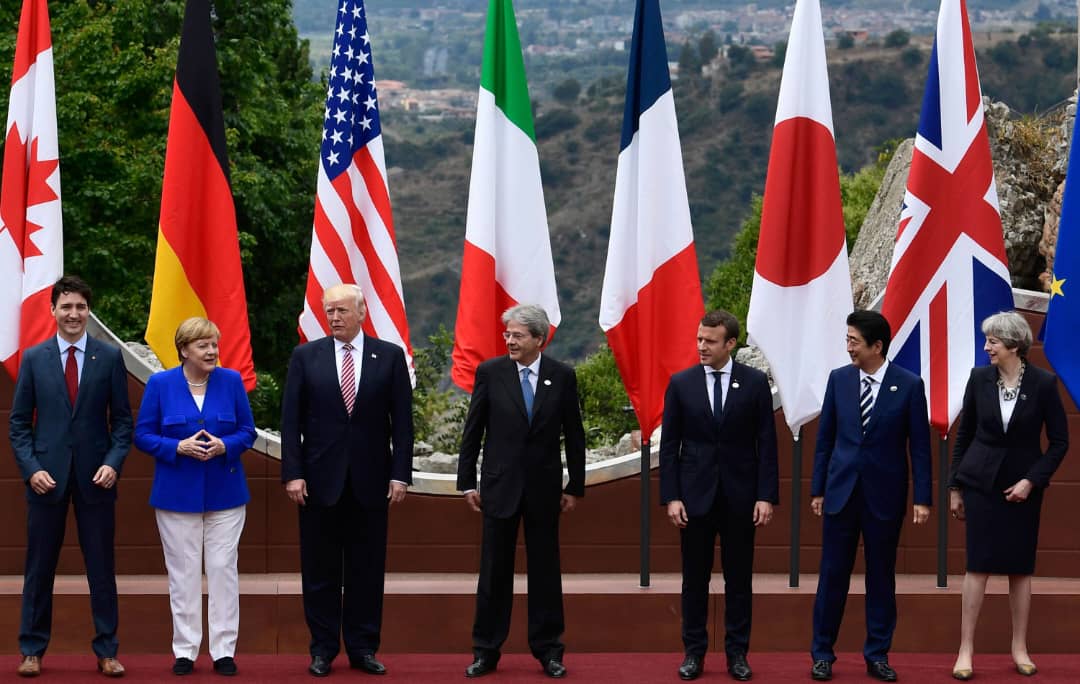
Finance ministers from the Group of Seven (G7) nations are set to hold an emergency meeting on Monday as global oil prices surge past $100 a barrel and stock markets fall amid the escalating war involving the United States, Israel, and Iran.
The talks will focus on the economic impact of the conflict and potential actions to stabilize global energy markets. Among those expected to attend is Rachel Reeves, Chancellor of the Exchequer of the United Kingdom.
Meanwhile, West Texas Intermediate (WTI) crude followed a similar path, trading around $101 per barrel.
Markets reacted sharply to fears that the conflict could severely disrupt shipments through the Strait of Hormuz, a critical maritime route through which roughly one-fifth of the world’s oil supply normally passes.
Traffic through the narrow shipping channel has reportedly slowed dramatically since the war began more than a week ago.
According to reports, G7 ministers will discuss the possibility of releasing emergency petroleum reserves in coordination with the International Energy Agency (IEA).
If implemented, such a move would mark the first coordinated release of reserves since 2022 following Russia’s invasion of Ukraine.
Analysts say releasing reserves could help calm markets by temporarily increasing global oil supply.
The latest surge in prices comes after a new wave of airstrikes across Iran over the weekend, including attacks on oil depots in Tehran.
Iran, in turn, targeted energy facilities in neighboring Gulf states. Authorities in Saudi Arabia reported intercepting two waves of drones aimed at a major oilfield overnight.
Scenes of damaged fuel depots and energy facilities across the region heightened fears that the conflict could severely disrupt global energy flows.
Global stock markets reacted quickly to the developments.
In the United States, both the S&P 500 and the Dow Jones Industrial Average fell around 1.4% in early trading.
European markets also declined, with DAX in Germany dropping 1.3% and CAC 40 in France falling 1.8%. In London, the FTSE 100 slid to its lowest level in nearly two months.
However, rising oil prices boosted shares of major energy companies including BP and Shell.
Asian markets suffered heavier losses earlier in the day. Japan’s Nikkei 225 dropped 5.2%, while South Korea’s KOSPI closed down 6%.
Economists warn that prolonged high oil prices could push inflation higher worldwide, potentially delaying expected interest rate cuts by central banks.
Paul Gooden, head of natural resources at Ninety One Asset Management, said the key question for markets is how long the conflict will last.
“The longer it goes on, the more nervous the oil markets are going to be,” he said.
Gooden added that oil prices could temporarily climb into the $120–$150 range before demand begins to fall as consumers cut back.
US President Donald Trump dismissed concerns about rising energy prices, arguing that the conflict’s long-term goal is global security.
Posting on the social platform Truth Social, Trump wrote that higher oil prices would be temporary and “a very small price to pay for the U.S.A., and world safety and peace.”
Meanwhile, US Energy Secretary Chris Wright told broadcasters that Israel, not the United States, was responsible for targeting Iran’s energy infrastructure.
Fuel prices have already started rising. Data from the American Automobile Association (AAA) shows the average price of regular gasoline in the United States rose 11% last week to $3.32 per gallon.
Gas prices have also surged in Europe. In the UK, month-ahead wholesale gas jumped nearly 25% to 171p per therm before settling around 149p.
While prices remain below the peak seen during the 2022 energy crisis, analysts warn that continued escalation in the Middle East could push costs significantly higher for households and businesses around the world.






Leave a Reply