
By George Omagbemi
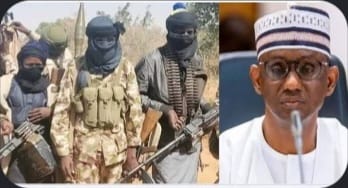
Nigeria’s counter-terrorism battle may be entering a more dangerous phase, with the reported deployment of drones by terrorists and the discovery of alleged foreign operatives embedded within the Islamic State West Africa Province (ISWAP).
The development should compel the Federal Government and the Nigerian Army to reassess their tactics, intelligence capabilities and overall strategy for confronting terrorism.
The National Security Adviser, Mallam Nuhu Ribadu, must also adopt a much firmer posture in addressing terrorists. Ribadu has previously described terrorists as “our brothers,” saying: “Whether we like it or not, there are terrorists in Nigeria who want peace. They are our brothers.”
Such language becomes increasingly difficult to reconcile with the sophistication and brutality of the threat now confronting Nigerian troops and civilians.
Recently, ISWAP attempted to infiltrate a military position at Cross Kauwa in Kukawa Local Government Area of Borno State. Troops repelled the attack, while the reported neutralisation of an ISWAP cameraman led to the recovery of a Sony camcorder containing videos and other materials.
According to the Nigerian military’s preliminary forensic analysis, the recovered footage identified three foreign terrorist facilitators: a Palestinian identified as Abu Ishaq, reportedly ISWAP’s overall trainer; a Moroccan identified as Abu Thaiba, reportedly serving as a medical doctor within the terrorist network; and another Arab operative whose identity remains unknown.
The military said the presence of these foreigners reinforces intelligence assessments that ISWAP benefits from external support, specialist expertise and transnational terrorist linkages.
If these findings are ultimately confirmed, Nigeria cannot afford to treat the development as business as usual.
The use of drones and foreign expertise points to an evolving terrorist network that is becoming more sophisticated, connected and potentially more capable of gathering intelligence, coordinating attacks and exploiting weaknesses within Nigeria’s security architecture.
This is why Ribadu and the military leadership must move beyond rhetoric and intensify intelligence gathering, border surveillance, technological capabilities and international cooperation.
Terrorism is not a family dispute. It is a national security emergency.
Nigeria must identify those financing, training, equipping and directing terrorist groups—and dismantle the networks sustaining them.
Leave a Reply