
By Opeyemi Adelakun
The 2026 Osun governorship election has produced more than a winner. Beyond Governor Ademola Adeleke’s victory, the poll exposed the growing influence of voters, money politics, celebrity activism, security deployment and the conduct of political actors.
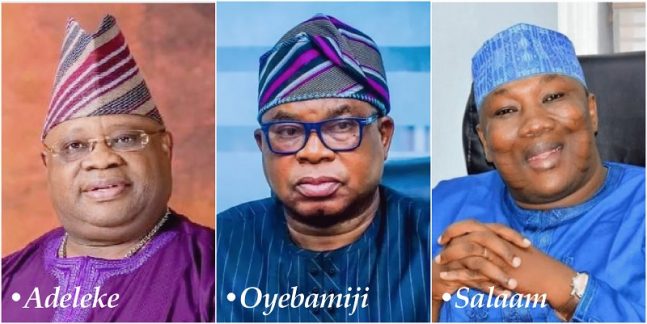
INEC declared Adeleke of the Accord Party winner with 511,067 votes, ahead of APC candidate Bola Oyebamiji, who polled 444,815 votes. ADC candidate Najeem Salaam came a distant third with 17,180 votes, while Adeleke won 19 local government areas to Oyebamiji’s 11.
Here are 20 major takeaways from the election:
- Adeleke Has Secured A Second Mandate
The biggest takeaway is that Ademola Adeleke has retained the Osun governorship, defeating his major challenger, Bola Oyebamiji, by 66,252 votes. The result gives Adeleke another term after his first victory in 2022.
- The Osun Electorate Ultimately Had The Final Say
Despite the intense political contest, allegations, money politics and heavy security presence, Osun voters still turned out to cast their ballots.
The election demonstrated that political strategies can influence voters, but the electorate remains the final determinant of who wins at the polling booth.
- Money Politics Remains A Major Problem
Vote buying was one of the major concerns surrounding the election. Reports from observers and media organisations indicated allegations of cash being offered to voters in several locations.
Reports cited sums ranging from ₦25,000 to ₦50,000 in some polling units, although individual allegations require proper verification before being treated as established facts.
- The People Appeared To Look Beyond The Money
Perhaps one of the most striking lessons is that money did not automatically translate into victory.
With allegations of vote buying involving political actors, the result nevertheless showed that voters could accept inducements and still vote according to their preferred candidate. This is an important distinction between buying access to a voter and buying the voter’s final decision.
- Both Major Camps Faced Vote-Buying Allegations
The allegations were not limited to one political camp. Reports and observer findings raised concerns about vote trading involving political party agents, while Kimpact Development Initiative documented 19 suspected cases of vote trading among the polling units it monitored.
Therefore, the issue should be treated as a wider problem of Nigeria’s electoral system rather than simply an allegation against one party.
- Tinubu Became A Major Test Of The Election
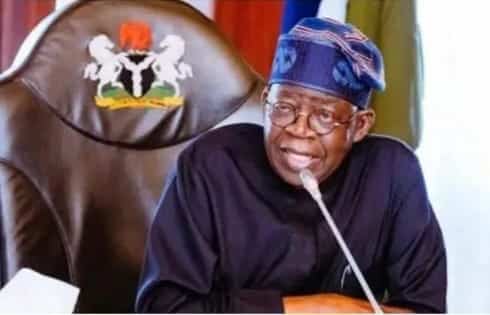
President Bola Tinubu’s role became one of the major political talking points before the election.
Tinubu urged Osun voters to go out and vote for candidates of their choice without fear and called for a peaceful and credible process.
For supporters of electoral integrity, the eventual result will therefore be viewed against the President’s public assurances.
- Tinubu Did Not Publicly Endorse A Rigging Agenda
This point needs careful wording.
Rather than stating as an established fact that there was a “rigging plan” which Tinubu rejected, the stronger journalistic takeaway is that Tinubu publicly positioned himself against electoral manipulation by calling for a credible poll and assuring voters of protection.
That distinction is important because allegations of rigging are not the same as proof of a coordinated rigging plan.
- Davido Turned The Election Into A National Conversation
David Adeleke, popularly known as Davido, was far more than a celebrity spectator.
As Governor Adeleke’s nephew and a prominent supporter, Davido used his enormous social-media following to comment on security, INEC, transparency and developments surrounding the election. He also questioned delays in uploading results to the IReV portal.
- Davido’s Influence Went Beyond Entertainment
The election demonstrated the changing relationship between politics, entertainment and social media.
Davido’s involvement ensured that developments in Osun attracted attention well beyond the state, particularly among young Nigerians and his large international audience.
His influence also showed that celebrities can now become significant voices in electoral conversations without holding political office.
- Social Media Became Another Electoral Battleground
The election was fought not only at polling units but also online.
Political actors, supporters and prominent personalities used social-media platforms to raise allegations, challenge official processes, share results and mobilise public opinion.
Davido’s interventions, in particular, showed how quickly an electoral dispute can become a national digital conversation.
- Heavy Security Presence Defined The Election
Security was one of the most visible features of the poll.
Heavy security deployment was reported in areas including Osogbo, Ede and Ilesa, while multiple security agencies were deployed around polling and collation locations.
The security presence was understandable given the violence recorded during the pre-election period and concerns over possible disruption.
- Security Did Not Completely Eliminate Violence
Despite the heavy deployment, isolated incidents of violence and intimidation were reported.
There were reports of gunshots, disruption of voting, destruction of election materials and an attack at a collation centre. In Ejigbo, INEC materials were reportedly destroyed after political thugs disrupted voting, forcing voters to flee.
This suggests that security presence alone cannot solve electoral violence without effective enforcement and accountability.
- INEC’s IReV Portal Again Became A Talking Point
The electronic transmission of results became another major issue.
INEC continued uploading polling-unit results to its IReV portal during the collation process, with more than 3,000 results uploaded before the final declaration.
The delays generated questions and criticism, including from Davido, showing that electronic result transmission remains central to public confidence in elections.
- BVAS Problems Still Matter
Technology did not completely eliminate electoral difficulties.
Reports indicated BVAS malfunctions in some polling units, while Kimpact Development Initiative also cited delays in the arrival of INEC officials and other logistical challenges.
The lesson is clear: technological reforms must be matched with reliable equipment, trained personnel and contingency plans.
- Adeleke’s Political Repositioning Worked
Adeleke contested under the Accord Party, having left the Peoples Democratic Party.
Despite the political realignment, he retained enough support to win the election. His victory therefore also represents a significant test of the political structure he built outside his former party.
- Oyebamiji Put Up A Serious Challenge
The election was not a landslide.
Oyebamiji polled 444,815 votes, only 66,252 votes behind Adeleke. He also won 11 local government areas, demonstrating significant APC support across the state.
The figures show that the APC remains a formidable political force in Osun.
- The Adeleke Family’s Political Influence Remains Significant
The victory again highlights the political weight of the Adeleke family in Osun.
Adeleke’s victory, combined with Davido’s visibility and influence, demonstrates how family networks, political organisation and popular culture can intersect in Nigerian politics.
- The Election Was A Test Ahead Of 2027
Osun was widely regarded as an important electoral test before the 2027 general elections.
The poll offered an opportunity to assess INEC’s preparations, the behaviour of security agencies, the influence of money politics and the ability of voters to protect their choices. The Nigeria Civil Society Situation Room also described the election as a critical test ahead of 2027.
- Voters Remained A Powerful Counterweight To Political Machinery
Political parties had money, structures, agents, security concerns and influential personalities on their side.
But the final figures show that the electorate could still produce an outcome that political strategists could not completely dictate.
That may be one of the most important lessons from Osun: Nigerian voters are not necessarily as predictable as political calculations suggest.
- Osun Has Raised A Bigger Question For 2027
The final takeaway goes beyond Adeleke, Oyebamiji, Tinubu or Davido.
The bigger question is whether Nigeria can move towards elections where votes matter more than money, intimidation, political connections and celebrity influence.
Osun has shown both sides of Nigeria’s electoral reality: voters who were exposed to intense monetisation and political pressure, but who still participated and produced a clear result; and an electoral system that continues to struggle with vote buying, violence, technology failures and public distrust.
The real victory, ultimately, should not belong only to Adeleke or any political party. It should belong to the Osun voter whose ballot is counted and whose choice is respected.
Leave a Reply