
By Paul Joseph
Nigeria is among 38 countries affected by a new United States trade policy that imposes a 12.5% tariff on selected imports, following Washington’s latest efforts to combat forced labour and address what it describes as unfair trade practices.
The revised tariff regime was announced by the Office of the United States Trade Representative (USTR) in a statement issued on July 23 by U.S. Trade Representative Jamieson Greer. The new import duties, ranging between 10% and 12.5%, are set to replace the temporary tariff measures introduced earlier this year.
Under the new schedule, Nigeria joins countries including China, Brazil, South Africa, Egypt, Morocco, Saudi Arabia, the United Arab Emirates, Vietnam and Venezuela in attracting the higher 12.5% tariff. Meanwhile, nations such as the United Kingdom, Canada, India, Mexico, Malaysia and Pakistan will face a 10% import duty.
According to the USTR, the decision followed extensive investigations involving public hearings, thousands of public submissions and consultations with trading partners aimed at addressing longstanding concerns over forced labour and trade imbalances.
The new tariffs, which take effect from 12:01 a.m. EDT on Friday, will apply to about 99.4% of U.S. imports. However, key products such as crude oil, natural gas, fertiliser and certain food items have been exempted from the measures. Goods already in transit before the implementation date will also be excluded until July 28.
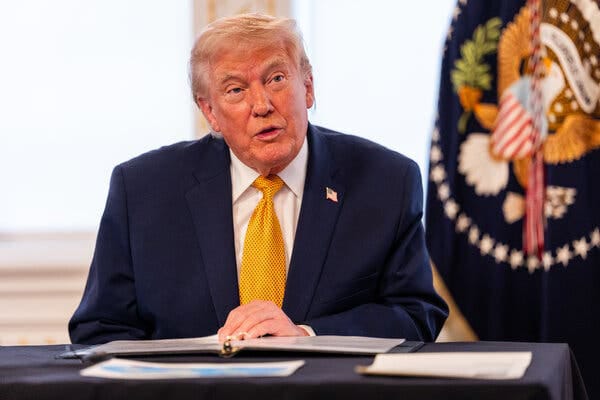
The latest action follows a U.S. Supreme Court ruling earlier this year that struck down President Donald Trump’s previous reciprocal tariffs imposed under emergency powers. In response, the administration introduced a temporary 10% tariff while developing a new framework under Section 301 of the U.S. Trade Act of 1974, a legal provision considered less vulnerable to court challenges.
Greer said the United States has enforced restrictions on goods produced through forced labour for decades and urged other countries to strengthen similar measures.
“The United States has had a forced labor import ban for nearly a century, and rigorously enforces it. It’s well past time for our trading partners to do the same,” he said.
The latest tariff framework also forms part of Washington’s broader strategy to reshape its trade relationships and maintain pressure on countries with which it has significant trade disputes.
Nigeria’s inclusion comes a year after President Trump announced an additional 10% tariff on Nigerian goods, citing the country’s alignment with BRICS, the bloc of emerging economies that includes Brazil, Russia, India, China, South Africa, Saudi Arabia, Egypt, the United Arab Emirates, Ethiopia, Indonesia and Iran.
Although the new tariff rate is higher than that imposed on several other trading partners, the actual impact on Nigerian exports will depend on the categories of goods affected, as exempt products will continue to enter the U.S. market without the additional duty.


Leave a Reply