
By Paul Joseph
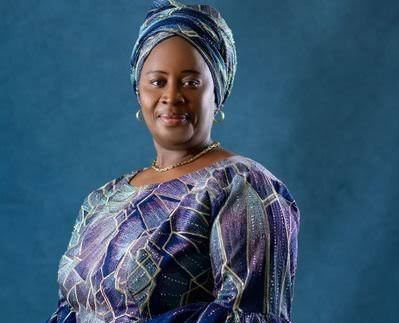
Eyong made this known in Abuja during a media parley organised to commemorate the International Women’s Day 2026. She warned that the poor representation of women in political leadership has significantly limited inclusive decision-making and slowed national development.
According to her, gender equality is fundamentally about power and influence, noting that the power gap between men and women in Nigeria’s political system remains wide.
To address the challenge, Eyong disclosed that UN Women is championing advocacy for the passage of the Special Seats for Women Bill, a proposed constitutional reform aimed at guaranteeing women greater representation in legislative bodies.
She explained that the organisation is working across multiple sectors to ensure that women have a meaningful voice in decision-making processes.
Eyong also highlighted several ongoing initiatives by UN Women in Nigeria, including collaboration with the Federal Ministry of Women Affairs to strengthen and expand the National Sexual Offender Database.
She said the database is a vital accountability tool that prevents offenders from moving across states without detection.
In addition, UN Women is engaging traditional and religious leaders to challenge harmful social norms that enable violence against women, while promoting the United Nations Secretary-General’s call for zero tolerance for gender-based violence.
“To ensure sustainable progress, we are working with the Ministry of Women Affairs to institutionalise Gender-Responsive Budgeting at federal and state levels,” Eyong said.
She noted that such budgeting prioritises critical areas including maternal health, girl-child education, women’s safety, and economic empowerment.
She further revealed that UN Women is expanding partnerships with financial institutions and the private sector to unlock funding opportunities for women-led businesses and grassroots initiatives.
The organisation is also supporting women’s participation in peacebuilding efforts through Nigeria’s Third National Action Plan on Women, Peace, and Security.
Eyong urged the media to play a stronger role in shaping narratives that promote gender equality, expose injustices, and hold institutions accountable.
“The media has a critical role in amplifying survivors’ voices and promoting women’s leadership,” she said. “By telling the full story accurately and consistently, the media can help turn rights, justice, and action into lived realities for every woman and girl in Nigeria.”
She also called on government agencies, civil society groups, the private sector, traditional institutions, and development partners to intensify reforms and investments that dismantle gender barriers.
Eyong acknowledged that Nigeria already has several gender-related policies in place but stressed that the key challenge lies in financing, enforcing, and sustaining them.
“When we secure justice and rights for women, we secure Nigeria’s stability, prosperity, and future,” she added.
Speaking on the theme of International Women’s Day 2026, “Rights. Justice. Action. For All Women and Girls,” Eyong noted that gender inequality remains one of the world’s greatest human rights challenges, but also a powerful driver of sustainable development when addressed effectively.
In her remarks, the Acting Deputy Representative of UN Women Nigeria, Patience Ekeoba, said the media engagement was organised to maintain momentum for behavioural change and women’s empowerment.
She noted that social norms begin to shift when people witness others taking meaningful action.
Also speaking, the President of the League of Women Voters of Nigeria, Irene Awunah, highlighted ongoing advocacy for women’s political inclusion, particularly the push for the Special Seats Bill.
Awunah revealed that an advocacy desk established in 2025 has gathered more than 200 endorsements and signatures, enabling campaigners to engage lawmakers directly and address misconceptions about the bill.
She added that a group known as Youth in Parliament, consisting of more than 38 lawmakers, has been inaugurated to champion the cause and mobilise support among their colleagues for increased women’s representation in Nigeria’s political system.


Leave a Reply