
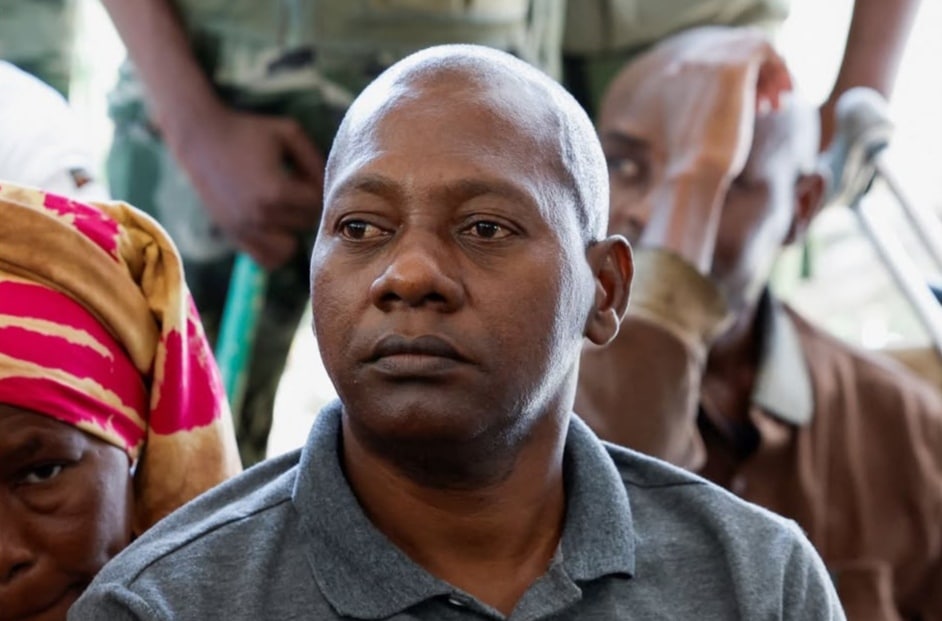

By Paul Joseph
A Kenyan court has sentenced Paul Mackenzie, founder of the Good News International Church, to 200 years in prison over the deaths of 191 people, including 190 children, in a religious cult-related tragedy linked to forced fasting and abuse.
Mackenzie was handed the sentence on Friday by the Mombasa High Court alongside more than two dozen other defendants over the deaths in Shakahola Forest, eastern Kenya.
The sentence comprises 100 years’ imprisonment for deaths caused by starvation and another 100 years for victims who died through direct homicide.
Investigations and court findings established that Mackenzie persuaded his followers to abandon their homes and relocate to Shakahola Forest, where he promised that fasting would bring them closer to God and prepare them for heaven.
The court heard that religious teachings were used to enforce prolonged fasting, while guards restricted the movements of followers and prevented them from leaving the forest.
Those who resisted were allegedly forced to continue fasting, while children were restrained, denied food and punished when they attempted to eat or escape.
A Kenyan Senate report on the incident found that Mackenzie’s teachings were largely influenced by doomsday beliefs and predictions about the end of the world.
He reportedly preached that the world would end in August 2023 and instructed followers to fast to meet Jesus, with children expected to die first, followed by young people and women.
Men were reportedly expected to remain alive long enough to bury the bodies before eventually dying.
Mackenzie was convicted of murder last month before Friday’s sentencing.
Delivering the ruling, Justice Diana Kavedza explained how the church founder used sermons and written materials to convince followers that the outside world was evil and that salvation could only be attained in the forest.
Messages recovered from his mobile phone, including WhatsApp conversations, also showed that he communicated with followers before they relocated to Shakahola.
The case remains one of Kenya’s most devastating cult-related tragedies, exposing the deadly consequences of religious extremism, coercion and the exploitation of vulnerable followers.






Leave a Reply