
By Opeyemi Adelakun
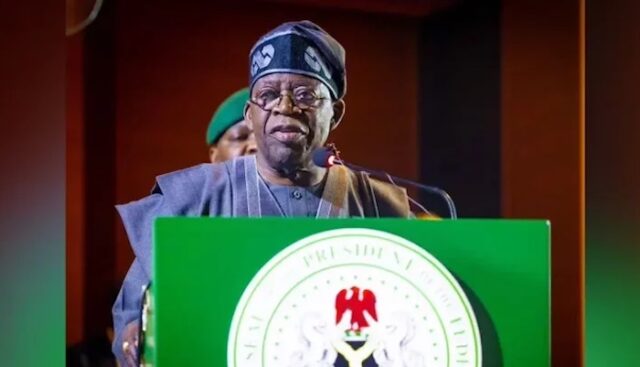
President Bola Tinubu has declared that Nigeria has moved beyond the most difficult phase of his administration’s economic reforms, saying the country is now entering what he described as an “age of prosperity”.
Tinubu made the declaration on Thursday in his nationwide Independence Day broadcast to mark Nigeria’s 66th anniversary, themed “From Reform to Prosperity.”
The President used the address to defend the removal of petrol subsidy and the unification of the foreign exchange market, arguing that the reforms were necessary to address long-standing weaknesses in the economy.
He compared Nigeria’s previous approach to a sick patient relying on pain relief rather than undergoing difficult treatment.
“Nigeria was like a sick patient who receives the terrible news that he has cancer,” Tinubu said, adding that previous leaders had chosen “morphine” instead of confronting the underlying problems.
“For too long, Nigeria’s leaders chose morphine while praying for a miracle that never came,” he said.
Tinubu warns against subsidy return
The President also warned Nigerians against political calls for a return to petrol subsidies ahead of the 2027 general election.
He described such proposals as a “siren song” and urged Nigerians to remember the reasons behind the reforms.
“Now, as certain influential but regressive voices would have us abandon the treatment and return ourselves to the abuse of addictive subsidies, we must resist their siren song,” he said.
Tinubu said the reforms did not create Nigeria’s economic weaknesses but confronted problems that successive governments had postponed.
“Our reforms did not create the weaknesses in our economy. They confronted them,” he said.
According to the President, Nigeria’s economy grew by more than four per cent in 2026, with both the oil and non-oil sectors contributing to the growth.
He also said oil theft had declined, inflation had fallen substantially from its peak, foreign reserves had been rebuilt and the foreign exchange market had stabilised.
Tinubu further disclosed that Nigeria recorded its highest-ever revenue from non-oil exports in 2025, exceeding $6bn.
The President had previously said his administration’s reforms had stabilised the economy and laid the foundation for a more prosperous country.
‘Emergency treatment is over’
Declaring a shift in the focus of his administration, Tinubu said the immediate task of correcting the country’s economic direction had given way to delivering broader prosperity.
“The emergency treatment is over. The foundation has been repaired,” he said.
“For three years, our overriding purpose was to correct our nation’s course. Now, our purpose is simple: shared and widespread prosperity.”
He said the next phase would be measured not only by macroeconomic indicators but by improvements in the daily lives of Nigerians.
Tinubu cited farmers being able to produce and earn more, factories having reliable electricity, businesses gaining access to credit, young people securing productive work and families being able to afford food, transportation and education.
Plans to reduce cost of living
On the persistent cost-of-living pressures facing households, the President said the administration would focus on reducing the cost of producing and transporting goods.
He listed plans to expand mechanised irrigation and dry-season farming, improve access to seeds and fertiliser, strengthen agricultural mechanisation and invest in storage and transportation infrastructure.
He also mentioned roads, railways and ports as part of efforts to improve the movement of goods between farms, factories and markets.
“Our logic is simple,” he said. “When a farmer produces more cheaply, when fewer crops are lost between the farm and the market, when a manufacturer spends less on electricity, when a truck reaches its destination faster, and when the business environment fosters fair competition, all those savings will ultimately find their way into the price of goods in the market.”
The Federal Government has also been pursuing cheaper transportation through CNG and other alternatives, with the Presidency previously directing states to work towards measurable reductions in transport costs from October 1.
Tinubu promises jobs, industrial growth
Tinubu said jobs, enterprise and industrial expansion would become central to the next phase of his economic programme.
He pledged to use domestic gas to power industries, revive factories in industrial centres, expand digital connectivity to underserved communities and develop skills required by employers.
“I want to see more Nigerians making things,” he said.
“I want to see more Nigerian farms feeding our cities and supplying our factories. I want to see Nigerian businesses selling Nigerian goods to the whole world. I want young Nigerians building unicorns and creating opportunities for others here at home.”
Social support
Acknowledging that many Nigerians were still struggling with the effects of the economic transition, Tinubu said the government was strengthening direct support for vulnerable households.
He said efforts were also underway to improve the National Social Register to ensure that assistance reaches those targeted.
The President cited the Nigerian Education Loan Fund and CREDICORP as examples of programmes designed to expand access to education and consumer credit.
He also said salaries and pensions had been paid on time and in full since 2023, while reforms to the pension system were aimed at improving support for retirees and vulnerable Nigerians.
“These programmes are not substitutes for prosperity. They are a bridge,” Tinubu said.
“Our objective is not to manage poverty more efficiently. We will defeat it.”
‘No looking back’
Tinubu ended the broadcast with a biblical reference, likening Nigeria’s economic journey to the Israelites’ exodus from Egypt.
“Nigeria has corrected its course. We have passed through our own Red Sea. This is not the time to look back,” he said.
“Our destination is in sight. Our foundations are strong. Our direction is clear. So let us go forward. No looking back.”




Leave a Reply