
By Abdulqadir Muhammad Alhaji
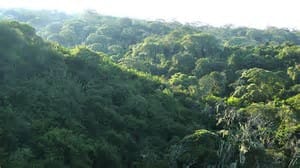
Nigeria’s vast forests, once known largely for their wildlife and natural resources, are increasingly becoming strategic hideouts for armed groups operating across the country’s north.
From the insurgency-ravaged Sambisa Forest in the northeast to the sprawling forest belts of the northwest, criminal groups have exploited difficult terrain and remote locations to hide, move weapons, hold abducted victims and launch attacks on surrounding communities.
A recent deadly confrontation between security forces and armed groups in Kebbi State has once again highlighted the security challenge posed by these vast forest areas. Reports said security personnel engaged a group of bandits who had moved from neighbouring Sokoto State into Kebbi through forested areas after intelligence was received about their movement.
The clash reportedly left 10 security personnel dead, while more than 40 bandits were killed.
An investigation by BBC Hausa has identified six major forests across northern Nigeria that have featured prominently in reports of banditry, kidnapping and insurgency.
The forests vary in size and location, but they share one important feature: their difficult terrain and geographical spread make them particularly useful to armed groups seeking to evade security forces.
Some extend across several Nigerian states, while others reach towards the country’s international borders, allowing criminal groups to move between jurisdictions when military pressure increases.
Despite intensified security operations, the forests continue to pose a major challenge to efforts to contain violence in many rural communities.
Sambisa Forest
Sambisa Forest in Borno State, north-eastern Nigeria, is perhaps the country’s best-known forest in the context of armed insurgency.
Located about 60 kilometres southeast of Maiduguri, the forest has for years been associated with Boko Haram and the Islamic State West Africa Province, known as ISWAP.
Its difficult terrain and proximity to the Mandara Mountains and the Nigeria-Cameroon border have made it particularly challenging for security forces.
The forest extends across parts of several local government areas, including Askira/Uba, Damboa, Konduga and Jere.
Once known mainly for wildlife and conservation, Sambisa became one of the principal theatres of Nigeria’s fight against jihadist insurgency.
Nigerian forces have conducted repeated operations in the forest, targeting insurgent camps and attempting to prevent the groups from using the area as a safe haven.
Kainji Forest
Kainji Forest, stretching across parts of Niger and Kwara states in western Nigeria, covers about 5,341 square kilometres, according to the BBC Hausa investigation.
The area was once better known for its wildlife and conservation value, but it has increasingly attracted security concerns over the activities of armed groups.
About 170 people abducted by bandits in Kwara State earlier this year were reportedly released in early August, bringing renewed attention to the forested areas used by criminal groups in the region.
Dr Kabiru Adamu, chief executive of Beacon Security Limited, warned that without effective intervention, Kainji Forest could develop into a security threat comparable to Sambisa.
He also expressed concern about the presence of different armed groups in the forest and possible attempts by jihadist organisations to establish a foothold there.
Rugu Forest
Rugu Forest is a vast forest belt extending across parts of Katsina, Zamfara, Kaduna and Niger states, with the area also reaching towards the Niger Republic.
The BBC Hausa investigation estimates its size at about 2,000 square kilometres.
Once associated with wildlife and tourism, Rugu has increasingly become known for its connection to banditry in north-western Nigeria.
Security analyst Audu Bulama Bukarti has described the forest as a major refuge for bandits operating across the region.
Its spread across several states makes it difficult for security agencies to contain criminal groups that can move between jurisdictions and seek refuge in remote areas.
Kamuku Forest
Kamuku Forest, also known as Kamuku National Park, lies within the savannah region of north-western Nigeria and extends into western Kaduna State, particularly around Birnin Gwari.
Speaking to BBC Hausa, security analyst Audu Bulama Bukarti identified the forest as an important refuge for bandits operating in the area.
The difficult terrain and limited access make sustained security operations particularly challenging.
The wider Birnin Gwari area has for years experienced attacks and kidnappings, with the forest providing armed groups with an environment in which they can hide and move with relative ease.
Sububu Forest
Sububu Forest is another major forest belt associated with bandit activity in north-western Nigeria.
It covers parts of Zamfara State, including Maradun, Maru, Shinkafi and Bakura, and extends towards parts of Sokoto State.
According to Bukarti, the forest reaches areas around Isa, Rabah and Sabon Birni.
The area has been associated with some of the region’s most notorious armed groups.
Halilou Sububu, a prominent bandit leader linked to the area, was killed by Nigerian troops last year.
The continued presence of armed groups in the wider forest belt illustrates the difficulty of dismantling criminal networks that operate across large and interconnected territories.
Kuyan Bana Forest
Kuyan Bana is another extensive forest belt stretching across parts of Zamfara, Katsina, Kebbi, Niger and Sokoto states.
Security analysts say its vastness and difficult terrain have made it attractive to armed groups seeking places to hide and operate.
Its geographical spread is particularly significant because criminals can exploit forest routes and state boundaries to evade security forces.
Bukarti has linked bandits operating from the forest to attacks affecting communities across parts of the surrounding states.
The significance of these forests goes beyond their size.
For armed groups, remote forests provide concealment, access to isolated communities and routes for moving between areas without being easily detected.
They can also serve as temporary camps where abducted victims are held and attacks are planned.
For security forces, the same terrain presents a major operational challenge. Poor roads, dense vegetation, limited access and the sheer scale of the forests make it difficult to maintain a permanent security presence.
This allows armed groups to retreat into the forests when military pressure increases and re-emerge when the pressure eases.
The challenge for Nigeria, therefore, is not simply to conduct periodic operations inside the forests. It is also to prevent them from becoming permanent sanctuaries by improving intelligence gathering, protecting vulnerable communities and maintaining sustained security operations.
The experience of Sambisa demonstrates how a remote forest can become deeply embedded in an insurgency.
The growing security concerns around Kainji, Rugu, Kamuku, Sububu and Kuyan Bana suggest that Nigeria’s forests have become an increasingly important part of the country’s security landscape.
For the communities living around them, these forests are no longer simply areas of wildlife and natural resources. They have become part of the geography of Nigeria’s struggle against banditry, kidnapping and armed insurgency.






Leave a Reply