
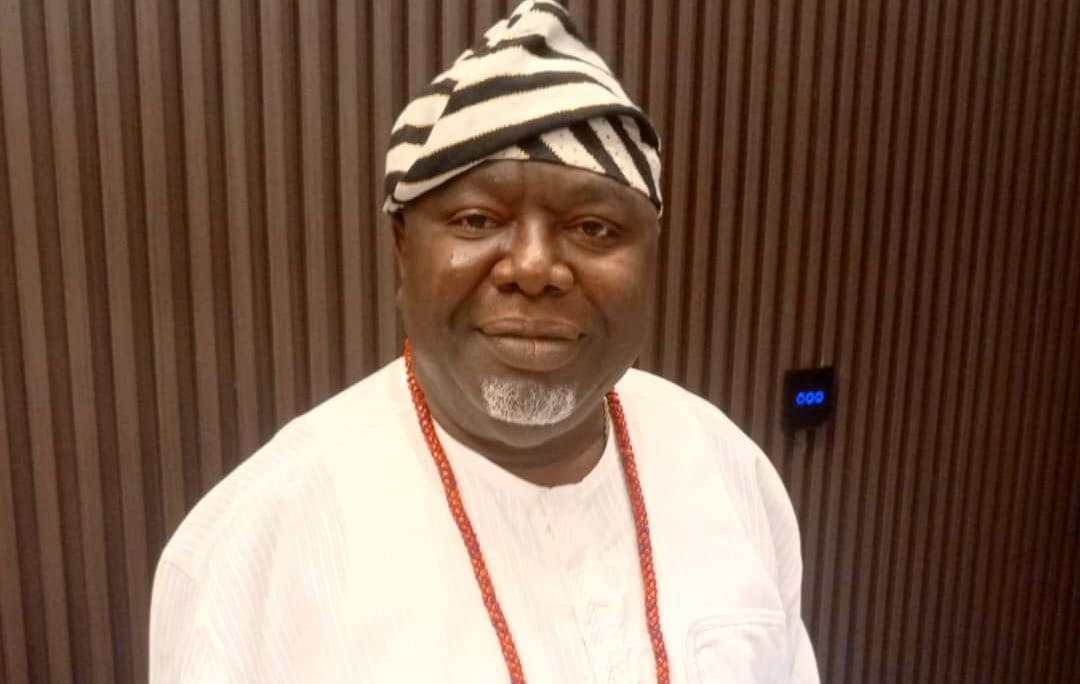

Economic expert and former Executive Director of Energy Bank Ghana, Isaac Monehin, has urged President Bola Ahmed Tinubu to exercise caution before taking additional foreign loans.
In a letter to the President, Monehin called for fiscal discipline, greater transparency and a sustainable national borrowing strategy.
See the full letter below:
11 November 2026
His Excellency,
President Bola Ahmed Tinubu, GCFR
President and Commander-in-Chief
Federal Republic of Nigeria
Presidential Villa, Abuja.
Your Excellency,
BEFORE YOU BORROW THE NEXT DOLLAR: A CALL FOR FISCAL DISCIPLINE AND A MORE SUSTAINABLE NATIONAL BORROWING STRATEGY
I write to express my concern about the Federal Government’s growing reliance on foreign borrowing, particularly against the background of Nigeria’s relatively weak revenue base and increasing debt-servicing obligations.
I recognise that Nigeria has enormous infrastructure and development deficits which cannot be addressed overnight through internally generated revenue alone. Strategic borrowing is therefore understandable and, in certain circumstances, necessary. However, the critical question is not simply whether Nigeria needs to borrow, but whether it can afford to borrow more, what it should borrow for, at what cost and with what capacity to repay.
Nigeria’s public debt has continued to rise. As of the latest official reporting, the country’s total public debt stood at approximately ₦152 trillion, equivalent to about US$100 billion, while the public-debt-to-GDP ratio was approximately 38%. These figures are already substantial for an economy with a comparatively narrow revenue base. An increasingly significant proportion of government revenue is committed to debt servicing, and the Debt Management Office’s projections of a potentially rising debt-service-to-revenue ratio are particularly concerning. This is a warning that deserves more than routine budgetary attention.
Your Excellency, Nigeria now has little, if any, comfortable fiscal leeway for additional borrowing. Any further debt should therefore be treated as exceptional and justified only by a clearly demonstrated capacity to repay. Borrowing headroom cannot be assessed by the debt-to-GDP ratio alone; the country’s weak revenue mobilisation, foreign-exchange risks and heavy debt-service burden must also be taken into account.
I believe there are important lessons to be drawn from the United States, which carries the world’s largest public debt. America’s ability to sustain such substantial indebtedness rests on structural advantages: the international reserve-currency status of the dollar, deep and liquid capital markets, enormous productive capacity, a diversified economy and strong revenue mobilisation institutions.
Nigeria does not yet enjoy these advantages. Consequently, comparing our debt-to-GDP ratio with that of the United States and concluding that we have sufficient borrowing headroom would be misleading. A country’s borrowing capacity must be determined not merely by the size of its economy, but by its capacity to generate revenue and service its obligations.
I respectfully suggest that the Federal Government adopt a more disciplined national borrowing strategy built around the following principles:
- Establish clear borrowing limits. Nigeria should work towards keeping public debt below a prudential ceiling of 40% of GDP, with a medium-term target of 35%. More importantly, debt servicing should progressively decline to below 40% of government revenue. These should be fiscal policy targets, not automatic entitlements to additional borrowing.
- Change the composition of borrowing. Prioritise concessional multilateral and bilateral financing, deepen the domestic long-term debt market and substantially restrict expensive commercial external borrowing, including Eurobonds. Commercial foreign loans should be contracted only where their economic justification and repayment capacity are demonstrable.
- Borrow principally for productive investments. Priority should go to electricity and energy security, agricultural transformation, transportation infrastructure, industrial development and human capital. Borrowing to finance routine recurrent expenditure, administrative overheads and poorly prioritised projects should be discouraged.
- Apply a rigorous marginal borrowing test. Before approving another loan, government should establish that the expected economic and fiscal returns justify its full financing cost, including interest, fees and foreign-exchange risks. Every loan should have clearly defined deliverables, implementation timelines and measurable performance indicators.
- Mobilise alternative financing. Public-private partnerships, pension funds, infrastructure bonds and private institutional capital should be deployed more aggressively, particularly for commercially viable infrastructure projects.
- Improve domestic revenue mobilisation and reduce the cost of governance. Nigeria’s greatest fiscal challenge is its weak revenue-generating capacity. Government must concentrate on plugging revenue leakages, improving tax compliance, expanding productive activities and eliminating wasteful expenditure. Borrowing cannot indefinitely substitute for fiscal reform.
- Strengthen transparency and accountability. Every significant foreign loan should be accompanied by public disclosure of its terms, purpose, repayment obligations and expected economic returns. Nigerians deserve to know what they are borrowing for and what benefits they can expect.
Your Excellency, I am not advocating an end to foreign borrowing. That would be unrealistic given our development requirements. I am advocating a transition from debt-driven expenditure to productivity-driven borrowing.
There is also an important intergenerational consideration. Every dollar borrowed today becomes an obligation for future taxpayers. We must ensure that future generations inherit productive infrastructure, stronger institutions and a more prosperous economy, rather than an overwhelming burden of debt accumulated to finance today’s consumption and inefficiencies.
The fundamental lesson from America’s experience is that a strong, diversified and productive economy can sustain substantial debt, but even economic strength has its limits. Nigeria should aspire to America’s productive capacity, revenue strength and institutional credibility, not merely its capacity to borrow.
My humble recommendation, therefore, is that before the Federal Government borrows another dollar, it should be able to demonstrate four things: what additional economic value that dollar will create, how much additional revenue it will generate, what it will cost to repay, and whether future generations will be better off because it was borrowed.
The success of your economic reforms should ultimately be measured not by how much financing government can attract, but by how much productive capacity, employment, household prosperity and poverty reduction those resources deliver.
Nigeria needs to borrow to develop, not borrow to survive.
Please accept, Your Excellency, the assurances of my highest consideration.
Yours faithfully,
Isaac Monehin
Monehin is an economist and former Executive Director of Energy Bank Ghana and a former Senior Special Assistant on PPP to former Governor Olusegun Mimiko of Ondo State. He can be reached on monehinisaac@gmail.com.






Leave a Reply