
By Paul Joseph
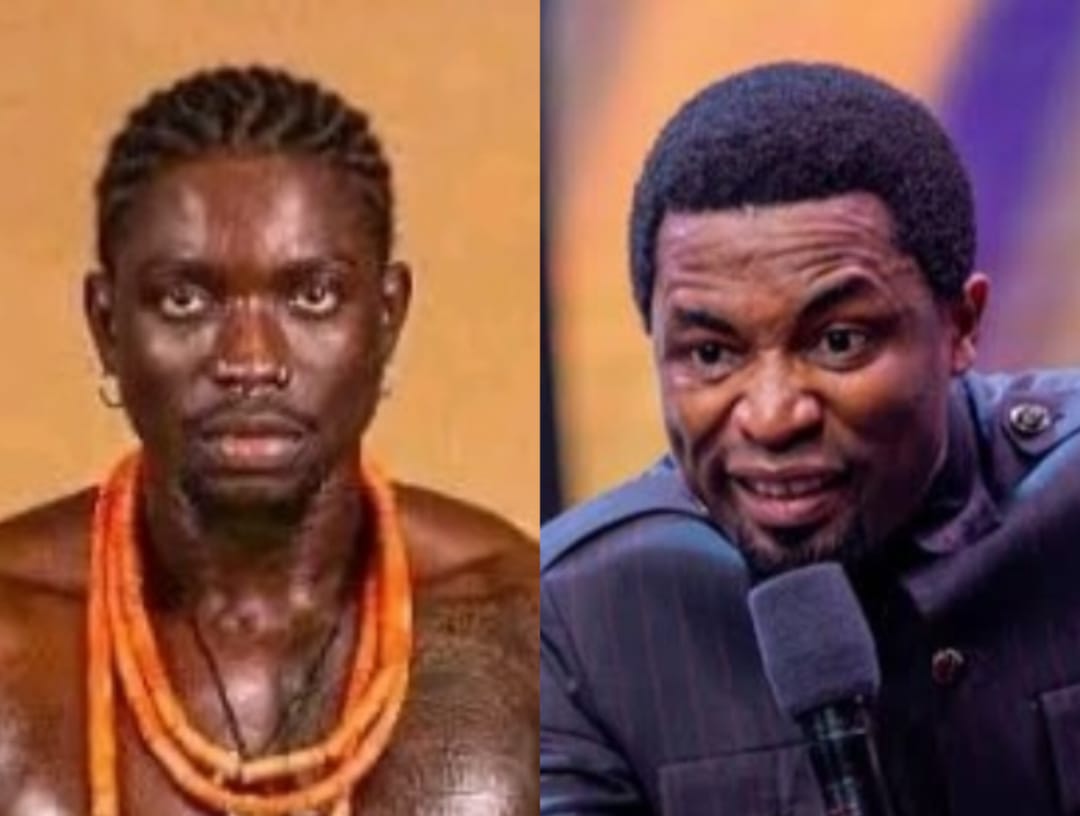
Prominent Nigerian prophetic evangelist, revivalist and seasoned gospel teacher, Apostle Michael Orokpo, has urged social media activist VeryDarkMan (VDM) to “ask questions” and “stay in your lane” rather than mock spiritual matters, while backing Apostle Arome Osayi of the Lord Jesus Christ, visionary leader and founder of Remnant Christian Network, and his message that Nigeria’s prophetic destiny is tied to revival and the restoration of godly values.
Orokpo made the remarks in a new video while reacting to VDM’s criticism of a message by Apostle Arome on Nigeria’s prophetic destiny and the role of revival in transforming the nation.
According to Orokpo, VDM’s growing influence presents an opportunity to speak for the helpless and oppressed, but he cautioned that such influence should be exercised with ethical responsibility.
He argued that there is a distinction between physical destiny and prophetic destiny, insisting that prophetic destiny precedes physical manifestations.
Orokpo described individuals who may not necessarily profess faith but whose actions could still serve a divine purpose as “Cyruses,” referencing the biblical King Cyrus, whom Scripture presents as an instrument chosen by God despite not being an Israelite worshipper.
He said VDM should have sought clarification and understanding of Arome’s message rather than dismissing it, particularly because revival, as he explained, goes beyond prayer.
“Revival is not just prayer. Revival is an awakening,” Orokpo said, adding that such awakening includes intimacy with God and the restoration of values such as honour, diligence, truth, love, mercy and integrity.
He cited the historical development of Britain and the United States as examples of societies he said were significantly influenced by Christian values and revival movements.
Orokpo maintained that the values produced through spiritual awakenings could contribute to the development of institutions, communities and nations.
He said Arome’s message about Nigeria exporting revival to other nations should not be interpreted merely as a call to increased prayer, but also as a call for Nigerians to embrace values capable of transforming society.
“When we say revival, our focus is relationship with God and the awakening of godly values,” he said.
According to him, Nigerians who embrace such values would be better positioned to contribute positively to governance, business, industry and other sectors of national life.
He further argued that Nigeria’s transformation should not be measured only by immediate physical or economic outcomes, maintaining that the awakening of values should come first.
“The product of the change is secondary. The awakening is the primary thing,” he said.
While criticising VDM’s approach, Orokpo acknowledged that people have the right to disagree with religious or ideological positions and engage in debates over them.
However, he condemned what he described as the mockery of another person’s physical condition, arguing that disagreement should not eliminate basic ethical considerations.
He recalled that society traditionally taught children not to mock people living with physical challenges, describing such conduct as contrary to basic human values.
Orokpo also acknowledged VDM’s previous use of his platform to speak against oppression and stand up for people he believed had been wronged.
He expressed concern that VDM’s recent comments could undermine the positive influence he had built, urging him to reconsider his approach to spiritual matters.
“Ask questions. Stay in your lane. Do the one God has asked you to do. Leave the other ones. There are high matters in this kingdom. Just stay in your lane,” Orokpo said.
He also appealed to Christians not to participate in what he described as another person’s wrongdoing, urging them instead to pray for people who may act out of ignorance.
Orokpo expressed hope that VDM would gain greater understanding and that his mistakes would not derail what he described as God’s purpose for his life.
He described VDM as “a type of a Cyrus,” suggesting that his influence could still serve a broader purpose despite his disagreements with Christian spiritual positions.

Leave a Reply