
By Abdulqadir Muhammad Alhaji
The Federal Government has begun implementing a nationwide reform of Nigeria’s Almajiri education system, marking what officials describe as a renewed effort to modernise centuries-old Qur’anic schools while preserving their religious and cultural identity.
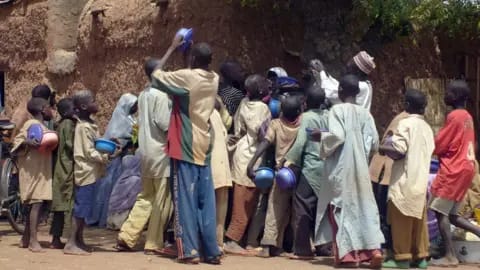
The initiative, which is being introduced across states particularly in northern Nigeria comes amid growing concerns over the country’s out-of-school children crisis and the widespread practice of street begging associated with some Almajiri pupils.
At the centre of the reform is a new operational framework for Tsangaya and Qur’anic schools. Under the policy, traditional Islamic education will be complemented with subjects such as English, Mathematics, Computer Studies, Arabic, civic education and vocational skills aimed at improving self-reliance among pupils.
Unlike previous interventions that largely focused on constructing Almajiri model schools, the latest approach seeks to strengthen existing Tsangaya institutions by integrating formal education into the traditional curriculum rather than replacing it.
The Executive Secretary of the National Commission for Almajiri and Out-of-School Children Education, Dr. Muhammad Sani Idris, said the reform is designed to improve learning outcomes while preserving the core values of the Almajiri system.
“An Almajiri child is like every other Nigerian child and deserves equal opportunities,” he said, adding that the programme is intended to improve not abolish the traditional system.
As part of the implementation process, the commission has begun distributing policy documents to state governments and plans to hold consultations with governors and Tsangaya proprietors to encourage adoption of the framework at state and local government levels.
The policy also places renewed emphasis on reducing street begging by promoting structured learning, skills acquisition and stronger government support for registered Qur’anic schools.
The reform comes after several previous attempts by successive administrations to address challenges within the Almajiri system. While billions of naira were invested in model schools over the past decade, many later became underutilised or were converted to other uses, highlighting the difficulties of sustaining large-scale education reforms.
Education experts have long argued that meaningful change will depend not only on government funding but also on the cooperation of traditional Islamic scholars, community leaders and state governments, whose support remains essential to the success of any reform.
The latest initiative represents another important opportunity to bridge the gap between religious and conventional education while addressing one of Nigeria’s most persistent social challenges. Whether it succeeds, however, will depend less on the policy itself than on sustained implementation, adequate funding and the confidence of the communities it is designed to serve.






Leave a Reply