
By Paul Joseph
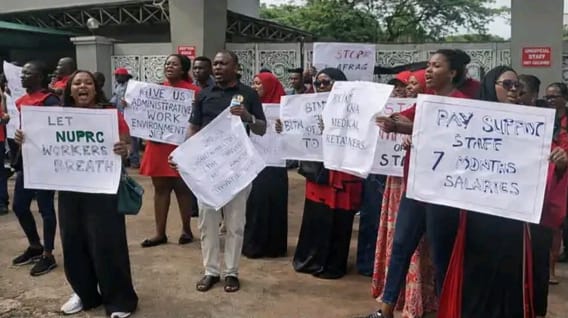
Operations at the Nigerian Upstream Petroleum Regulatory Commission (NUPRC) have been brought to a standstill following the commencement of an indefinite strike by workers under the aegis of the Petroleum and Natural Gas Senior Staff Association of Nigeria (PENGASSAN).
The industrial action, which began on Monday, disrupted activities at the commission’s headquarters in Abuja and its offices across the country, raising concerns about potential delays in regulatory processes within Nigeria’s upstream petroleum sector.
The strike stems from a dispute between workers and management over staff training programmes, particularly the decision to prioritise local capacity-building initiatives over overseas training opportunities.
Confirming the development, NUPRC spokesman, Eniola Akinkuotu, acknowledged that some administrative operations were affected by the industrial action but maintained that oil and gas production activities remain unaffected.
“It is true that some administrative activities were affected today due to industrial action taken by the unions. However, this has not in any way impacted activities in oil and gas facilities or production in general,” he said.
Akinkuotu added that the commission’s leadership had opened discussions with labour representatives in a bid to resolve the dispute and restore normal operations.
“The top management of the Commission is meeting with the unions in order to put an end to the strike and ultimately restore normalcy,” he stated.
Sources within the commission revealed that the disagreement centres on management’s decision to conduct certain specialised technical training programmes within Nigeria rather than abroad.
According to an official familiar with the matter, workers opposed directives requiring some technical courses, including those linked to Factory Acceptance Tests for Positive Displacement (PD) meters, to be held locally.
“The shutdown affects both headquarters and field operations nationwide. The disagreement centres on foreign training programmes, and workers are not comfortable with the new approach,” the source disclosed.
Management is reportedly defending the policy as part of efforts to reduce costs and strengthen local technical expertise. However, union members argue that some highly specialised programmes require exposure to international facilities and training environments that are not currently available in Nigeria.
The dispute escalated after negotiations between both parties failed to produce an agreement, leading workers to embark on an indefinite strike.
Sources indicated that efforts are underway to resolve the impasse, with representatives of both sides currently engaged in discussions at the office of the National Security Adviser.
Industry stakeholders have expressed concern that a prolonged shutdown of the regulator could affect key oversight responsibilities, including approvals, inspections and compliance monitoring, potentially impacting project timelines and investor confidence in the oil and gas sector.
Observers are closely monitoring the ongoing negotiations, amid expectations that both parties may reach a compromise capable of restoring full operations at the commission in the coming days.





Leave a Reply