
By Paul Joseph
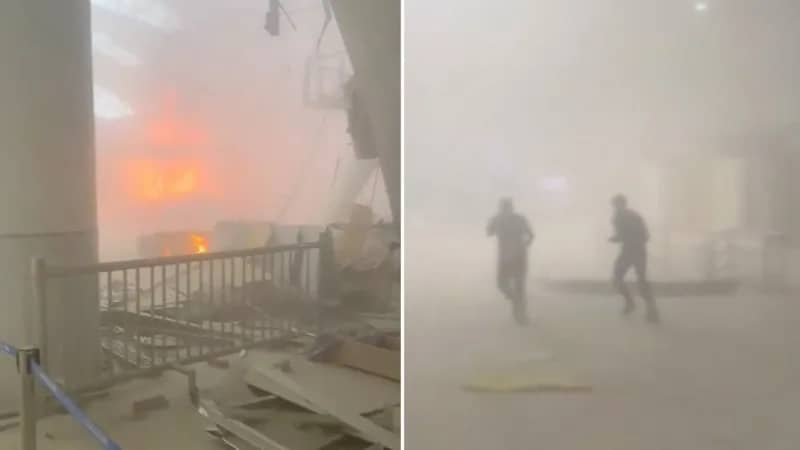
Tensions in the Middle East escalated on Wednesday as the United States and Iran launched fresh military strikes against each other, while Kuwait reported that its international airport was hit by Iranian drones in an attack that left one person dead and dozens injured.
The latest escalation comes amid a deepening conflict between the United States and Iran, with diplomatic efforts aimed at securing a ceasefire and reopening negotiations appearing to have stalled.
According to the U.S. military’s United States Central Command (CENTCOM), American forces carried out what they described as “self-defence strikes” on Iran’s Qeshm Island overnight.
CENTCOM said the operation targeted an Iranian military ground-control station and was conducted in response to alleged Iranian attacks across the region.
The U.S. military also reported intercepting ballistic missiles and attack drones launched by Iran toward Gulf countries and commercial vessels operating in regional waters.
Iran, however, said its actions were retaliatory measures against American military operations.
Officials in Tehran claimed missile and drone attacks were directed at U.S. military assets and helicopters stationed in a Gulf nation, although specific details were not immediately disclosed.
The conflict took a new turn after authorities in Kuwait confirmed that drones struck infrastructure in the country, including Kuwait International Airport.
Kuwaiti officials said one person was killed and more than 60 others sustained injuries during the attacks.
Defence Ministry spokesman Saud Abdulaziz Al-Otaibi described the incident as “criminal Iranian aggression,” while the country’s foreign ministry said diplomatic facilities and other infrastructure were also damaged.
Iran’s Islamic Revolutionary Guard Corps (IRGC) defended its actions, warning that any attempt to undermine security in the Strait of Hormuz would attract a severe response.
The Strait of Hormuz remains at the centre of the crisis. The strategic waterway handles a significant share of global oil shipments and has become a focal point of the confrontation.
CENTCOM disclosed that U.S. forces recently intercepted and disabled an oil tanker heading toward Iran after it allegedly ignored repeated warnings. American officials said the vessel was part of operations linked to the ongoing maritime blockade imposed on Iran’s Gulf coastline.
Iran condemned the move, accusing Washington of violating international norms and threatening regional stability.
The Iranian Foreign Ministry also blamed Gulf states hosting American military facilities for facilitating what it called acts of aggression against Tehran.
The renewed violence comes as diplomatic efforts to end the conflict face growing uncertainty.
U.S. President Donald Trump recently expressed optimism about reaching an agreement with Iran, stating that Tehran was interested in making a deal that would benefit both countries.
Trump also revealed that discussions involving Iran’s Supreme Leader, Mojtaba Khamenei, were progressing and suggested a direct meeting could take place in the future.





Leave a Reply