
By Sunday Ameh
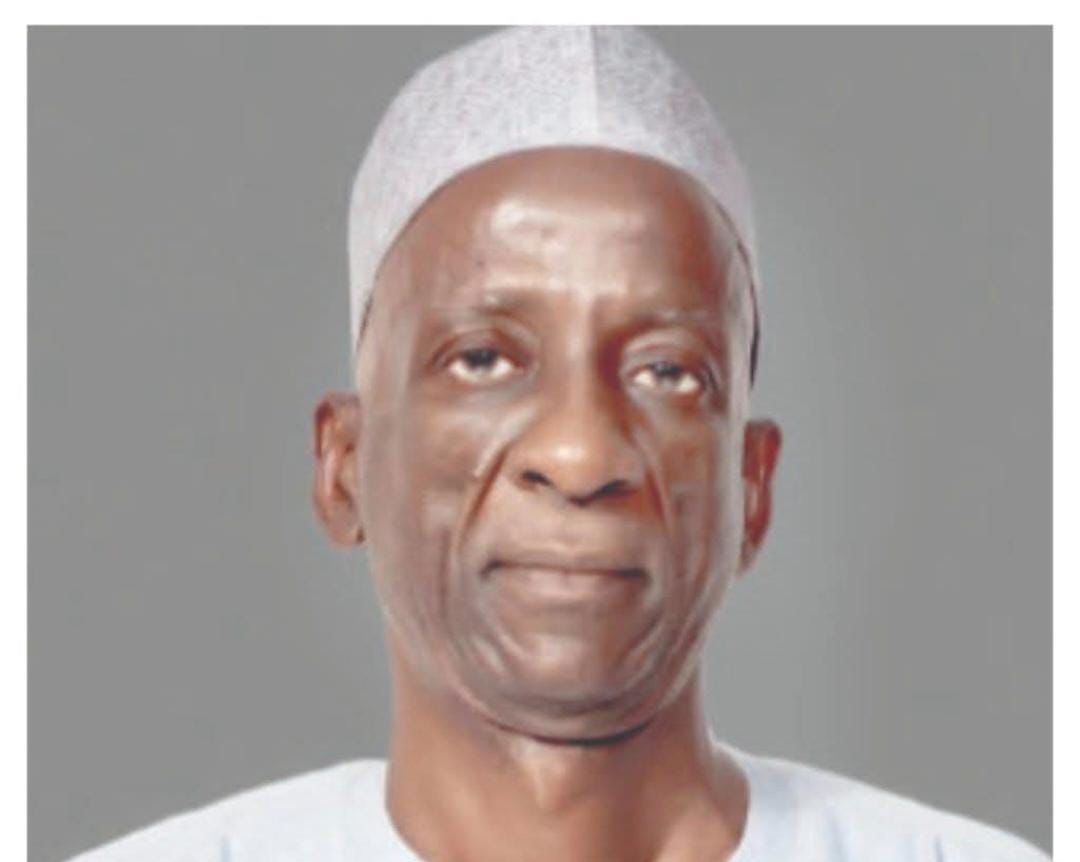
A security analyst and Convener of the Katsina Security Community Initiative, Bashir Kurfi, has raised concerns over Nigeria’s security screening process following reports that suspected terrorists returning from the 2026 Hajj pilgrimage were arrested, while also calling on authorities to investigate allegations that some bandit commanders participated in the pilgrimage.
Kurfi, a former consultant to the Libyan government under the late Col. Muammar Gaddafi and a retired lecturer at Ahmadu Bello University, Zaria, made the remarks during an interview on Frontline, a current affairs programme on Eagle 102.5 FM, Ilese-Ijebu, Ogun State.
He said allegations had emerged that some bandit commanders travelled to Saudi Arabia for the pilgrimage, with claims that some were allegedly sponsored by state governments. He stressed that the allegations had not been confirmed and challenged the authorities to either substantiate or refute them through transparent investigations.
“There is an allegation that these bandits, many of the commanders, were in Saudi Arabia. There is also another allegation that some of them were actually sponsored by state governments. Let the government come out and disprove this because nobody has said it is confirmed,” he said.
Kurfi recalled that the controversy followed an interview he granted to Trust TV, where he raised the allegations as issues requiring investigation rather than established facts.
According to him, while the Katsina State Commissioner for Internal Security initially dismissed the claims, the situation changed after the Minister of Interior reportedly confirmed that suspected terrorists were arrested at the Katsina airport while returning from Hajj.
He questioned how individuals suspected of terrorism could successfully pass through Nigeria’s Hajj screening process, which includes documentation, verification by local authorities and pre-departure orientation.
“There is a process for international travel and Hajj. Pilgrims must come through their local governments, undergo verification and orientation. How can all these processes be followed without detecting them?” he queried.
Kurfi also criticised the alleged use of public funds to sponsor religious pilgrimages, describing such practice as inconsistent with Islamic teachings.
“If government paid for them, even if they were Imams, paying people to perform Hajj with public funds is un-Islamic because Islam says you should go to Hajj only when you can afford it,” he said.
He warned that allowing suspected terrorists to travel internationally could expose Nigeria to greater security threats if such individuals establish links with extremist groups abroad.
“It may be part of a peace deal, but the danger is that they may meet international terrorist groups. Government should thoroughly screen everyone returning from Hajj,” he added.
Kurfi
Explaining the evolution of banditry in northern Nigeria, Kurfi said many perpetrators initially engaged in cattle rustling before expanding into kidnapping for ransom and forming alliances with terrorist organisations.
He described bandits as individuals without stable economic or social identities, making them difficult to rehabilitate or integrate into productive ventures.
“Many started with cattle rustling. Later they moved into kidnapping for ransom and linked up with terrorist organisations for logistics and financial support. They usually live in forests and attack people on roads or in their homes,” he said.
Kurfi recounted the ordeal of a theatre nurse from his village whose wife, two-month-old twins and five-year-old son were abducted by bandits.
According to him, the victims spent two months in captivity after the family paid a ransom of N5 million, yet the kidnappers allegedly demanded an additional N1 million before releasing the young boy.
He alleged that the child was tortured during captivity, sustaining multiple cigarette burns.
“They chained them in the bush. The five-year-old boy was held back for another two weeks after the family paid the first ransom. When he returned, he had over 20 cigarette burns on his body. That is what these people are doing,” he said.
Kurfi maintained that many bandits are not foreigners but locals familiar with their communities, arguing that this makes intelligence gathering and security operations even more critical.
“Many of these bandits are from our communities. I know where some of them live. I know their parents. Whoever wants to know where they are can come, and I will show them,” he said.






Leave a Reply