

By Olumide Akinrinlola
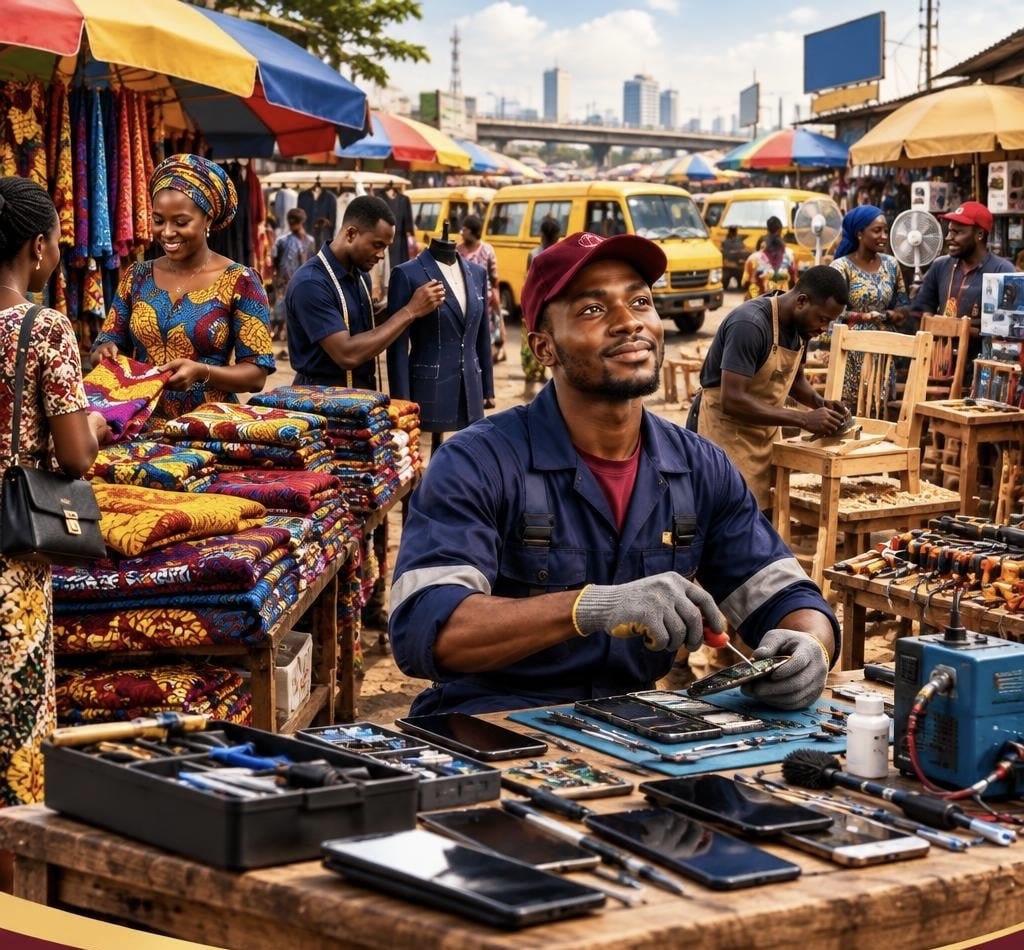
On a busy Saturday afternoon in Egbeda, Lagos, 26-year-old Omopekun, an Ikale man, wipes sweat from his forehead after completing the installation of a 5kVA solar inverter system in a two-bedroom flat. By 4pm, he has packed away his tools and completed a job that, he says, earned him more than the monthly take-home pay of some junior lecturers at federal universities.
Four years ago, Omopekun dropped out of a part-time diploma programme after his family could no longer afford the fees. Today, he employs two apprentices and is often booked weeks in advance.
In Africa’s most populous country, stories like his would once have sounded unusual. For decades, the Nigerian dream followed a familiar path: attend school, obtain a university degree, secure an office job and build a stable life. Technical colleges and vocational workshops were often treated as destinations for students who could not gain admission to university or pass the Joint Admissions and Matriculation Board examination.
But across Nigeria, a quiet economic shift is taking place. It is being driven not by government policy or corporate boardrooms, but by practical skills.
As inflation erodes fixed salaries and economic reforms fail to ease the pressure on household budgets, the gap between what a certificate promises and what a marketable skill can deliver has become increasingly difficult to ignore.
From Ikeja to Port Harcourt, and from Kano to Onitsha, the evidence is visible. Thousands of graduates, including those with Second Class Upper degrees, compete for entry-level jobs that often barely cover transport costs and rent.
At the same time, people providing solutions to everyday problems are building profitable businesses. A skilled fashion designer in Lekki or Surulere, for example, may charge between ₦250,000 and ₦300,000 for a bridal outfit or an aso-ebi ensemble. Completing several orders in a week can generate income that exceeds the monthly earnings of many salaried professionals.
The same pattern can be seen in other sectors. Hybrid vehicle mechanics, phone-repair technicians, makeup artists, furniture makers and digital content creators have transformed practical expertise into viable businesses.
Even Nigerian skit makers, once dismissed as unserious smartphone users, now secure multimillion-naira brand endorsements and invest in property because they have mastered the business of capturing and holding public attention.
What may appear to be an unconventional survival strategy in Nigeria is standard practice in many of the world’s strongest economies. In countries such as Germany, Canada, the United Kingdom and the United States, vocational and technical careers are treated with greater institutional respect.
Plumbers, electricians, welders, heating and ventilation technicians, and certified care workers can earn wages that rival, and sometimes exceed, those of office workers.
Trade schools in these countries do not carry the same stigma attached to vocational education in Nigeria. They provide recognised qualifications because developed economies understand a basic truth: society cannot function without people who can build, repair and maintain essential systems.
Nigeria’s education system, however, continues to place greater emphasis on theory than practical competence. Many students spend four years memorising lecture notes, only to graduate into an economy that rewards execution, problem-solving and experience.
Waiting for the government to revive the economy or create millions of white-collar jobs is no longer a realistic strategy for many Nigerians. With fuel prices, electricity tariffs and food costs putting pressure on households, financial survival requires a change in mindset.
Academic degrees still have value, particularly in regulated professions such as medicine, law and engineering. No one would want an untrained person performing surgery or designing a major bridge.
But for millions of young Nigerians seeking economic independence, combining formal education with a high-demand skill or pursuing a skilled trade entirely may offer a more practical route out of poverty.
Whether it is installing solar panels in a country facing persistent power shortages, learning software development, making clothes or providing digital marketing services, the modern economy follows a simple rule: people pay for solutions, not certificates.
Until Nigeria’s classrooms catch up with economic reality, some of the biggest opportunities may continue to belong to those who can use their hands, creativity and expertise to solve everyday problems.
Olumide Akinrinlola is the Publisher of Starnews NG Online Newspaper



Leave a Reply