
By Opeyemi Adelakun
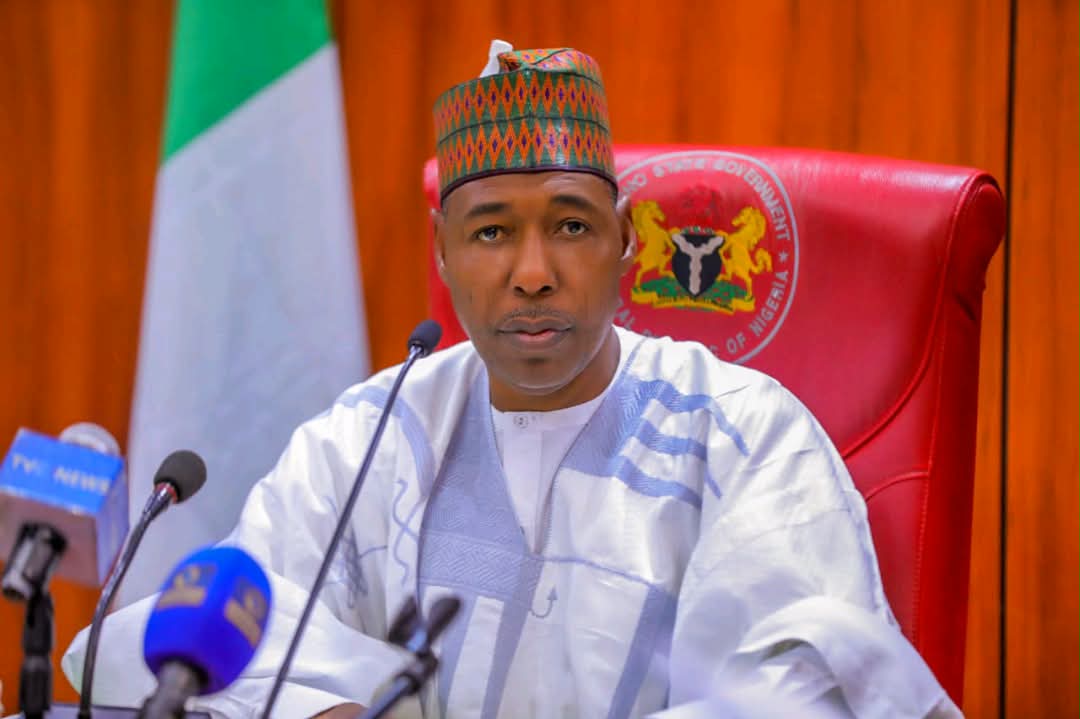
More than 5,000 school structures were destroyed in Borno State during the insurgency, while an estimated 2.2 million children were forced out of school at the peak of the crisis, Governor Babagana Zulum has said.
Zulum disclosed this on Sunday in Maiduguri while commissioning a number of infrastructure projects, including schools, a flyover and roads.
The governor said the prolonged insurgency also claimed the lives of many teachers and school administrators who were killed while carrying out their duties.
He said the scale of destruction meant that rebuilding the education sector required more than replacing damaged buildings.
According to him, the state government invested ₦46,987,069,675.33 in basic and secondary education between the 2025 and 2026 fiscal years.
Zulum said the projects commissioned in Maiduguri formed part of the broader investment aimed at restoring access to education and improving infrastructure for learners.
Among the commissioned projects were the Larawaram Community Senior Secondary School, Shehu Sanda Kyarimi I Primary and Junior Secondary School, the Post Office nine-span flyover and the dualisation of the 2.5-kilometre road from Budum Tandari Junction to Kasuwan Shanu, alongside five kilometres of drainage.
“It is about restoring access to education, rebuilding confidence in our communities and providing our children with the opportunity to secure a better future,” the governor said.
Zulum added that 136 other projects had been completed and were awaiting commissioning.
He said the state had also expanded infrastructure at the public pre-primary and primary school levels, with usable classrooms increasing to 5,792 and functional Water, Sanitation and Hygiene facilities rising to 4,563.
At the senior secondary level, Zulum said the number of functional schools increased from 34 in eight local government areas in 2019 to 129 across 25 local government areas in 2026.
The governor also reported a significant rise in school enrolment, from 766,551 learners in 2019 to 1,801,295 in 2026.
He attributed the increase to wider access to education, improved public confidence and sustained investment in the sector.
“These indicators demonstrate the scale of our efforts to expand educational access, restore infrastructure and improve the learning environment for our children,” Zulum said.





Leave a Reply