

By Opeyemi Adelakun
The Federal Government is moving to make the 2027 budget personnel system more difficult to manipulate, with ministries, departments and agencies required to reconcile their payrolls against federal personnel databases before receiving personnel cost provisions.
The directive forms part of a broader set of controls contained in the 2027 Personnel Costs Budget Call Circular issued by the Budget Office of the Federation.
The circular, signed by Budget Office Director-General Tanimu Yakubu, sets Friday, September 18, 2026, as the deadline for MDAs to submit their 2027 personnel budget proposals.
Under the new framework, an employee cannot automatically qualify for a budget provision simply because his or her name appears on an MDA’s nominal roll.
The Budget Office directed agencies to validate their personnel records against the Integrated Personnel and Payroll Information System and the Government Integrated Financial Management Information System.
It said no personnel cost provision would be made for a serving federal employee who is not captured on IPPIS or enrolled on GIFMIS unless the employee has been specifically exempted by the appropriate authority.
The government also warned agencies against making salary or allowance provisions for individuals who are not legitimate Federal Government employees.
“MDAs should note that payment of salaries and allowances are for legitimate employees of the FGN only. Any unauthorised payments from the personnel costs budget will attract appropriate sanctions,” the circular stated.
The measures extend to recruitment, promotions, transfers and the treatment of consultants and temporary workers.
MDAs have been told not to budget for promotions that have not yet taken effect. Only promotions already approved and effective at the time of budget preparation should be reflected in the 2027 personnel budget.
Promotions expected to take effect during 2027 will be funded centrally through the Payment for Promotion and Salary Arrears in the Service-Wide Vote and reflected in subsequent personnel planning.
The circular also stipulates that an employee transferred or posted after the 2027 personnel budget has been concluded will continue to have the personnel cost provision retained by the MDA where it was originally budgeted until preparation of the 2028 budget.
For new recruitment, agencies must provide financial clearance, letters of first appointment and applicable recruitment waivers or clearances.
The Budget Office warned that it would not entertain salary shortfalls or payroll lock-outs arising from unauthorised recruitment.
Outsourced workers excluded
The new rules draw a firm distinction between permanent federal employees and individuals providing services to government institutions under other arrangements.
Consultants, contract staff, National Youth Service Corps members, industrial attaches, outsourced service providers and legionnaires are not to be included in MDA nominal rolls because they are not permanent and pensionable Federal Government employees.
Non-executive board members are also excluded from personnel rolls, with their fees and allowances to be provided under overhead expenditure.
The circular introduced particular safeguards for federal health and education institutions, where consultants and other personnel may work across multiple institutions.
The Budget Office prohibited the same consultant or lecturer from being captured on the nominal rolls of different federal institutions.
Where duplication is detected, the individual will be removed from the payrolls of institutions other than the person’s primary place of employment.
Federal hospitals must also observe approved ceilings for interns and honorary consultants, while registration or licence numbers of interns must be supplied for authentication.
The recruitment, deployment and budgetary provisions for house officers and nursing interns will be handled centrally by the Medical and Dental Council of Nigeria and the Nursing and Midwifery Council of Nigeria respectively.
Hospitals that independently recruit or deploy such personnel without following the councils’ procedures may face sanctions for unauthorised recruitment.
The government was particularly emphatic about outsourced workers.
“The staff of outsourced service providers must not be included in the nominal roll. Inclusion of staff of outsourced service providers in MDAs payroll will henceforth be regarded as willful fraudulent action, and shall be reported to relevant authorities accordingly,” the circular warned.
Budget checks begin before appropriation
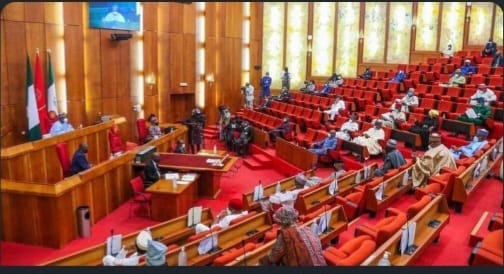
The personnel reforms are coming alongside a wider attempt to strengthen the credibility of the federal budget before it reaches the National Assembly.
For the first time under the new directive, MDAs must submit their Establishment Acts alongside their budget proposals.
The Budget Office said the requirement was introduced to prevent agencies without legal backing from finding their way into the federal budget.
“To further strengthen the budget preparation process and mitigate against any entry of unestablished agencies in the FGN Budget, it has become compulsory for MDAs to submit budget proposals along with their respective Establishment Acts as failure to do so, may lead to rejection,” the circular stated.
The directive follows the controversy over the Presidential Foreign Intervention Promotion Council, which received about N1.3bn in the 2026 budget despite questions about its existence.
Investigations by the House of Representatives and the ICPC subsequently examined how the entity entered the budget.
The ICPC reported that the purported agency had no legal backing and that its alleged Director-General, Adeniyi Adeyemi, had not been appointed by the Federal Government. It also said the appointment letter he used was forged.
The commission recommended prosecution and disciplinary measures against individuals it said were involved in the operation.
The ICPC also uncovered the National Brands Development and Made-in-Nigeria Special Project Office operating within the Office of the Secretary to the Government of the Federation.
It identified George Buchi Nwabueze as its promoter and said the office had been allocated space in the OSGF without presidential authorisation.
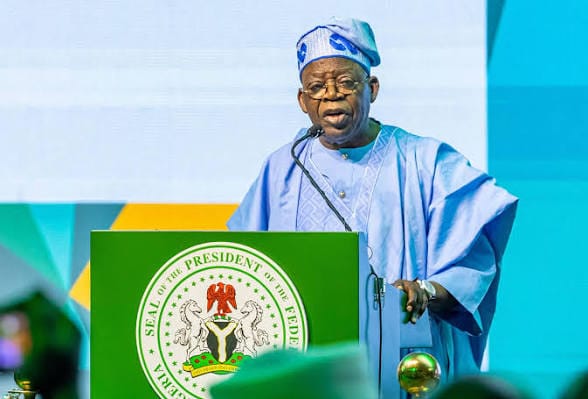
President Bola Tinubu subsequently ordered Nwabueze’s arrest and suspended three permanent secretaries following the ICPC findings.
Amnesty International’s Country Director in Nigeria, Isa Sanusi, described the fake agency controversy as an indication of institutional weaknesses.
“The incident of the fake government agency is an indictment of the Nigerian government. It is a practical indication of the rampant corruption within and around government agencies. The fact that such a scam can happen is an indication of how weak government institutions are,” Sanusi said.
Real-time personnel spending
The Federal Government plans to take the monitoring of personnel expenditure beyond the initial budget submission.
The Budget Office said a centralised Personnel Cost Monitoring Dashboard would be linked to IPPIS and GIFMIS to enable real-time comparison between actual personnel spending and approved budget provisions.
A Payroll Discrepancy Resolution Committee will meet monthly to address differences between MDA submissions and federal payroll records.
A separate standing committee will process requests for salary and promotion arrears quarterly.
MDAs are also expected to create joint human resources and budget personnel-cost teams to ensure that staffing decisions correspond with available budget provisions.
They must submit their third-quarter personnel budget performance reports by September 30, 2026.
Ministers, chief executives and accounting officers will be required to initial every page of their hard-copy personnel budget submissions and certify the accuracy of the information provided.
The government has also directed MDAs to make provisions for nutrition-related initiatives and Early Childhood Development programmes.
The wider 2027 budget timetable is being accelerated, with the Federal Government targeting September for submission of the spending plan to the National Assembly.
The Budget Office said the draft 2027-2029 Medium-Term Expenditure Framework and Fiscal Strategy Paper had been completed by July 2026 to facilitate the early presentation of the budget.
“As you are aware, the 2027-2029 draft Medium-Term Expenditure Framework and Fiscal Strategy Paper was concluded by July 2026 in line with the Fiscal Responsibility Act 2007 to facilitate the submission of 2027 Budget to the National Assembly by September 2026,” the office said.
The approach comes against the backdrop of recurring delays and overlapping fiscal years, as well as concerns over differences between budget projections and actual economic performance.
The Federal Government has previously sought to harmonise assumptions on crude oil production and prices, exchange rates, inflation and non-oil revenues in an effort to improve the accuracy of its fiscal planning.
The Minister of Finance and Coordinating Minister of the Economy, Taiwo Oyedele, had said harmonising those assumptions should reduce discrepancies between budget expectations and actual economic outcomes.




Leave a Reply