
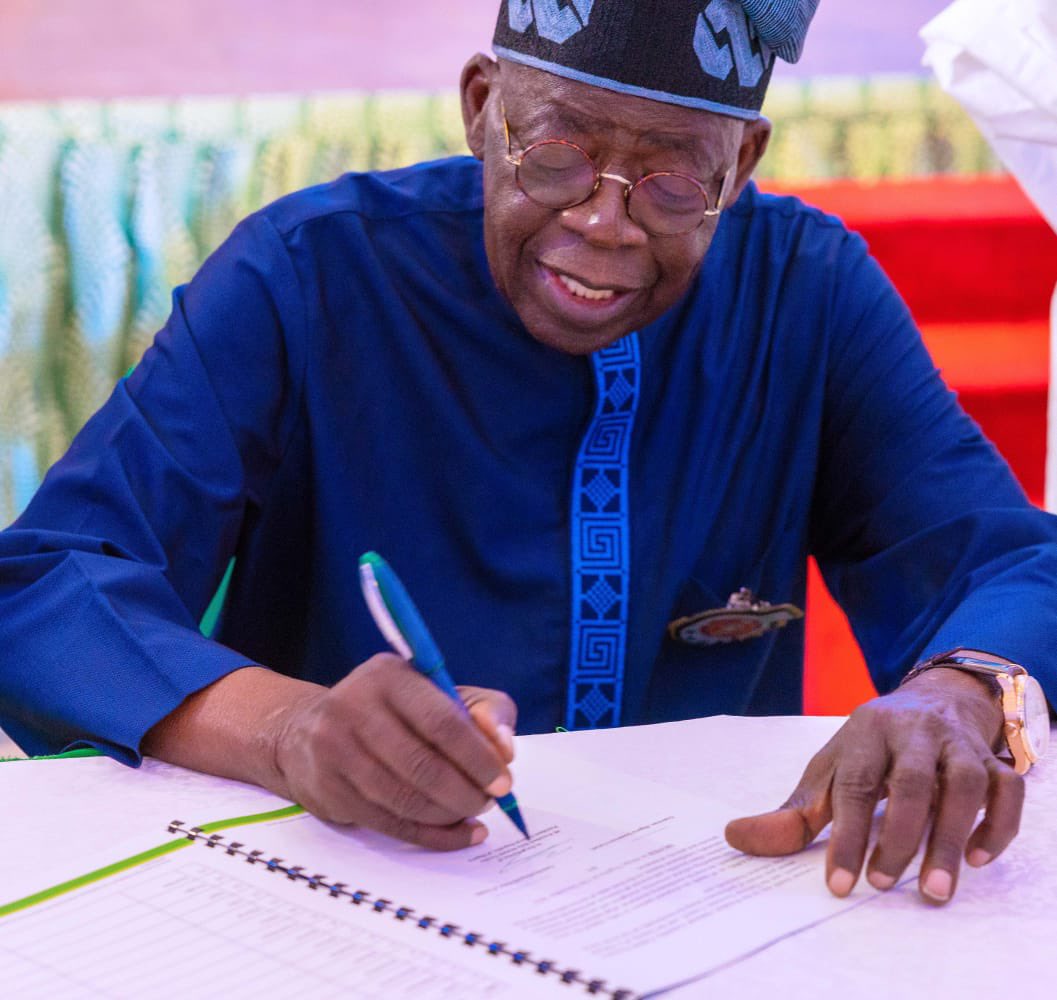
By Paul Joseph
President Bola Ahmed Tinubu has said Nigeria will continue to borrow responsibly while pushing for fairer global trade and financing systems, insisting that the country is “not asking for charity” despite growing economic pressures and rising debt obligations.
Tinubu made the remarks on Tuesday during the Africa Forward Summit held at the Kenyatta International Convention Centre, where he led Nigeria’s delegation of government officials, diplomats and business leaders.
The summit, co-hosted by Emmanuel Macron and William Ruto, brought together leaders and senior officials from more than 30 countries across Africa to discuss economic integration, industrialisation and development financing.
Speaking at the event, Tinubu disclosed that Nigeria is projected to spend about $11.6 billion on debt servicing in 2026, representing nearly half of the country’s expected revenue for the year.
According to the president, high borrowing costs imposed on African countries continue to weaken industrial growth and limit economic competitiveness.
“Every single dollar that leaves our treasury to pay punitive interest rates is a dollar that did not go into our steel sector, textile mills, agro-processing plants or digital industries,” Tinubu said.
He argued that the current global financial structure unfairly treats African economies as permanently high-risk, regardless of their fiscal reforms and economic potential.
The Nigerian leader maintained that Africa deserves a financial system that supports industrialisation, local manufacturing and infrastructure development rather than one that deepens dependency and underdevelopment.
“Nigeria is not asking for charity. We are demanding a financial system that intentionally enables Africa to industrialise, process its own minerals, refine its own crude oil, manufacture its own pharmaceuticals and compete fairly in global markets,” he stated.
Tinubu also addressed migration and security issues, saying African governments and international partners must tackle the root causes of irregular migration by creating economic opportunities for young people.
He explained that Nigeria’s economic reforms, including fuel subsidy removal, bank recapitalisation and agricultural modernisation, were aimed at improving livelihoods and reducing desperation among citizens.
The president called on development partners to invest more in climate adaptation, energy access, digital skills and productive sectors capable of creating jobs across the continent.
On regional cooperation, Tinubu urged African countries to strengthen collaboration in building an effective global migration governance system, while backing initiatives of the African Union aimed at managing migration across the continent.
He added that Africa’s future growth depends on fair access to finance, stronger regional integration and reforms within international financial institutions.


Leave a Reply