
By Paul Joseph
Governor Lucky Orimisan Aiyedatiwa has announced a N1 billion Hospital Intervention Fund and free health insurance coverage for retirees as part of efforts to strengthen healthcare delivery and expand access to medical services in Ondo State.
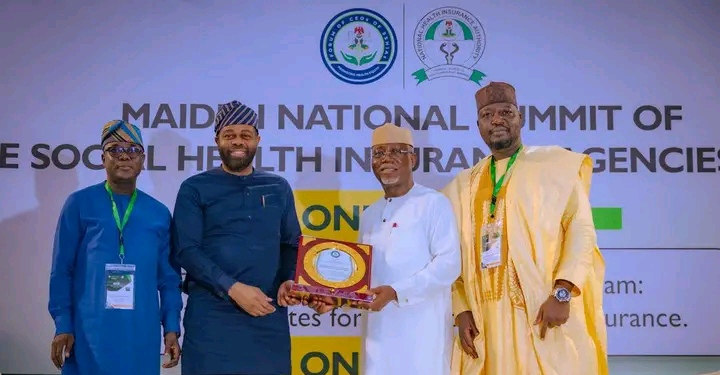
The governor made the announcement on Monday during the maiden National Summit of State Social Health Insurance Agencies (SSHIAs) held at the International Culture and Event Centre (The Dome) in Akure.
Speaking on the theme, “Economic Realities and the Universal Health Coverage Dream: Mobilising States for Scalable Health Insurance,” Aiyedatiwa reaffirmed his administration’s commitment to achieving universal health coverage, stressing that access to quality healthcare should not depend on an individual’s financial status.
He noted that rising inflation and economic challenges have increased the burden of healthcare costs on families, often forcing people to delay seeking medical attention until illnesses become more severe and expensive to treat.
According to the governor, social health insurance remains one of the most effective tools for protecting citizens from catastrophic health expenditures while ensuring equitable access to healthcare services.
Aiyedatiwa highlighted the achievements of the Ondo State Contributory Health Commission (ODCHC), noting that the Orange Health Insurance Scheme currently provides coverage for public servants and their dependents, while enrolment has also been extended to informal sector workers and members of local security outfits.
He further cited the success of the Abiyamo Maternal and Child Health Insurance Programme, which offers free antenatal care, safe delivery services and healthcare coverage for children under five years of age.
The governor also revealed that vulnerable residents across all 203 political wards in the state have been enrolled in health insurance schemes through the Basic Healthcare Provision Fund programme.
In a major policy announcement, Aiyedatiwa disclosed that retirees would now be formally integrated into the Orange Health Insurance Scheme, with the state government bearing the full cost of their enrolment.
He said the initiative was designed to address the increasing healthcare needs of pensioners and would provide access to consultations, medication, treatment and specialised healthcare services without financial hardship.
To further improve healthcare infrastructure, the governor announced the approval of a N1 billion Hospital Intervention Fund dedicated to upgrading and expanding healthcare facilities across the state.
He explained that the intervention fund is separate from regular health sector allocations and is intended to boost hospital capacity and improve service delivery.
Aiyedatiwa also disclosed that Ondo State had become the first state in Nigeria to implement the newly approved salary structure for health workers, describing the move as a strategic effort to improve welfare, reduce brain drain and retain skilled professionals within the state’s healthcare system.
The governor added that his administration had intensified the construction and rehabilitation of healthcare facilities, procured modern medical equipment and recruited additional healthcare personnel to strengthen service delivery.
He pledged to sustain reforms aimed at expanding health insurance coverage, improving quality assurance and ensuring that underserved and vulnerable populations benefit from healthcare services.
Earlier, the Ondo State Commissioner for Health, Banji Awolowo-Ajaka, described the summit as a critical platform for addressing financing challenges in Nigeria’s health sector.
Also speaking, Oyebanji Filani commended Ondo State’s performance in healthcare delivery, citing data that placed the state among those with the lowest neonatal and infant mortality rates in the country.
The Director-General of the National Health Insurance Authority, Kelechi Ohiri, called for stronger efforts to expand health insurance coverage, noting that more than 90 per cent of Nigerians remain outside the formal insurance system.
The summit attracted health policymakers, insurance managers, development partners and government officials from across the 36 states and the Federal Capital Territory, who deliberated on strategies for achieving universal health coverage amid prevailing economic challenges.






Leave a Reply