
By George Omagbemi
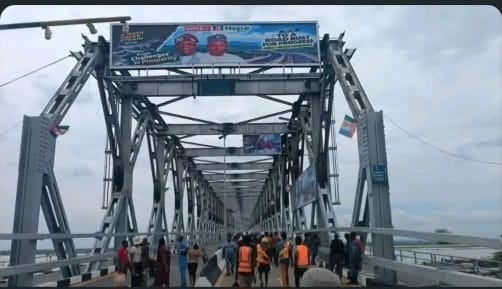
The Federal Government has reopened the First Niger Bridge linking Onitsha, Anambra State, to Asaba, Delta State, after about 38 days of closure for emergency rehabilitation works.
The Minister of Works, David Umahi, announced the reopening on Thursday, October 15, at a ceremony attended by federal and state officials, as well as traditional rulers from the two states.
The bridge was closed to vehicular traffic on September 7 after the discovery of vandalised structural components, including steelwork around its expansion joints. The closure was initially scheduled to end on September 21 but was extended following persistent rainfall and other delays that affected the rehabilitation work.
According to reports, the intervention involved structural repairs, resurfacing, the installation of solar-powered streetlights and closed-circuit television cameras, as well as additional safety measures to improve traffic management.
Umahi said median barriers and designated turnaround points had also been provided to help motorists manage vehicle breakdowns and reduce traffic-related risks. Security monitoring facilities are also being established at both ends of the bridge.
The minister warned against the removal of bolts, cutting of steel components and other activities capable of weakening the structure. He also raised concerns about sand dredging near the bridge, calling for enforcement of regulations intended to protect federal bridges.
The reopening is expected to ease movement between the South-East and South-South regions, restoring a vital route used by commuters, traders and businesses transporting goods across the River Niger.
During the closure, motorists were redirected to the Second Niger Bridge, increasing travel inconvenience and putting additional pressure on alternative routes.
Delta State Governor Sheriff Oborevwori commended the Federal Government’s intervention, stressing the bridge’s importance to regional commerce and the movement of people. The Asagba of Asaba, Epiphany Azinge, also welcomed the rehabilitation and called for sustained maintenance of the infrastructure.
Although the bridge has reopened, Umahi acknowledged that some aspects of the work were not completely finished. Continued maintenance and protection of its structural components will therefore remain important to its long-term safety and durability.



Leave a Reply