

By Olumide Akinrinlola
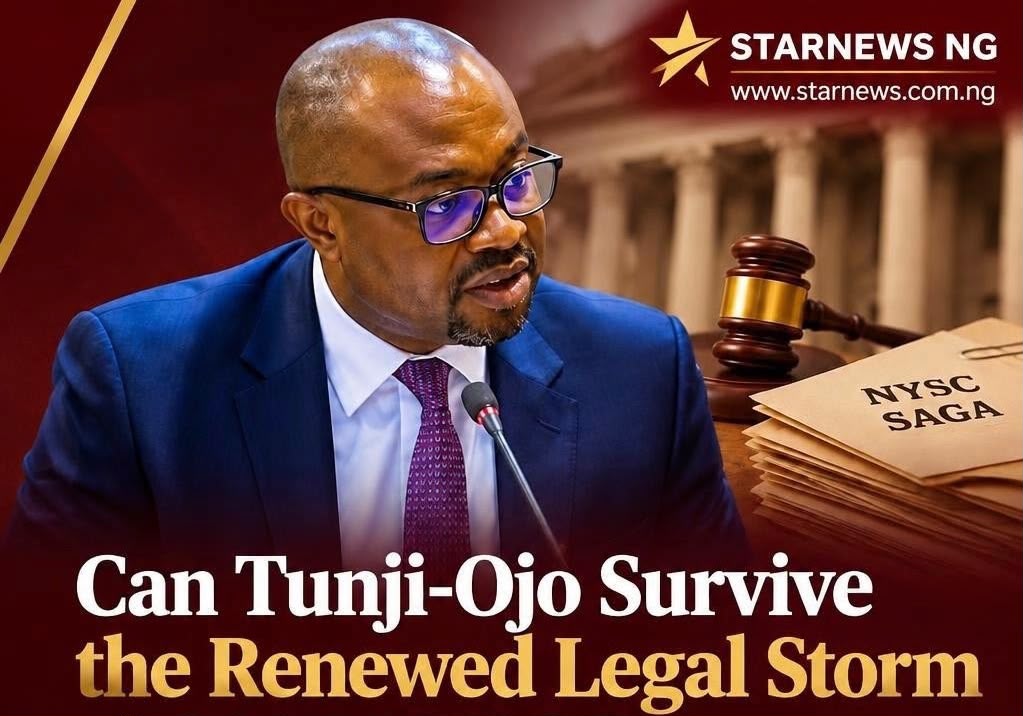
The controversy surrounding the National Youth Service Corps records of the Minister of Interior, Olubunmi Tunji-Ojo, has returned to the courtroom, reviving questions that have refused to disappear.

At the centre of the renewed legal battle is a suit before the Federal High Court in Abuja, where Justice Salim Ibrahim has directed the minister to respond by 18 November 2026.
The suit, filed by the Incorporated Trustees of Pathway to Equity and Charity Foundation, is registered as FHC/ABJ/CS/1812/2026.
The organisation is seeking access to documents relating to Tunji-Ojo’s NYSC history under the Freedom of Information Act. Among the records requested are his 2006 primary assignment logs, details of his 2019 remobilisation and bank schedules showing the payment of his monthly allowances.
The applicants say the documents are necessary to clarify aspects of the minister’s service history, including whether there was any case of abscondment or irregularity in the timeline.
Although the case concerns records from nearly two decades ago, its return to public attention has created a fresh challenge for a minister whose political profile has continued to rise.
Court Fixes Date To Hear NYSC Certificate Forgery Suit Against Olubunmi Tunji-Ojo has built a reputation not only through his performance as Minister of Interior but also through his kindness, generosity and support for people across Ondo State. His initiatives have helped to nurture careers, support businesses, create employment opportunities, develop human resources and reduce poverty.
He has also supported communities in need, assisting individuals and groups whose challenges might otherwise have been overlooked. To his admirers, these efforts reflect a commitment to lifting people and strengthening communities beyond the responsibilities of his ministerial office.
These efforts may partly explain why some individuals, pro-government groups and youth organisations have questioned the motive behind the suit, describing it as an attempt by unnamed political interests to distract the public from the minister’s achievements.
They have particularly criticised the demand for bank records dating back to 2006, arguing that it amounts to an excessive search for evidence to support a controversy that should have been settled long ago.
The applicants and the minister’s critics, however, appear determined to keep the matter alive. For them, public office comes with a responsibility to answer questions about official records, regardless of the age of the documents involved.
They maintain that no government official should be above the law and that every public official must be accountable, transparent and honest, especially when legitimate questions require answers.
For the media and international observers, the legal battle goes beyond the minister’s personal records. It could also test how far the Freedom of Information Act can be used to compel the release of documents involving serving public officials.
The November 18 deadline is expected to provide the next major indication of the direction of the case. Tunji-Ojo’s response could either help settle the controversy permanently or open another chapter in a saga that has continued to follow him since questions were first raised about his 2006 NYSC records.
For the minister, the stakes are significant. A decisive resolution could strengthen his position and silence his critics. But if the court orders the release of the requested documents, the controversy may take an even more serious turn.
Until then, the question remains: can Tunji-Ojo finally put the 2006 NYSC saga to rest, or will the renewed legal storm continue to threaten his rising political profile?






Leave a Reply