
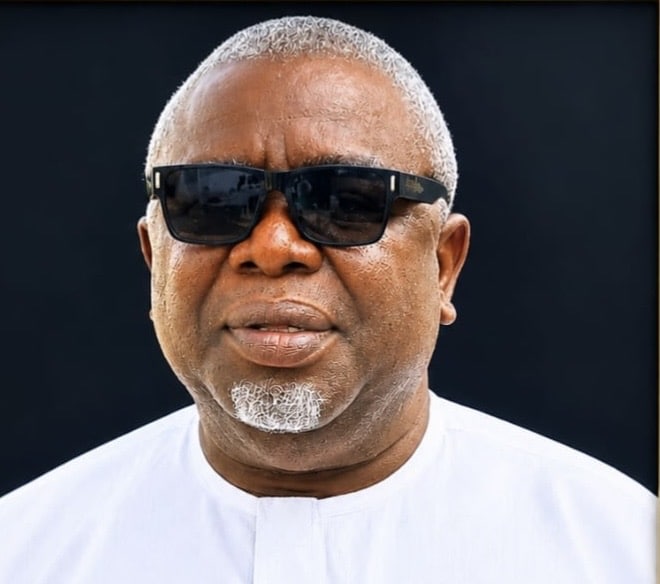

By Isaac Monehin
Nigeria’s journey towards nationhood has been anything but easy. Since independence in 1960, the country has grappled with ethnic suspicion, religious divisions, regional rivalries, a devastating civil war and recurring political tensions. Against this background, national symbols such as the flag, the coat of arms and the national anthem ought to be treated as instruments of national identity, unity and collective belonging, rather than convenient tools of partisan politics.
It is against this backdrop that the conduct of Mr Peter Obi, presidential aspirant of the Nigeria Democratic Congress (NDC) in the 2027 general elections, at a political gathering in Lagos on Thursday, November 12, deserves serious reflection.
At the gathering, when participants were invited to stand for the national anthem, Obi and other party members declined to participate in the rendition of the officially recognised anthem, Nigeria, We Hail Thee. Instead, they joined the audience in singing Arise, O Compatriots, the anthem that Nigeria used between 1978 and May 2024. Obi subsequently faced the crowd, raising both hands in a gesture associated with his political party.
The incident, captured on video and circulated widely, has generated considerable public controversy. The issue goes beyond which anthem Nigerians prefer. It touches on the fundamental question of whether political disagreement should extend to national symbols that are supposed to transcend partisan loyalties.
There is no denying that the restoration of Nigeria, We Hail Thee in May 2024 was controversial. Many Nigerians questioned the urgency of the legislation, the absence of extensive public consultation and the wisdom of changing the anthem when the country was confronting serious economic and security challenges. Those objections were legitimate and deserved public debate.
Indeed, a presidential aspirant has every right to criticise the process through which the anthem was restored and even promise to revisit the legislation if elected. But there is a fundamental distinction between disagreeing with the government over a national policy and appearing to reject an officially established national symbol at a political gathering.
The national anthem belongs to Nigeria, not President Tinubu or the APC. Equally, the previous anthem does not belong to any political party or generation of Nigerians. The office of the President carries responsibilities that extend beyond party loyalty. Anyone aspiring to occupy that office must demonstrate an appreciation of the delicate responsibilities of preserving national cohesion, respecting institutions and accommodating differences.
Peter Obi’s act is a dangerous precedent for national unity.
Nigeria remains a country struggling to consolidate its national identity. Our political environment is already characterised by considerable ethnic and regional sensitivities. In such an environment, the conduct of influential political figures matters enormously.
When a presidential aspirant participates in what appears to be a deliberate rejection of an officially recognised national symbol, it risks sending an unfortunate message: that national identity and national institutions can be subordinated to political preferences. What happens when another political group decides to reject the national flag, another refuses to recognise an officially established national institution, or another chooses to substitute its preferred national symbols for those recognised by law?
Where does legitimate political dissent end and institutional fragmentation begin?
These are not imaginary concerns. National cohesion is sustained not merely by constitutional provisions but also by shared values, mutual respect and the willingness of political leaders to rise above partisan considerations.
Nigeria cannot afford a political culture in which every change of government becomes an invitation to dismantle or repudiate national symbols simply because they were introduced or endorsed by political opponents.
Nigeria is Africa’s most populous country and one of the continent’s most consequential political and economic actors. Our international standing depends not only on our economic potential, military strength and diplomatic engagements but also on the maturity of our democratic institutions.
The spectacle of a presidential aspirant appearing to reject an officially recognised national anthem at a political gathering is unlikely to strengthen perceptions of our political maturity, institutional respect and the durability of our national consensus.
At a time when Nigeria is seeking foreign investment, international partnerships and greater diplomatic influence, we should be conscious of the image our political conduct projects.
We cannot consistently demand that the international community take Nigeria seriously while appearing unable to agree on the symbols through which we express our collective nationhood.
The 2027 elections should be about competing visions for Nigeria’s future: economic recovery, poverty reduction, employment generation, security, education, healthcare, electricity and institutional reform.
Nigerians deserve a robust contest of ideas, not a contest over which political group can demonstrate greater rejection of the symbols associated with its opponents. Mr Obi and other presidential aspirants must understand that seeking the presidency requires more than articulating attractive economic policies or criticising the shortcomings of an incumbent administration.
It requires demonstrating the capacity to unite Nigerians across ethnic, religious, regional and political boundaries. A prospective president must be able to distinguish between the government of the day and the Nigerian state. Governments change; the country must endure. If Obi believes the restoration of Nigeria, We Hail Thee was ill-conceived, he should make a compelling constitutional, historical and political argument for its reconsideration. That would be a legitimate democratic engagement.
National symbols should not become instruments for communicating partisan defiance. Ultimately, the question is not whether Nigeria, We Hail Thee is musically superior to Arise, O Compatriots, or whether one generation has a stronger emotional attachment to one anthem than another. The more important question is whether we are prepared to put Nigeria above our political preferences.
Our country has paid an enormous price for disunity. We must therefore be careful not to encourage actions, however politically convenient, that could deepen existing divisions or weaken respect for our common institutions.
Presidential aspirants should be standard-bearers of national unity, not merely champions of partisan causes. Nigeria must be bigger than Obi, bigger than the APC, bigger than the NDC and bigger than every political ambition.
That is the minimum standard of responsibility Nigerians should expect from anyone seeking the privilege of leading this country.
Monehin is a policy analyst and a public affairs commentator.

Leave a Reply