
By Opeyemi Adelakun
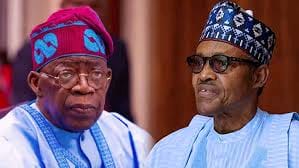
A new policy report has claimed that late former President Muhammadu Buhari, not President Bola Ahmed Tinubu, remains Nigeria’s biggest borrower in the country’s democratic era since 1999.
The report, released by a policy and communications group, Think Business Africa, argued that much of the public perception about rising debt under the current administration is misleading when assessed using dollar-denominated figures and broader fiscal context.
According to the group, the sharp increase in Nigeria’s debt figures in naira terms is largely linked to the 2023 exchange rate adjustment, which significantly revalued existing foreign currency obligations, rather than a corresponding surge in new borrowing.
It stated that President Tinubu cannot be accurately described as the highest borrower in Nigeria’s democratic history, insisting that comparisons should be based on internationally comparable debt data rather than naira valuation fluctuations.
“The evidence suggests that Nigeria’s debt narrative requires greater nuance,” the report noted. “President Bola Ahmed Tinubu cannot be described as the largest borrower based on dollar-denominated metrics.”
The group explained that Nigeria’s external debt rose from about $42.5 billion in May 2023 to approximately $51.9 billion by December 2025 under the current administration, representing an increase of about $9.4 billion.
In contrast, it said external debt increased from roughly $10.3 billion in 2015 to $42.9 billion by 2023 during the Buhari administration, a net rise of about $32.6 billion.
“The largest increase in Nigeria’s external debt stock in the democratic era occurred between 2015 and 2023,” the report added.
The organisation further argued that the impact of exchange rate unification in 2023 led to a significant accounting revaluation of Nigeria’s debt stock, inflating naira-denominated figures without equivalent new borrowing.
It added that while Nigeria’s total debt profile has increased over time, the current narrative around unprecedented borrowing under the Tinubu administration does not fully reflect the underlying fiscal data.
However, the report also acknowledged that Nigeria continues to face a serious debt burden, warning that rising debt servicing costs are putting pressure on public finances and limiting investment in key sectors such as infrastructure, health, education, and security.
It called for a more balanced national discussion on debt sustainability, urging policymakers and analysts to move beyond headline figures and focus on long-term fiscal realities.



Leave a Reply