
By Opeyemi Adelakun
Ondo State Governor Lucky Orimisan Aiyedatiwa has announced plans to extend targeted agricultural interventions to all 203 political wards in the state as part of efforts to increase production, create jobs and expand agricultural exports.
The governor said the 203-Ward Agricultural Programme would identify the specific commodities produced in each ward, the farmers and cooperatives operating there, existing infrastructure and the interventions required to improve productivity.
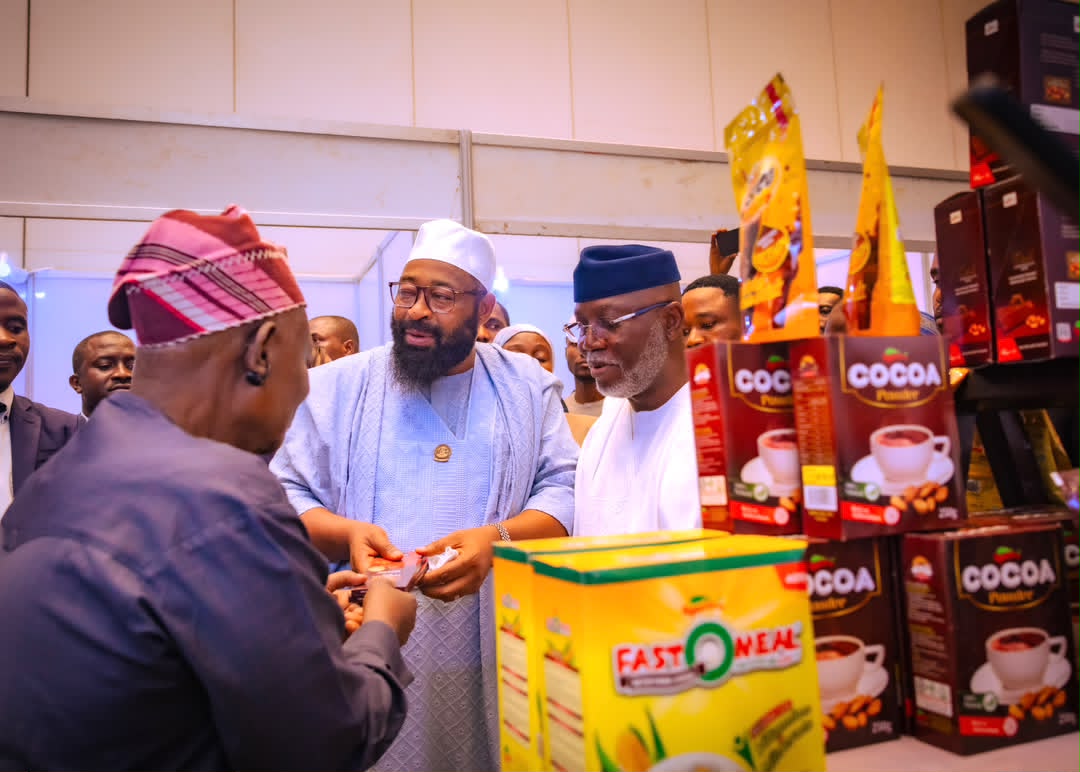
This was contained in a statement signed by Prince Ebenezer Adeniyan, Chief Press Secretary to the Governor of Ondo State, following Aiyedatiwa’s participation in the FirstBank Agric and Export Expo 2026 in Lagos.
Speaking at the event, themed “From Farm to Global Markets: Building Nigeria’s Export Value Chain”, Aiyedatiwa said agricultural development must begin at the community level because production takes place in communities rather than government offices.
“Agriculture happens in communities, not in government offices and not in banking offices either,” the governor said.
He explained that different agricultural communities required different interventions, noting that cocoa-producing areas could not be treated in the same way as fishing, cassava, oil palm or livestock-producing communities.
According to him, the ward-based approach would enable the government to identify local production strengths and provide interventions suited to the needs of each area.
Aiyedatiwa said the programme would be complemented by communal and cluster farming to address the challenges created by fragmented agricultural production.
He explained that larger production clusters would make it easier to deploy mechanisation, extension services, technology, inputs and machinery while improving access to finance, aggregation and processing facilities.
The governor said Ondo had strong production capacity in cocoa, oil palm, cassava, fisheries, aquaculture and livestock, but argued that production alone would not deliver sustained prosperity without developing the complete value chain.
He said his administration was therefore focusing on quality inputs, aggregation, processing, storage, logistics, traceability, standards, financing and access to domestic and international markets.
Aiyedatiwa disclosed that more than two million cocoa seedlings had been distributed in the state this year, alongside livestock prevention measures and other agricultural programmes.
He also identified infrastructure as critical to the success of the agricultural sector, citing the construction and rehabilitation of hundreds of kilometres of rural roads under the Rural Access and Marketing Programme (RAMP).
According to him, the roads are connecting rural communities and production areas while improving the movement of farm produce.
He listed electricity, water, storage facilities and market access among other requirements for reducing post-harvest losses and linking farmers with buyers.
On insecurity, Aiyedatiwa described it as a major challenge to agricultural expansion and said the state was strengthening collaboration between local security outfits and conventional security agencies to protect farmers and their farms.
He also said his administration was taking steps to improve access to land for agricultural production and investment while protecting the interests of host communities.
The governor further disclosed that Ondo had inaugurated a State Strategic Committee on Compliance with the European Union Deforestation Regulation (EUDR), comprising farmers, exporters, processors and other stakeholders in the cocoa value chain.
He said mapping was being carried out to establish the origin of cocoa from farms and ensure that producers and exporters complied with international market requirements.
“The goal is clear. Farmers must not lose access to premium international markets because global standards have changed,” he said.
Aiyedatiwa urged prospective investors to focus on processing and value addition rather than merely acquiring land or purchasing agricultural commodities.
He said Ondo was seeking investments in cocoa and cassava processing, fisheries, aquaculture, livestock, storage, logistics, renewable energy, agricultural technology and export infrastructure.
“We do not simply want investors who will come and acquire our land and leave it for many years without utilising it. We do not want investors who will come and purchase our commodities only,” he said.
The governor said the state wanted investments capable of creating jobs, transferring technology, building local skills, supporting farmers and retaining greater value within Ondo.
“Our mission is straightforward. The work we produce in Ondo State should be increasingly processed in Ondo State, create jobs in Ondo State and compete confidently in markets across Nigeria and around the world,” he said.
He also urged young Nigerians to look beyond primary agricultural production, citing opportunities in cocoa processing, chocolate, beverages, cosmetics, logistics and exports.
He noted that cassava could similarly support businesses in starch, flour, industrial materials and bio-based products.
The governor said government, farmers, private-sector operators, financial institutions and development partners must work together to move agriculture from subsistence to enterprise and from raw production to processing and global markets.
He assured credible investors that the state was prepared to facilitate productive investments and provide conditions conducive to business growth.
Speaking at the event, Niger State Governor Mohammed Umar Bago urged stakeholders to embrace modern farming methods, saying agriculture and agribusiness offered significant opportunities for wealth creation.
Lagos State Governor Babajide Sanwo-Olu, represented by the Commissioner for Agriculture and Food Systems, Ruth Olusanya, said agriculture should be treated as an engine of economic growth, industrialisation, employment and export earnings.
Sanwo-Olu advocated the export of processed agricultural products rather than raw commodities, citing cassava derivatives and processed cocoa products as examples.
In his welcome address, FirstBank Nigeria Managing Director, Olusegun Alebiosu, said the annual expo had evolved into a platform connecting producers, processors, exporters, financiers, policymakers and investors across agricultural and non-oil export value chains.
Alebiosu said FirstBank remained committed to supporting agriculture and exports as part of efforts to diversify the Nigerian economy and promote sustainable growth.
The Managing Director of Sunbeth Global Concept, Sukunmi Owoyemi, also urged young people interested in agriculture to acquire practical business experience before venturing into the sector.
He identified financing constraints, policy issues and educational gaps among factors affecting agricultural development and called for sustained engagement among stakeholders to address them.




Leave a Reply