
By Paul Joseph
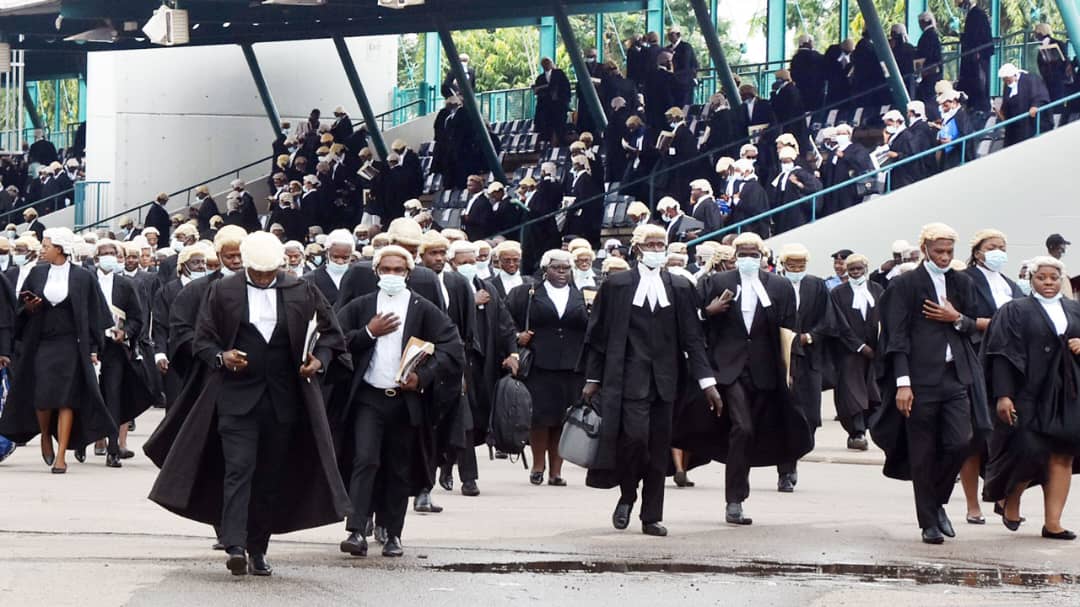
The Nigerian Law Society (NLS) has rejected a directive by the Chief Justice of Nigeria (CJN), Justice Kudirat Kekere-Ekun, restricting lawyers from using the title “Barrister” before their names in official engagements at the Supreme Court.
The society argued that there is no clear statutory provision empowering the CJN to impose such a restriction on legal practitioners.
The controversy followed a July 13, 2026 memorandum issued by the Supreme Court’s Chief Registrar, Kabir Akanbi, directing lawyers, court registrars and other legal practitioners to discontinue the use of “Barrister” and adopt “Esquire” as their professional designation.
The directive was reportedly aimed at promoting professional standards and uniformity in official proceedings at the apex court.
However, the NLS, through its Executive Director, Dr Tonye Jaja, challenged the legal basis of the directive in a statement issued on Wednesday.
Jaja argued that the Legal Practitioners Act of 1962 recognises “Barrister” and “Solicitor of the Supreme Court of Nigeria” as professional descriptions applicable to lawyers called to the Nigerian Bar.
While acknowledging that the use of “Barrister” alone may not constitute a lawyer’s complete professional designation, he questioned the legal basis for replacing it with “Esquire”.
According to the NLS, neither “Esquire” nor the abbreviation “Esq.” is expressly provided for in the Legal Practitioners Act.
The society therefore maintained that neither the CJN, the Legal Practitioners Privileges Committee nor the Nigerian Bar Association could lawfully compel lawyers to adopt professional designations that lack a clear foundation in the relevant legislation.
NLS Questions Consistency Over Legal Titles
The dispute has also opened a wider debate over the regulation of professional titles within Nigeria’s legal profession.
The NLS questioned the treatment of other professional designations, particularly the controversial Senior Counsel of Nigeria (SCN) rank, popularly associated with the “Blue Silks.”
Jaja argued that applying one standard to the use of professional titles while permitting others that are not expressly contained in the Legal Practitioners Act could amount to inconsistency.
He maintained that if the absence of a title from the Act automatically makes its use unacceptable, the same principle should apply to “Esquire” and other professional designations.
The NLS also drew attention to the historical development of the Senior Advocate of Nigeria (SAN) title, arguing that the rank evolved from the British King’s Counsel tradition rather than being directly created by Nigerian legislation.
According to the society, a professional designation does not necessarily become unlawful simply because it is not expressly mentioned in a particular statute.
Jaja further argued that the legitimacy of the Senior Counsel of Nigeria designation rests on professional guidelines and constitutional provisions rather than direct statutory creation.
The disagreement has consequently broadened into a significant debate over who has the legal authority to regulate professional titles and the extent of that authority within Nigeria’s legal profession, particularly in proceedings before the Supreme Court.





Leave a Reply