
By George Omagbemi Sylvester
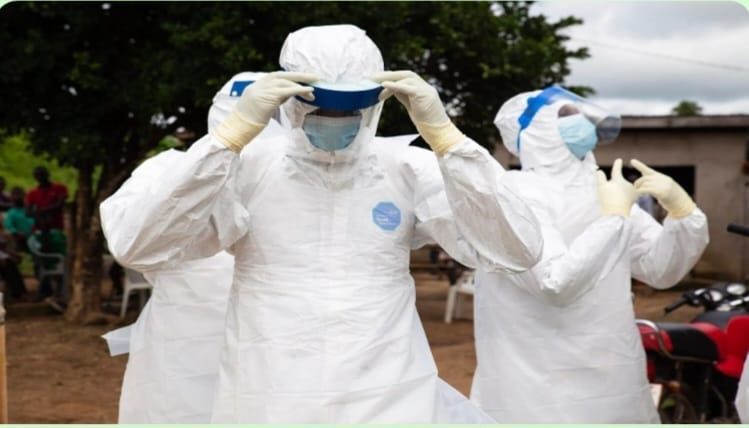
Health authorities have raised serious concerns over the rapid spread of Ebola in Central and East Africa, warning that at least 11 African countries are now at risk as the outbreak continues to expand beyond the Democratic Republic of Congo (DRC) and Uganda.
The World Health Organization (WHO) and the Africa Centres for Disease Control and Prevention (Africa CDC) have both described the situation as a major public health threat requiring urgent international attention.
The current outbreak is linked to the rare Bundibugyo strain of the Ebola virus, which experts say is particularly difficult to contain because there is presently no approved vaccine specifically designed for the strain.
Countries considered at high risk include Angola, Burundi, Central African Republic, Republic of Congo, Ethiopia, Kenya, Rwanda, South Sudan, Tanzania, Zambia, alongside Uganda and the DRC.
As of Sunday, 25 May 2026, WHO officials confirmed that the outbreak is spreading faster than response efforts, with hundreds of suspected cases and rising deaths already reported in affected regions.
Conflict, population displacement, weak healthcare systems, and attacks on health facilities have further complicated containment measures.
International health experts warn that increased regional travel and cross-border movement could accelerate transmission if stronger surveillance, testing, and emergency response systems are not urgently implemented.





Leave a Reply