
By Paul Joseph
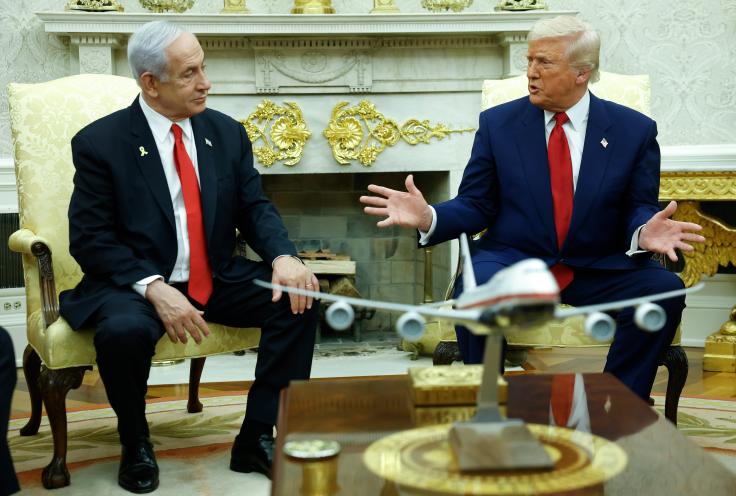
“What the fuck are you doing?” That was the question U.S. President Donald Trump reportedly hurled at Israeli Prime Minister Benjamin Netanyahu during a heated phone call over Israel’s military operations in Lebanon, according to a report that has exposed rare public signs of tension between two leaders often viewed as close allies.
According to Axios, Trump sharply criticized Netanyahu during a phone conversation on Monday following Israeli strikes against Hezbollah targets in Lebanon. Citing U.S. officials familiar with the discussion, the report claimed Trump called Netanyahu “crazy” and angrily challenged him over actions that threatened to derail fragile ceasefire efforts and wider diplomatic initiatives in the region.
The reported outburst came shortly after Netanyahu authorized Israeli Defense Forces (IDF) strikes on Hezbollah positions in Beirut’s Dahiyeh district, a known stronghold of the Iran-backed militant group.
The development has raised questions about the strength of the traditionally close relationship between the two leaders, particularly as the Trump administration attempts to contain escalating tensions across the Middle East.
Israel and Hezbollah have continued exchanging attacks despite a ceasefire that officially took effect in November 2024. While the agreement significantly reduced hostilities, periodic clashes have persisted along the Israel-Lebanon border, threatening to trigger a broader conflict.
The disagreement also comes at a critical time for Washington’s diplomatic efforts with Iran. The Trump administration is reportedly seeking a wider regional settlement, while Tehran has accused Israel of undermining those negotiations through military operations in Lebanon.
Iranian Foreign Minister Abbas Araghchi argued that Israeli actions violated a broader ceasefire understanding reached earlier this year between the United States and Iran.
“The ceasefire between Iran and the US is unequivocally a ceasefire on all fronts, including in Lebanon,” Araghchi wrote on social media. “Its violation on one front is a violation of the ceasefire on all fronts.”
Despite reports of a heated exchange, Trump later characterized his conversation with Netanyahu as productive. In a statement on Truth Social, the U.S. president claimed he persuaded the Israeli leader not to proceed with a major military operation in Beirut.
“I had a conversation with Bibi Netanyahu today, asking him not to go into a major raid of Beirut, Lebanon,” Trump wrote. “He turned his Troops around. Thank you Bibi!”
Trump further revealed that he had spoken with representatives linked to Hezbollah and secured commitments aimed at halting attacks from both sides.
“I also had a conversation with Representatives of the Leaders of Hezbollah, and they agreed to stop shooting at Israel, and its soldiers. Likewise, Israel agreed to stop shooting at them,” he stated.
However, Netanyahu’s comments later suggested Israel remains prepared to escalate military operations if Hezbollah continues launching attacks against Israeli territory.
In a post on X, the Israeli prime minister said he informed Trump that Israel would strike targets in Beirut should Hezbollah fail to stop attacks on Israeli communities.
“If Hezbollah does not cease attacking our cities and citizens—Israel will attack terror targets in Beirut,” Netanyahu declared.
He also stressed that Israeli military operations in southern Lebanon would continue as planned.
The reported clash underscores the increasingly difficult balancing act facing Washington as it seeks to support Israel’s security objectives while preventing a wider regional war involving Iran and its allies.
Although Trump has long positioned himself as one of Israel’s strongest supporters, the reported exchange suggests growing frustration within the White House over actions that could derail ongoing diplomatic initiatives and reignite a major conflict in the region.
Whether the confrontation signals a temporary disagreement or a deeper policy divide remains unclear. Nevertheless, the episode highlights the fragile nature of the current ceasefire and the high-stakes diplomacy surrounding one of the world’s most volatile regions.





Leave a Reply