
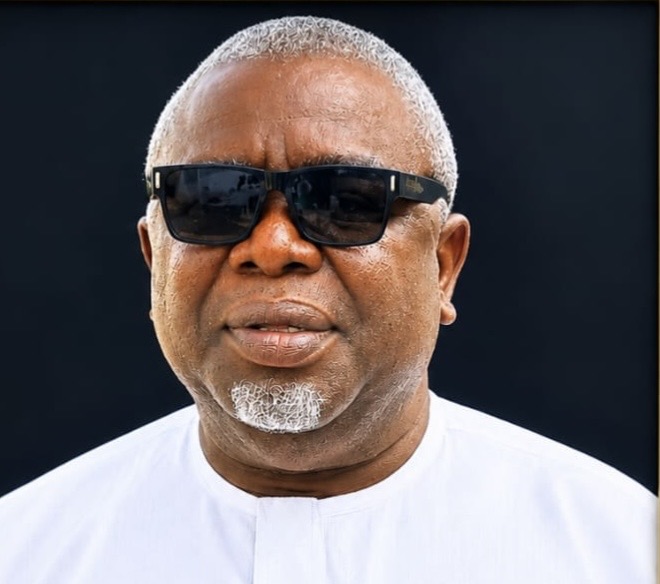

By Isaac Monehin
Welcome to the Nigerian political circus, where the newest measure of political relevance is not the quality of ideas, the credibility of candidates or the number of lives touched by their policies. It is the size of the crowd assembled at campaign rallies. The competition is simple: My crowd is bigger than yours! Never mind that half the crowd may not know the candidate’s name, let alone what he intends to do with the mandate he is seeking.
As long as the television cameras capture a sea of human heads, the mission is accomplished!
It is difficult not to find the whole spectacle amusing, were it not so embarrassingly wasteful and potentially dangerous.
There is an interesting lesson in the biblical account of Jesus feeding five thousand people with five loaves and two fish. In John 6, the crowd sought Him again the following day. But Jesus, discerning their real motivation, observed that they were looking for Him not because they understood His message, but because they had eaten bread and were satisfied. In effect, they were interested in the bread, not the message.
Two thousand years later, Nigerian politicians appear to have perfected a rather less miraculous version of the same phenomenon. They do not need five loaves and two fish. A few buses, some cash, food packs, branded T-shirts and a promise of refreshments will do. The difference is that Jesus fed the hungry; our politicians sometimes hire the hungry to manufacture popularity!
It has become an entrenched feature of Nigerian politics for parties and candidates to transport people, sometimes over considerable distances, to campaign grounds. Their assignment is to fill the venue, wave flags, dance, shout prescribed slogans and generally behave as though the political salvation of the nation depends on their candidate.
At the end of the performance, they collect their allowances and return home. Tomorrow, another candidate may offer a better deal. And so the political theatre continues. One can almost imagine the conversations between rival campaign managers.
“How many people did you bring?” “Twenty thousand!” “Is that all? We brought thirty thousand!”
“Don’t worry. We shall hire more buses for the next rally. My crowd must be bigger than yours!”
What an extraordinary competition! Two political gladiators measuring their popularity by the number of people they can hire to cheer them. If this is not an expensive exercise in collective self-delusion, what is?
The stupidity of the enterprise is difficult to overstate. What exactly does a politician learn from an audience assembled through financial inducement? That his policies are popular? That his personality is inspiring? That the electorate is convinced? Nothing of the sort! He has merely demonstrated that he has enough money to rent an audience. It is the political equivalent of buying applause at a theatre and then concluding that the audience loved the performance.
The tragedy is that this is not merely a Nigerian peculiarity, in the sense that organised transportation of supporters occurs elsewhere. Political parties around the world facilitate attendance at rallies. But there is a fundamental difference between helping genuine supporters attend an event and paying people to impersonate an enthusiastic electorate. One is mobilisation; the other is deception dressed up as democracy.
Why does the practice flourish here? Poverty is certainly a major explanation. For someone who cannot afford a decent meal, an offer of a few thousand naira to attend a rally may be difficult to resist. Political entrepreneurs have discovered that economic deprivation can be converted into campaign entertainment. Rather than empower citizens to demand better living conditions, they exploit their desperation to create the illusion of political acceptance.
Low political and civic awareness also contributes. Too many citizens have not been sufficiently empowered to appreciate that elections are about choosing people to manage public resources and determine their future, not about attending political carnivals. But the greater responsibility belongs to politicians who have reduced democratic participation to a commercial transaction.
Consider the economics of this madness. Transportation, allowances, feeding, accommodation, publicity materials and security all cost money. In a country struggling with unemployment, poverty, inadequate electricity, poor schools and failing healthcare, such expenditure represents an outrageous misallocation of scarce resources. Money that could establish functional ward structures, support policy research, educate voters and engage communities is thrown into the business of renting applause.
And what of the human risks? Large numbers of people are transported over long distances, often in poorly coordinated arrangements, exposing them to road accidents, fatigue and other avoidable dangers. Citizens are put at risk so that politicians can obtain impressive photographs and boast about crowd sizes. What a bizarre way to demonstrate concern for the welfare of the people!
There is also the danger of mistaking noise for political strength. A crowd of 50,000 people does not necessarily translate into 50,000 votes. Some may be supporters, others curious spectators, and many simply temporary beneficiaries of campaign logistics. The same people may attend rival rallies in the same election season. They are not necessarily politically confused; they may simply be economically enterprising!
What, then, should replace this circus?
Political parties should invest in genuine grassroots structures at ward and polling-unit levels, engaging communities throughout the year rather than assembling artificial audiences during election season. They should organise community dialogues where candidates explain their programmes and answer difficult questions.
They should exploit radio, community media, social media and local-language communication to make their policies accessible. They should mobilise traditional institutions, professional associations, trade groups, youth and women’s organisations through persuasion and meaningful engagement.
Above all, they should measure mobilisation by the number of citizens reached, informed, persuaded and meaningfully engaged, not by the number of buses deployed.
A gathering of 300 informed citizens who understand a candidate’s manifesto may be worth more than 30,000 people who came for transportation money and refreshments. Ultimately, politicians must understand that a campaign rally is not a population census, a music festival or an Olympic competition in crowd assembly. The objective is not to win the trophy for the largest rented audience. It is to persuade citizens that one deserves their votes and, more importantly, their trust.
Perhaps our politicians should revisit the lesson in John 6. People who gather because they have eaten will return when they are hungry again. They may cheer today and collect money tomorrow from another candidate. Bread can buy attendance, but it cannot buy conviction.
The greatest irony is that while politicians are busy competing over who can assemble the biggest crowds, millions of Nigerians are still waiting for leadership that will create an economy in which they no longer have to sell their attendance to survive.
So, to our political gladiators, please spare us the spectacle. We are not interested in knowing whose crowd is bigger. We want to know whose ideas are better, whose promises are credible and whose leadership can improve our lives.
My crowd is bigger than yours! What a childish boast in a country where the real crowd that matters is the millions waiting for good governance.
Isaac Monehin is a public affairs commentator.





Leave a Reply