
By Paul Joseph
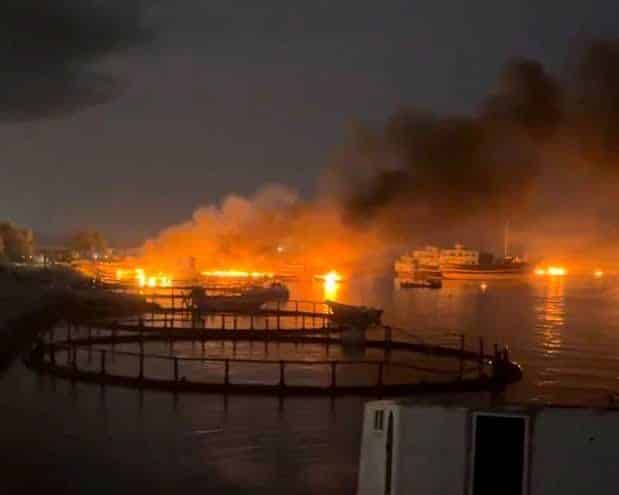
The United States has carried out another wave of military strikes on Iran, marking the sixth consecutive night of attacks, as tensions between the two countries continue to intensify over the strategic Strait of Hormuz.
The US Central Command (CENTCOM) said the latest operations were aimed at weakening Iran’s military capabilities. It also disclosed that American forces intercepted a vessel while enforcing a naval blockade targeting Iranian ports.
Iranian state media, however, accused the US of striking civilian infrastructure, including bridges, a railway station and an airport. Reports indicated that several bridges in the southern port region were damaged, while at least seven people were killed in the latest attacks.
The Iranian Revolutionary Guard Corps (IRGC) claimed it retaliated by launching strikes on US maritime surveillance radar installations in Oman, as well as military targets in Kuwait and Bahrain.
It also alleged that it attacked a US special operations command centre at al-Tanf in Syria, though neither Washington nor Damascus has confirmed the claim.
Jordan’s military said it intercepted three Iranian missiles that entered its airspace, adding that there were no casualties or damage.
In Iraq’s Kurdistan region, local authorities blamed Iran for missile and drone attacks that reportedly killed eight people in Sulaymaniyah, while several drones were also shot down over Erbil.
The ongoing conflict has kept the Strait of Hormuz effectively closed, disrupting one of the world’s most important oil shipping routes. The International Energy Agency warned that prolonged disruption could have serious consequences for global energy supplies if the crisis persists.
The latest US strikes reportedly targeted military infrastructure near Qeshm Island and the southern cities of Bandar Abbas and Bushehr, home to Iran’s only nuclear power plant. CENTCOM maintained that its targets included air defence systems, military logistics facilities, coastal surveillance sites and maritime assets.
Earlier in the week, US President Donald Trump warned that Washington could target Iran’s bridges and power plants if Tehran refused to resume negotiations. Human rights groups have previously cautioned that deliberate attacks on civilian infrastructure could constitute violations of international law.
Iranian officials said more than 38 people have been killed and over 400 injured since hostilities with the US resumed.
Meanwhile, the White House insisted President Trump remains open to diplomacy despite the continued military campaign. Press Secretary Karoline Leavitt said discussions with Tehran were ongoing but stressed that the US would continue responding to attacks on international shipping in the Strait of Hormuz.
Iranian officials, however, maintained that any future agreement must protect the country’s national interests, insisting that control of security arrangements in the Strait of Hormuz remains central to Tehran’s position.
As diplomatic efforts continue alongside the escalating conflict, the international community has renewed calls for restraint to prevent the crisis from expanding across the Middle East.




Leave a Reply