
By Paul Joseph
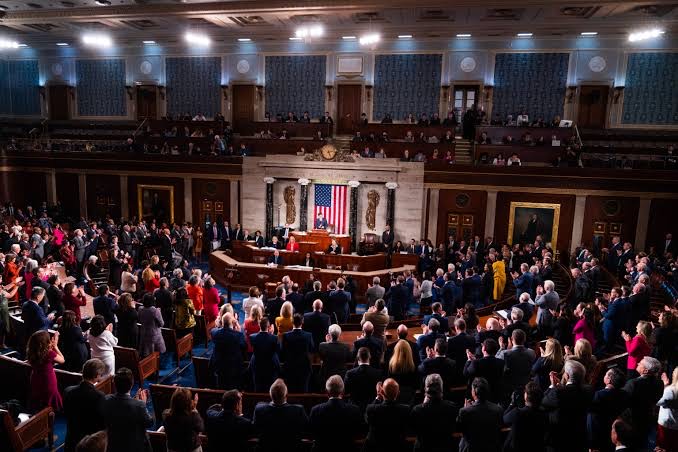
The United States Congress has called on Nigeria to remove armed Fulani militias from confiscated and productive farmlands across the country’s 36 states, as part of sweeping recommendations submitted to President Donald Trump over rising insecurity and alleged religious violence in Africa’s most populous nation.
The recommendations were contained in a congressional report presented to the White House following investigations led by Congressman Riley Moore into what was described as violence affecting Christian communities in Nigeria.
Moore disclosed on his X handle that he had formally submitted the report, stating it was aimed at addressing religious persecution, sectarian violence and broader insecurity challenges.
The development followed congressional hearings and a visit by an investigative delegation to Nigeria, amid Washington’s broader diplomatic pressure after Nigeria’s redesignation as a Country of Particular Concern (CPC) over alleged religious freedom violations.
Among the most striking recommendations is a demand that the Nigerian government remove Fulani militias from seized farmlands and enable the voluntary return of displaced communities.
Lawmakers said restoring access to agricultural land would not only reduce humanitarian dependence but also boost food production and economic stability.
The report urged Abuja to ensure security and rebuild infrastructure in affected communities to facilitate resettlement, particularly in the predominantly Christian Middle Belt region.
Congress also proposed a new bilateral US–Nigeria security agreement focused on:
Protecting vulnerable Christian communities from violent persecution.
Eliminating jihadist terror activity in the region.
Expanding economic cooperation.
Countering geopolitical rivals, including the Chinese Communist Party and the Russian Federation.
The proposed pact would require Nigeria to co-fund humanitarian assistance, including support delivered through faith-based organisations, and strengthen early-warning systems to prevent attacks and kidnappings. It also calls for deploying capable security forces to violence-prone areas and holding officials accountable for failure to act on intelligence warnings.
Lawmakers recommended that Nigeria: Expand security cooperation with the United States and divest from Russian military equipment in favour of American defence systems.
Develop a demobilisation, disarmament and reintegration programme targeting armed Fulani militias.
Strengthen the newly created Ministry of Livestock’s ranching reforms and pursue meaningful land reforms.
The report further called for comprehensive counter-terrorism cooperation, including the provision of US excess defence equipment and the possible classification of certain armed groups as foreign terrorist organisations if intelligence findings warrant such action.
In addition, Congress urged Washington to counter what it described as hostile foreign exploitation, including alleged Chinese illegal mining operations and claims of protection payments to militias.
Other recommendations include: Publicly invoking CPC Presidential Directives to “name and shame” perpetrators of violence.
Imposing sanctions on individuals or groups involved in or tolerating violence against Christians.
Continuing visa restrictions on alleged violators of religious freedom.
Pressing for repeal of Sharia codes and criminal anti-blasphemy laws.
Reviewing trade leverage, including potential restrictions on cattle-related exports, to compel armed herdsmen to disarm.
The report also advocates increased oversight of US aid to Nigeria, enhanced Treasury Department engagement to safeguard financial integrity, investments through the US Development Finance Corporation in the Middle Belt, and improved staffing at American diplomatic posts in Nigeria.
Congress further recommended commissioning a National Intelligence Estimate on Nigeria’s sectarian and communal violence, as well as enlisting support from international partners such as France, Hungary and the United Kingdom to address instability.
The wide-ranging proposals underscore growing concern in Washington over Nigeria’s security trajectory and religious freedom record, while signalling potential shifts in US–Nigeria relations if the recommendations are adopted.
As of press time, the Nigerian government had not issued an official response to the congressional report.



Leave a Reply