
By Abdullahi Alhassan, Kaduna
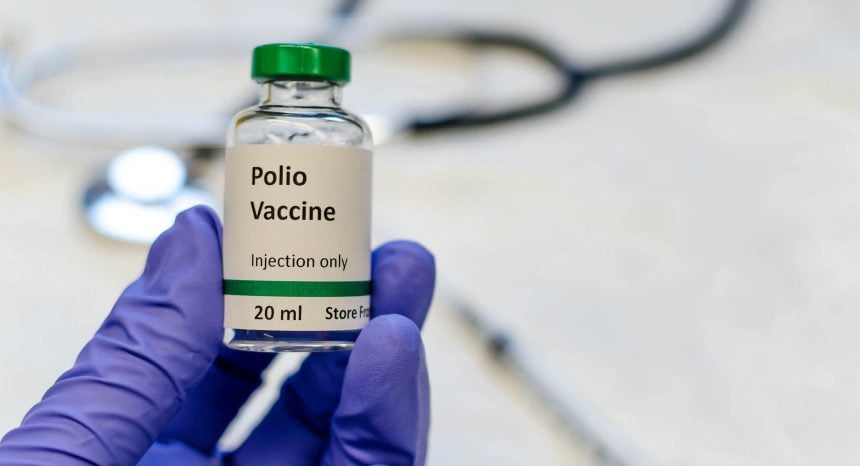
As the country records 46 per cent decline in reported Acute Flaccid Paralysis (AFP) cases in 2026, indicating progress in efforts to curb the spread of polio virus, plans has reached an advanced stage by The Jigawa State Primary Health Care Development Agency (JSPHDA) in conjunction with UNICEF to immunise no fewer than 1.5 million children’s against poliomyelitis in the forthcoming statewide campaign scheduled to commence on March 28.The State Health Promotion Officer, Sani Yusuf, disclosed this during a media dialogue organised by the agency in collaboration with UNICEF at Three Star Hotel in Dutse.
Yusuf said the exercise, was part of the upcoming nationwide polio immunisation campaign, slated March 28 to April 2, 2026, targeting children’s below the age of five years across Jigawa state.
He explained that the campaign would begin with Direct Oral Polio Vaccination (DOPV) on Thursday and Friday, followed by house-to-house vaccination from Saturday to Tuesday. Mop-up activities are slated for Wednesday and Thursday to ensure over 95 per cent coverage.
According to him, adequate arrangements have been put in place to ensure success of the excercise.
Ealier Speaking, the UNICEF Jigawa State Team Leader, Jibril Shu’aibu, said the Campaign was aimed to sustain gains recorded in the fight against poliovirus and prevent its resurgence.
Shuaibu noted that vaccination would be conducted through both house-to-house visits, as well in all the designated fixed posts to ensure no child was not left out.
He urged parents and caregivers to take advantage of the exercise, describing the polio vaccine as safe, free, and effective in protecting children from lifelong disability.
Also speaking, the World Health Organisation (WHO) representative, Dr. Aliyu Muhammad Salisu, stressed the need for sustained immunisation despite Nigeria being declared free of wild poliovirus.
The WHO representative called on parents and caregivers to cooperate with health workers to ensure every eligible child is reached.
He noted that in the latest Week 10 report, a total of 1,089 AFP cases were recorded across 584 Local Government Areas in 36 states and the Federal Capital Territory, representing a significant drop compared to the same period in 2025.
The report showed that key surveillance indicators met global benchmarks, with the non-polio AFP rate at seven per cent, stool adequacy at 97 per cent, and Non-Polio Enterovirus (NPENT) rate at 30.6 per cent.
However, 11 circulating Vaccine-Derived Poliovirus Type 2 (cVDPV2) isolates were recorded in 2026, underscoring the need for sustained vigilance.
Environmental surveillance has also intensified; 218 wastewater samples have been collected so far this year, and two tested positive for cVDPV2.
Further findings has revealed that two cVDPV2 cases in Kebbi State, while a Wild Poliovirus Type 1 (WPV1) case unlinked to previous infections was detected in Zamfara State. One Poliovirus Type 2 (PV2) sample from Zamfara is still undergoing sequencing.
The report added that the March 2026 Outbreak Response conducted in Kebbi, Sokoto, and Zamfara states has been completed, while the results of the ongoing Lot Quality Assurance Sampling (LQAS) are awaited.
It further noted that the National Training of Trainers has concluded for several states, including Kaduna, Kano, Katsina, Jigawa, Yobe, Bauchi, Borno, Gombe, Adamawa, Niger, Kwara, and Nasarawa, with cascade training currently ongoing at the state level.
The next phase of immunisation campaigns in 12 states is scheduled to take place between March 28 and March 31, while the April round of Supplemental National Immunisation Plus Days (SNIPDs) will take place from April 25 to April 28.
Health authorities reaffirmed their commitment to eradicating polio in Nigeria, emphasising on the need for sustained immunisation and active community participation.
Leave a Reply