

By George Omagbemi Sylvester
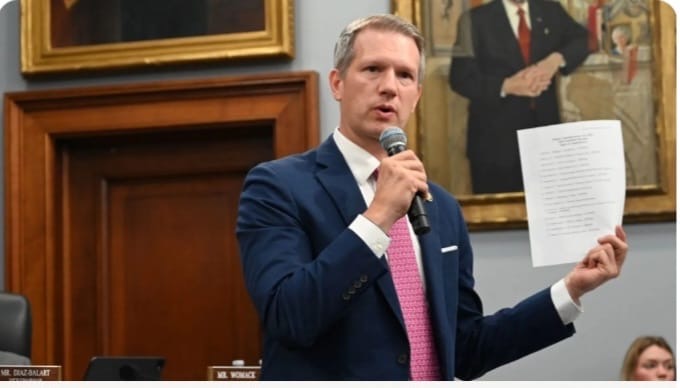
On 23 February 2026, United States House Committees on Appropriations and Foreign Affairs formally submitted a comprehensive report to President Donald J. Trump at the White House detailing their investigation into alleged persecution of Christians in Nigeria. The action follows Trump’s redesignation of Nigeria as a “Country of Particular Concern” under U.S. law and a mandate to probe what lawmakers describe as systemic violence targeting Christian communities.
Led by Rep. Riley Moore (R‑WV) and Appropriations Chairman Tom Cole (R‑OK), the report draws on months of hearings, expert testimony, fact‑finding missions to Nigeria (including visits to Internally Displaced Persons camps in Benue State) and consultations with religious leaders and Nigerian officials. It alleges that jihadist networks exploit governance weaknesses to perpetrate coordinated attacks against civilians and that Nigeria has become one of the most perilous places in the world to practise Christianity.
The lawmakers recommended a suite of policy measures: a bilateral U.S.–Nigeria security agreement, targeted sanctions and visa restrictions against perpetrators, withholding U.S. aid until demonstrable action is taken and technical assistance to dismantle extremist networks.
Prominent policy expert Dr. Karen Smith‑Evans at the Georgetown Institute on Religious Freedom observed, “When state institutions fail to protect vulnerable communities, international scrutiny and diplomatic leverage become essential to uphold universal human rights.” Meanwhile, Nigerian authorities have consistently rejected characterising internal violence as genocide, emphasising the complex mix of terrorism, banditry and communal conflict that affects Nigerians of all faiths.
The report’s delivery marks a pivotal moment in U.S.–Nigeria relations, spotlighting religious freedom as a central axis of foreign policy while setting the stage for intense diplomatic negotiations ahead.





Leave a Reply