
By George Omagbemi Sylvester
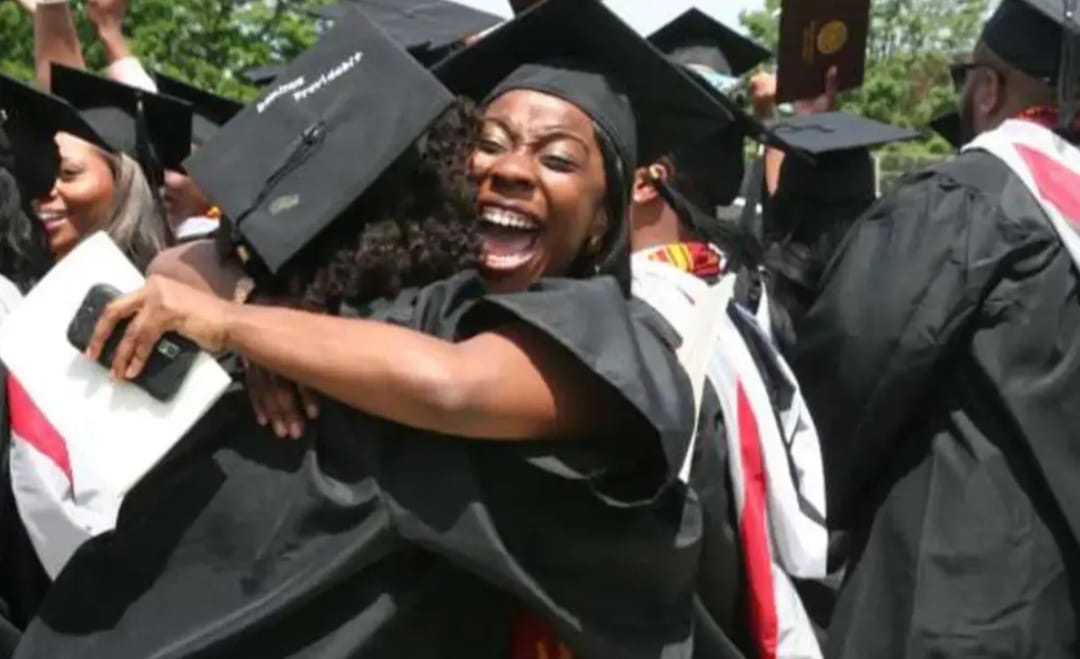
The United States government has formally clarified that Nigerian students are not affected by its newly announced visa restrictions, a move that brings relief to thousands of prospective and returning scholars from Africa’s most populous nation. The clarification followed the U.S. Department of State’s recent policy adjustments targeting specific visa categories and countries over concerns relating to national security vetting and immigration compliance. Crucially, Nigeria was not listed among the affected countries, and student visa categories (particularly F-1 and J-1 visas) remain fully operational for qualified Nigerian applicants.
The development was confirmed by officials of the U.S. Department of State, which oversees visa policy implementation, and corroborated by diplomatic sources at the U.S. Embassy in Abuja. According to embassy guidance, Nigerian students who meet academic and financial requirements may continue to apply under standard procedures without additional blanket restrictions.
This clarification comes at a sensitive time. In recent years, U.S. visa policies have undergone significant tightening under successive administrations, particularly in response to global security concerns and irregular migration patterns. However, education diplomacy has remained a cornerstone of bilateral relations between United States and Nigeria. Data from the Open Doors Report published by the Institute of International Education consistently ranks Nigeria among the leading African countries sending students to American universities, with tens of thousands enrolled annually.
Policy analysts argue that excluding Nigerian students from the new restrictions reflects strategic considerations beyond mere immigration enforcement. Dr. Michael Clemens, a migration policy expert at the Center for Global Development, has long maintained that “international students are among the most economically beneficial migrants, contributing billions annually to the U.S. economy while strengthening diplomatic ties.” His assessment aligns with U.S. higher education data showing that international students significantly bolster research output, tuition revenues, and campus diversity.
Security concerns reportedly triggered the broader visa review. U.S. authorities have cited the need for enhanced background checks in certain regions where documentation integrity or information-sharing mechanisms are considered insufficient. However, no official statement has linked Nigeria to those compliance deficiencies in the current review cycle. A senior consular official, speaking on condition of attribution through publicly available policy guidance, emphasized that “visa adjudications remain individualized and merit-based,” underscoring that nationality alone does not determine eligibility.
For Nigerian families and academic institutions, the reassurance is consequential. The United States remains a premier destination for advanced studies in STEM, medicine, law, and business. Economists note that remittances and knowledge transfer from U.S.-educated Nigerians have historically contributed to entrepreneurial growth and institutional development back home. Professor Ayo Teriba, a respected Nigerian economist, has repeatedly argued that “human capital mobility is not a loss but a long-term investment for emerging economies.”
Diplomatic observers further interpret the exclusion as an affirmation of ongoing bilateral engagement. Security cooperation, trade dialogue, and educational exchange programs between Washington and Abuja have deepened over the past decade. By insulating students from sweeping restrictions, U.S. authorities appear intent on maintaining academic bridges even as immigration enforcement tightens elsewhere.
Nonetheless, experts caution that visa approval rates are still subject to routine scrutiny under Section 214(b) of the U.S. Immigration and Nationality Act, which requires applicants to demonstrate strong ties to their home country. “Policy continuity does not eliminate individual compliance requirements,” notes immigration attorney Linda Dakin-Grimm, emphasizing that documentation accuracy and interview preparation remain essential.
In essence, what happened is a policy clarification: new U.S. visa restrictions were announced in Washington, D.C., but Nigeria was not included among the targeted countries. The decision affects prospective applicants globally, yet Nigerian students remain eligible under existing frameworks. The policy shift was driven by security and compliance considerations, implemented through the Department of State, and communicated via U.S. diplomatic missions. For now, academic mobility between Nigeria and the United States endures uninterrupted.
For thousands of ambitious Nigerian scholars, that continuity is more than bureaucratic detail; it is a reaffirmation that educational opportunity remains open, even in an era of tightening borders.


Leave a Reply