
By: Sunday Ameh
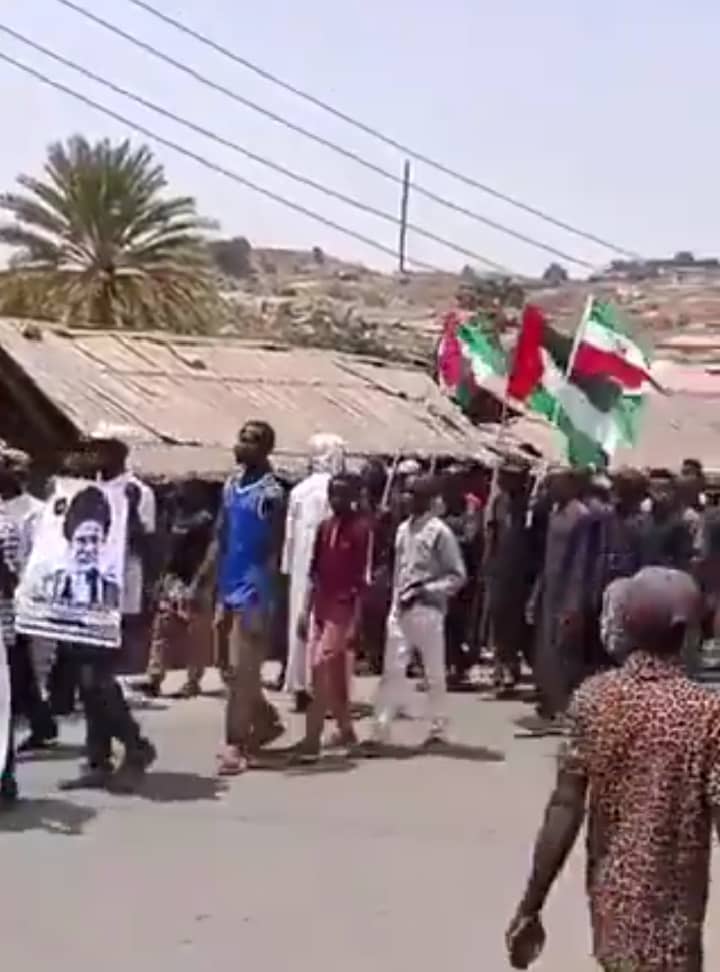
Members of Nigeria’s Shiite Muslim community staged protests in parts of the country following reports of the killing of Iran’s Supreme Leader, Ali Khamenei, sparking tensions and emotional reactions among supporters of Iran’s religious leadership.
The demonstrations, reportedly organised by sympathisers of the Islamic Movement in Nigeria (IMN), drew crowds carrying banners and chanting slogans condemning the attack that allegedly led to Khamenei’s death. Protesters described the incident as an assault on the global Shiite community and called for international accountability.
Witnesses told Starnews NG that gatherings were observed in several northern Nigerian locations, where participants demanded justice and expressed solidarity with Iran. Security personnel were deployed to monitor the protests and prevent possible escalation, though no major violence was immediately reported.
The protests followed controversial claims attributed to former United States President Donald Trump, who announced via a public statement that multiple Iranian naval assets had been destroyed during military operations, alongside heavy damage to Iran’s naval headquarters. The statement intensified global reactions and raised fears of wider geopolitical instability.
Nigeria hosts one of Africa’s largest Shiite populations, many of whom maintain religious and ideological ties with Iran. The IMN has historically organised demonstrations in solidarity with Iranian causes, particularly during periods of heightened Middle East tensions.
Analysts note that developments involving Iran often resonate strongly among Shiite communities worldwide, including in Nigeria, where sectarian dynamics occasionally intersect with international politics. Authorities have therefore urged calm while monitoring the situation closely.
Security agencies have advised protesters to remain peaceful and warned against actions capable of threatening public safety or national stability.
As global reactions continue to unfold, observers say the situation underscores how international conflicts can quickly influence domestic sentiments and public demonstrations far beyond the Middle East.

Leave a Reply