
By Opeyemi Adelakun
The Socio-Economic Rights and Accountability Project (SERAP) has instituted a suit against the Independent National Electoral Commission (INEC), seeking a court order compelling the electoral umpire to investigate allegations that governors elected on the platform of the All Progressives Congress (APC) diverted about ₦800 billion from Federation Account Allocation Committee (FAAC) allocations to finance political and campaign activities.
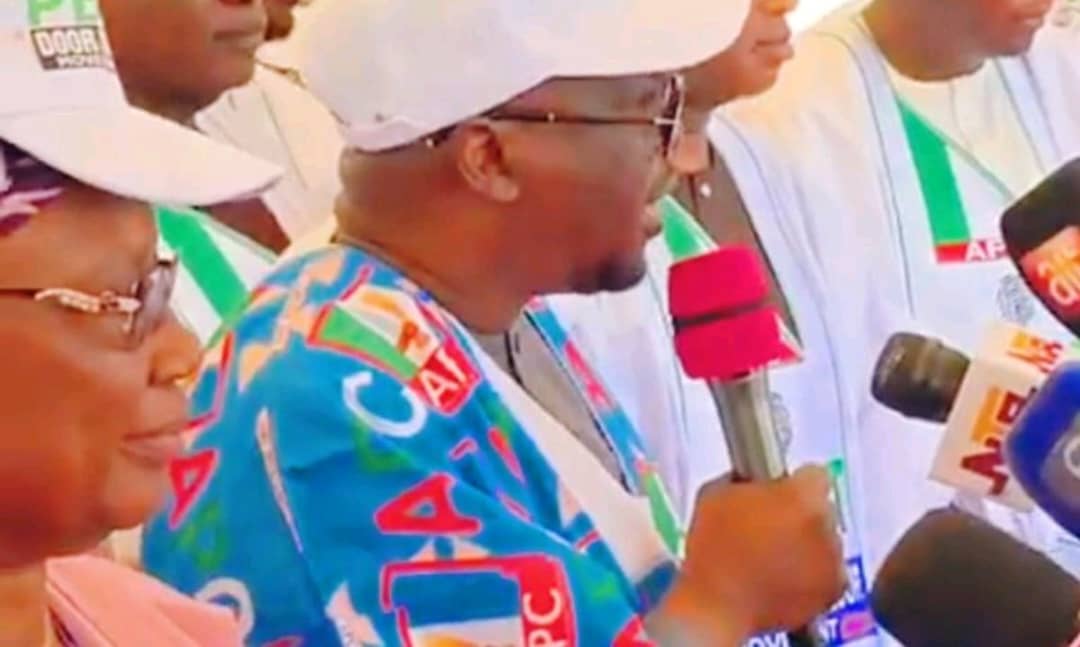
The suit, filed at the Federal High Court in Abuja and marked FHC/ABJ/CS/1426/2026, follows reports alleging that APC governors have been making monthly deductions from their FAAC allocations into a dedicated campaign fund to support President Bola Tinubu’s re-election bid ahead of the 2027 general election.
In the action filed on behalf of SERAP by its lawyers, Kolawole Oluwadare and Kehinde Oyewumi, the organisation is asking the court to issue an order of mandamus directing INEC to investigate the allegations that APC governors diverted ₦800 billion for political and campaign purposes.
The group is also seeking another order compelling the commission to request full disclosure from the governors and the APC on all contributions made to any campaign fund, including the identities of donors and the lawful sources of the funds.
SERAP further wants the court to direct INEC to commence a comprehensive review and investigation into compliance with Section 91 of the Electoral Act, particularly concerning the sources and scale of campaign financing by political parties and candidates.
According to the organisation, the allegations raise serious concerns about political finance transparency, electoral fairness and the constitutional rights of Nigerians.
“These allegations raise serious concerns about political finance transparency, electoral fairness, and the constitutional right of Nigerians to participate freely in their own government,” SERAP stated.
It added that “opaque political financing remains a major entry point for corruption and a threat to democratic legitimacy. Nigerians deserve to know who funds the candidates or political parties of their choice and the sources of any such funding.”
SERAP argued that the alleged abuse of public resources for electoral advantage undermines democratic accountability and public confidence in the electoral process.
“The abuse of state resources for electoral advantage undermines democratic integrity and public trust. Fairness, transparency, and accountability in political or campaign finance are essential safeguards against corruption, state capture, and undue influence in democratic processes,” the organisation said.
The rights group warned that the allegations pose a significant threat to preparations for the 2027 elections.
According to the suit, “the allegations of diversion or opaque use of public funds pose a grave risk to the integrity of the 2027 general elections,” adding that “large-scale public fiscal flows, coupled with weak transparency and oversight mechanisms, provide a compelling basis for INEC to activate its constitutional and statutory mandates.”
SERAP maintained that Nigeria’s political finance system continues to suffer from inadequate disclosure requirements and weak enforcement, creating opportunities for the misuse of public resources for partisan purposes.
The organisation relied on Section 91 of the Electoral Act, arguing that the law empowers INEC to regulate political donations, compel disclosure of campaign funding, enforce contribution limits and impose sanctions on violators.
It noted that the Act provides that any political party exceeding the prescribed donation limit is liable to a fine of up to ₦10 million and forfeiture of the excess amount, while individuals who exceed the legal donation threshold are liable to a penalty equal to five times the excess contribution.
SERAP also argued that INEC has constitutional responsibilities under Sections 13, 14(2)(c) and 15(5) of the 1999 Constitution (as amended) to protect the integrity of the democratic process and combat corruption.
It further cited Nigeria’s obligations under the African Charter on Human and Peoples’ Rights, the International Covenant on Civil and Political Rights (ICCPR) and the United Nations Convention against Corruption (UNCAC), insisting that the country is required to ensure transparency and accountability in political financing.
The organisation stressed that “where public resources are allegedly diverted or deployed for political and campaign purposes, the result is not merely financial impropriety—it is a direct distortion of electoral competition.”
It added that such actions undermine the principle of a level playing field, weaken citizens’ ability to freely choose their representatives and threaten the credibility of elections.
“Any use of public funds for political advantage would constitute a grave violation of these national and international standards and a threat to electoral credibility,” SERAP stated.
No date has been fixed for the hearing of the suit.




Leave a Reply