
By Opeyemi Adelakun
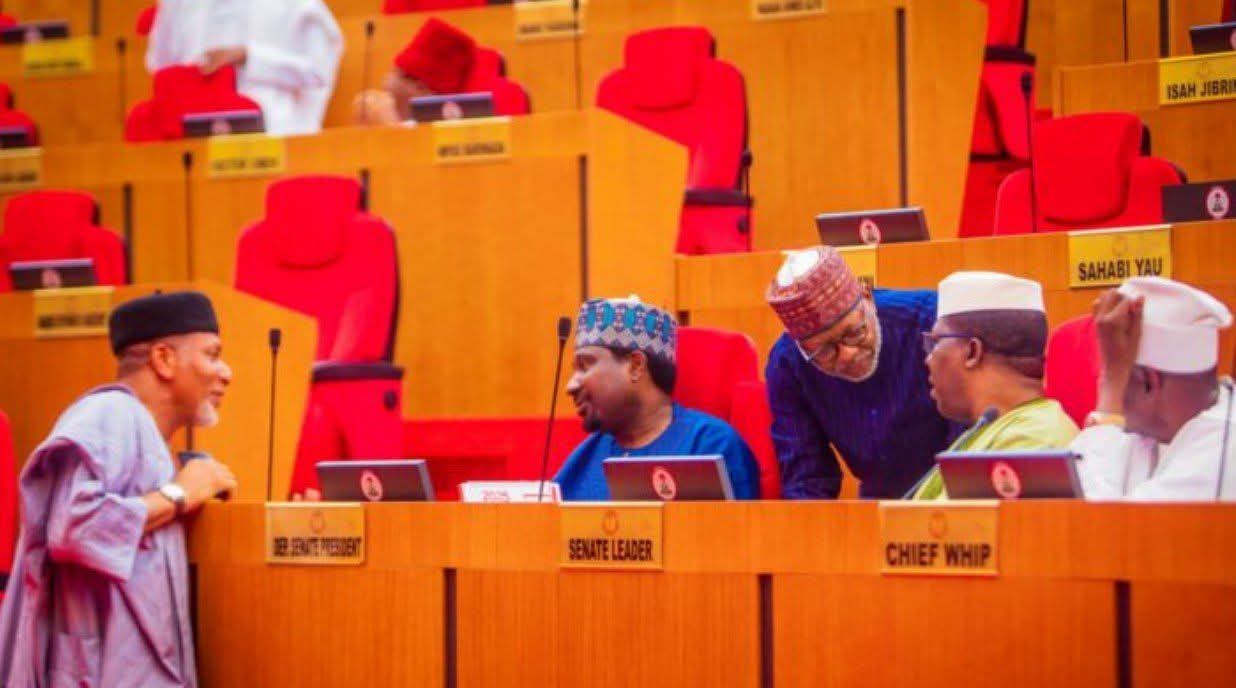
The Senate has resolved to halt the practice of granting state pardons and rehabilitating convicted or suspected terrorists, bandits, kidnappers and other violent criminals, particularly members of the Boko Haram insurgent group, describing the policy as counterproductive to Nigeria’s fight against insecurity.
The resolution was adopted on Tuesday during plenary following a motion sponsored by Senator Abdulazeez Yar’Adua on the abduction and killing of former Director of Defence Information, retired Major General Rabe Abubakar, and other serving and retired military officers. The session was presided over by Deputy Senate President Jibrin Barau.
Lawmakers expressed concern over what they described as the continued rehabilitation and reintegration of so-called “repentant” Boko Haram members and other criminals under various deradicalisation programmes implemented by some state governments.
Several senators argued that the release of rehabilitated insurgents into society has contributed to the persistence of terrorism and violent crimes, particularly across northern Nigeria.
The Senate also raised alarm over what it described as the worsening security situation in the country, warning that the increasing targeting of serving and retired military officers signals a dangerous shift in the nation’s security challenges.
Adopting the motion, the Senate described the killing of Major General Abubakar as a painful national tragedy and a grim reminder of the scale of insecurity confronting the country.
“The death of retired Major General Abubakar and others in the custody of terrorists represents not only personal tragedies but also a painful national loss and a stark reminder of the scale and persistence of insecurity confronting the nation,” the Senate said.
The lawmakers also cited a series of attacks on senior military officers recorded between January 2023 and May 2026 as evidence of the growing threat.
Among the incidents highlighted were the killing of retired Major General Richard Duru in Owerri after a reported ransom payment of $50,000, the murder of retired Brigadier General O.M. Harlord Udokwere in Abuja, the 56-day captivity of former National Youth Service Corps (NYSC) Director-General, retired Brigadier General Maharazu Tsiga, and the death in captivity of retired Major Aja in Kogi State.
According to the Senate, the increasing attacks on current and former military personnel have serious implications for national security because many of the victims previously held sensitive intelligence, operational and command positions.
“The increasing frequency with which serving and retired military personnel are being targeted by criminal and terrorist groups represents a dangerous evolution in the nation’s security challenges,” the lawmakers noted.
The Senate stressed that insecurity now extends beyond individual victims and poses a direct threat to national unity, democratic stability, economic growth and public confidence in government.
“The constitutional responsibility of government to protect lives and property remains fundamental to national unity, democratic stability, economic growth and public trust in governance,” the Senate added.
While commending the Armed Forces, the Nigeria Police Force, the Department of State Services (DSS), the Nigeria Security and Civil Defence Corps (NSCDC) and other security agencies for their sacrifices, lawmakers called for urgent improvements in intelligence gathering, deployment of technology, inter-agency coordination and community engagement to tackle the country’s worsening security situation.
The Senate further observed that the rising wave of kidnappings and killings has left many families devastated through deaths, prolonged captivity, huge ransom payments, emotional trauma, economic hardship and psychological distress.
It urged the Federal Government and security agencies to intensify efforts to protect Nigerians and prevent further attacks on both civilians and security personnel while ensuring that those responsible for violent crimes are brought to justice.





Leave a Reply