
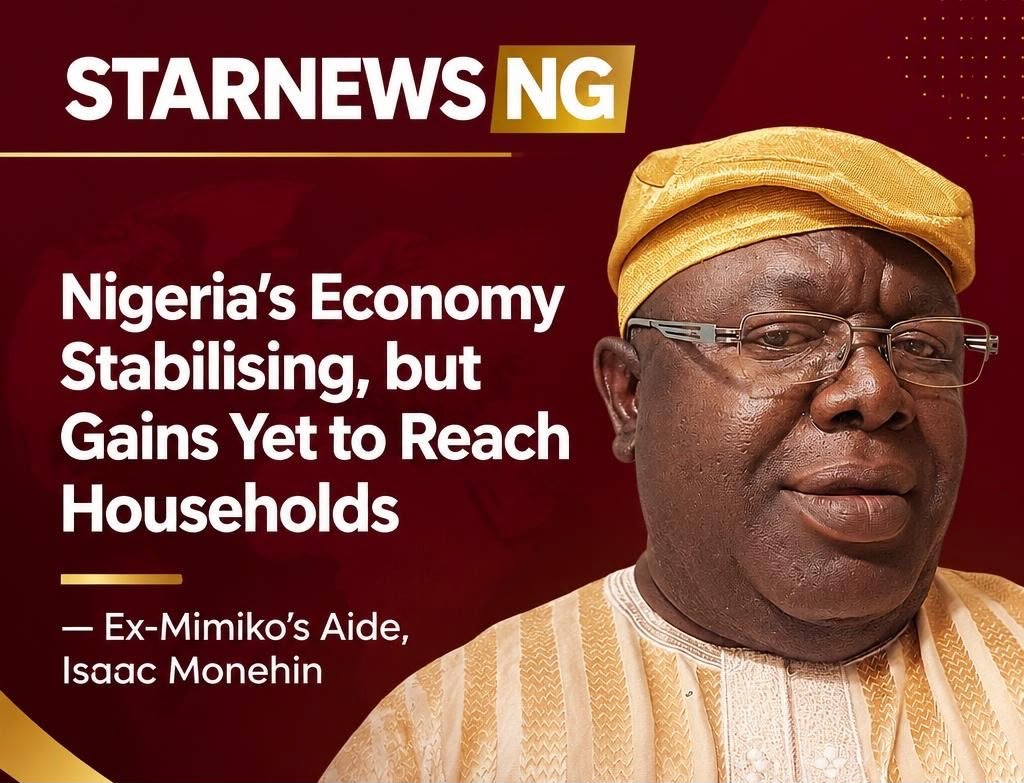

—Lists Five Qualities Nigerians Must Look for in Candidates ahead of 2027
Hon. Isaac Olusina Monehin, an indigene of Ode Aye in Okitipupa Local Government Area of Ondo State, is a former Executive Director at Energy Bank Ghana and former Senior Special Assistant to ex-Governor Olusegun Mimiko of Ondo State. In this interview with Starnews NG, granted yesterday, Monehin assesses the state of the Nigerian economy, discusses the challenges facing citizens, offers suggestions to the Federal Government and speaks on the 2027 elections, youth participation, political leadership and the 2028 Ondo State governorship race.
Question 1: How would you assess the current state of the Nigerian economy?
The Nigerian economy has achieved very significant stability now with the reforms introduced by President Bola Ahmed Tinubu. President Tinubu came into power at a pivotal moment in Nigeria’s economic trajectory, as he inherited an economy that was technically dead.
There was the unsustainable and unaffordable fuel subsidy, gulping as much as N4 trillion a year; distorted multiple foreign exchange rates, with cases of racketeering and round-tripping causing arbitrage; total loss of investors’ confidence in the economy; major multinationals leaving the country; and government finances shrinking to the extent that the government of the day resorted to ‘ways and means’ and actually printed money to the tune of N30 trillion.
Twenty-seven state governments could not pay salaries, not to talk of pensions as and when due; the debt service ratio was as high as 97 per cent; foreign reserves were low and could not support 90 days of imports; growth was too low to keep pace with the population growth rate; income per capita was low; inflation was high; and, generally, the standard of living of the people was poor.
That is the Nigeria President Bola Tinubu inherited. The reforms introduced and the subsidies abolished became an indispensable desideratum. The macroeconomic reforms have produced some stability in the economy. States are not only paying salaries now but are also embarking on infrastructural development. Food inflation is coming down. Stock market activities have ballooned, with market capitalisation at about N158 trillion. Foreign direct reserves have increased to $58 billion, the highest in 18 years. The exchange rate has stabilised, while real GDP growth is now about 4.3 per cent, higher than the population growth rate.
The reforms have produced all these macro gains, though not without serious pain for the people, especially given the fact that the macro gains are yet to percolate down to individuals, households and businesses. Multidimensional poverty is increasing. Transmitting the gains is where we are now. One needs to add, however, that insecurity still holds sway; unemployment and underemployment are growing; reliable and affordable 24/7 electricity remains a mirage; and the hydra-headed monster of corruption is yet to abate. Summarily, it is an economy struggling to grow, full of human and material potential that is poorly harvested to deliver benefits to its people.
Question 2: What are the major economic challenges facing Nigerians today?
The major challenge the average Nigerian is facing now is how to cope with the high cost of living consequent upon subsidy removal. Food inflation is still at a level that the meagre minimum wage of N70,000 cannot cope with. As I said earlier, reliable and affordable electricity is yet to happen. There are schools without teachers and hospitals without beds, nurses and doctors. Insecurity is a big problem, as abduction for ransom is very common. These are the challenges Nigerians are facing today.
Question 3: What practical steps should the Federal Government take to improve the economy?
For the Federal Government to improve the economy, it needs to adopt multidimensional policies. I will group these into three categories: short-term, medium-term and long-term. The immediate challenge now is how to cushion the high cost of living Nigerians are experiencing. Government needs to come up with a transmission mechanism for getting the macro gains to households.
Food inflation is a major causative factor responsible for the high cost-of-living shock. Food inflation is consequent upon high transportation costs, of which fuel price is a major component. Put this side by side with the fact that an average household spends 70 per cent of its earnings on food, and then you want to address this head-on.
Returning to the pre-2023 subsidy era to tackle the issue of the high fuel price, which is about N1,400 per litre today, as some people are advocating, is a no-brainer. To me, the question should not be whether there should be a subsidy or not, as is being debated. It should be whether Nigeria can subsidise the cost of living without recreating the corruption and shenanigans that made the old subsidy regime before 2023 unsustainable. This, I doubt.
My take is that a well-designed subsidy can provide faster relief than waiting for road infrastructure, provision of electricity and productivity reforms to work through the economy to reduce poverty.
This has to be temporary and counter-cyclical, and made a function of government receipts, as it carries a huge fiscal responsibility for the government. What do I mean? If actual oil receipts are above the budgeted level, 25 per cent of that can be used to subsidise fuel prices, with the remainder used to service our debts and meet other government financial obligations.
Here, you determine the amount to be subsidised per litre, and once the allocated fund is exhausted, you return to the normal market price. Government can continue to do this when oil revenues exceed the budget benchmark and stop when the benchmark is not exceeded.
The assumption here, however, is that the oil output target is reached. The key success factor is increased oil production, and this depends on increased investment in the sector and the extent to which oil theft is reduced. The Federal Government can look into the possibility of doing this as an immediate measure.
Another ‘macro-micro transmission’ chain I wish to recommend as an immediate measure is for the government to consider the use of cash transfers—as a bridge and not the destination—to identified vulnerable individuals in the country.
This will serve two purposes. Firstly, it will provide immediate protection against cost-of-living hardship. Secondly, it will enhance economic participation and improve production.
The above should be complemented with policies to attack food inflation frontally. Lower inflation will cause household real income to rise. In this regard, all unnecessary import restrictions on food and agricultural inputs should be removed.
Roads and storage facilities should be improved. Security in agricultural zones and across the country should be improved so that people can move freely without fear of being kidnapped, thereby improving national output.
The availability of fertilisers, seeds and chemicals should be increased, while mechanisation should be adopted as much as possible.
States and local governments should be encouraged and mobilised to massively engage in agriculture and specialise in the production of one food item or another.
Stable and affordable electricity on a 24/7 basis should be achieved in all the industrial zones of the country as a starting point. Small and medium-sized enterprises should be made the principal transmission belt, with support provided in the form of guarantees to SMEs seeking finance instead of cash.
Every naira of additional sustainable revenue should go into productive investment and not into promoting or increasing recurrent government expenditure.
Question 4: How can Nigeria attract more foreign investment and create jobs?
There are certain things we must understand about the nature of foreign capital: it does not just go anywhere. For Nigeria to attract foreign investment, we have to make our country not just investment-friendly but safe at the same time. The ability to make a profit and repatriate returns without difficulty is also key.
Recall that before 2023, a lot of foreign investment left Nigeria. It was partly because investors could not repatriate their profits. Take the example of the airlines that refused to fly to Nigeria simply because they could not secure dollars in exchange for their naira, which was trapped in banks.
That is why a robust foreign reserve, such as we now have, is necessary. Investment safety also involves predictable and stable policies and, in some cases, the safety of personnel. Other factors that can affect or influence foreign investment include the provision of stable electricity, improved logistics and infrastructure, the removal of unfriendly levies and multiple taxes, and an end to ‘red tape’ and its associated negative bureaucratic practices.
Nigeria has a big market because of its population, as well as abundant mineral and agricultural resources. These advantages can be converted into competitive investment opportunities. Employment and household welfare should be made explicit policy objectives.
Question 5: What key issues should Nigerians consider ahead of the 2027 elections?
The 2027 elections in Nigeria are going to be a major watershed in the annals of the country’s history. They should be a contest not only between political personalities but also between competing visions for Nigeria’s future, judged against evidence and realistic commitments. Nigerians should vote for the leadership most likely to turn economic growth into jobs, public revenue into public services and not private pockets, national resources into shared prosperity, and political power into transparent and accountable government.
That is the standard against which every candidate or party, irrespective of region or affiliation, should be judged. Before casting their votes, every Nigerian should ask for relevant and verifiable evidence of a candidate’s performance to ascertain their administrative capability. Secondly, for every campaign promise or manifesto, voters should ask about its practicability. They should know the ‘how’, the cost, the source of funding, the trade-offs and so on.
For emphasis, voters should seek to know the candidates’ plans for electricity, security, job creation, infrastructural development, poverty reduction and welfare improvement generally.
Pitiably, voting in Nigeria is determined mostly by religion, ethnicity, money and ‘stomach infrastructure’—rice and Indomie—aside from the state and direction of the national economy.
Our politicians have, for so long, used these factors to deceive, fool and woo the electorate, particularly the uninformed and unenlightened.
Elections have been monetised to a level that makes one wonder about the type of democracy being practised. It is high time we got rid of these practices and placed real value on issues that will help deepen democratic practice.
Question 6: What qualities should voters look for in political candidates?
I recommend what I call the five Cs: capacity, competence, character, compassion and commitment. Availability, accessibility and approachability are equally important. There is a need to interrogate candidates on these qualities and, where possible, conduct proper investigations to verify whatever claims they put forward.
Question 7: What is your assessment of the political climate ahead of 2027?
The political climate is becoming interesting as campaigns have started in full swing. Three parties out of the lot are in contention. The All Progressives Congress (APC), with the incumbent President, Bola Tinubu, is seeking re-election. There is the African Democratic Congress (ADC), with former Vice-President Abubakar Atiku as its presidential candidate, and the Nigeria Democratic Congress (NDC), with Peter Obi, former Anambra State Governor, as its presidential candidate. Others exist, but they are not in any way in contention.
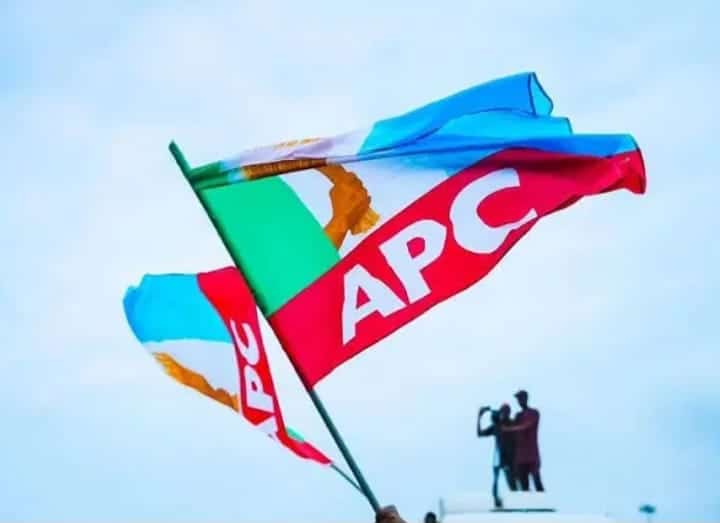
The APC is presenting a scorecard of economic stabilisation, with the macro gains as evidence of performance. The party is seeking consolidation, with a promise to focus on improving the welfare of the people and building a $1 trillion economy.
The ADC of former Vice-President Abubakar Atiku has introduced an interesting dimension to the campaign with its promise to return fuel subsidy.
The subsidy on production has been stabilised under President Tinubu, while his critics argue that economic growth does not indicate that households are better off.
Peter Obi of the NDC, like President Tinubu, is against the reinstatement of subsidy. He is advocating the movement of the economy from consumption to production, focusing on agriculture as the transmission engine for poverty reduction.
The APC has a great task in convincing the Nigerian public that their sacrifices since the introduction of the reforms will indeed yield a prosperous tomorrow. It does, however, have the advantage of incumbency, a firm party structure and greater organisation than the fragmented opposition. It also has the support of 31 out of the 36 governors. How easily this will translate into electoral victory remains to be seen. The APC, as it stands, remains the party to beat.
As for the opposition, it has the advantage of a discontented public due to the cost-of-living shock being experienced. However, economic dissatisfaction alone does not guarantee an opposition victory. Voters must also believe that an alternative government can deliver better results.
Indeed, the political atmosphere is tense. The generality of Nigerians hopes that the electoral umpire, the Independent National Electoral Commission (INEC), and the judiciary will put up a better performance than in past elections so that the election will be credible.
With security guaranteed, apathy may not be as high as it was in the last election because the outcome of the election will determine the direction Nigeria takes.
Ultimately, for me, the most important thing is the survival of Nigeria. It is the candidate who can credibly and safely steer Nigeria towards security, prosperity, rapid growth and development who should win.
Question 8: What role should young people play in the elections?
The youth constitute the majority of those expected to vote in 2027, as they have a demographic advantage. Apart from that, they are agile and informed, and can serve as enlightenment and mobilisation agents for the older generation.
The youth should insist that candidates explain their manifestos and enquire how issues affecting them—job creation, reduction in the cost of living, improved quality of education, support for small-scale businesses and reduced insecurity—would be addressed.
They are also expected to fight misinformation, ethnic and religious division, vote-buying, ballot snatching, political thuggery and all forms of electoral malpractice before, during and after the election. Through active participation, they should protect the integrity of the election and hold elected officials accountable after the election.
Question 9: What is your belief regarding governorship zoning in Ondo State and your expectations for the next administration as different interest groups prepare ahead of 2028?
I am not aware of any zoning arrangement, and if it exists, nothing is cast in stone. Rather than talking about zoning, I believe in allowing the best candidate to win, irrespective of where he or she comes from. Quality and transformative leadership that will guarantee the greatest good for the greatest number of our people should be what we seek.
It is too early to talk about a contest scheduled for 2028. Twenty-four hours is long enough in politics to change the dynamics of things. The ideal thing is to allow the incumbent to have undivided attention to govern. There is an adage among our elders which says, ‘When we get to the river, we will know how to navigate and cross over.’ There is no need to fret. 2028 will take care of itself.
Question 10: What message do you have for Nigerians, political leaders and your state?
Nigerians should pray for the peace and unity of the country. They should pray for a peaceful election in January 2027 and that the outcome will improve the living conditions of the people, particularly the vulnerable.



Leave a Reply