
By George Omagbemi Sylvester
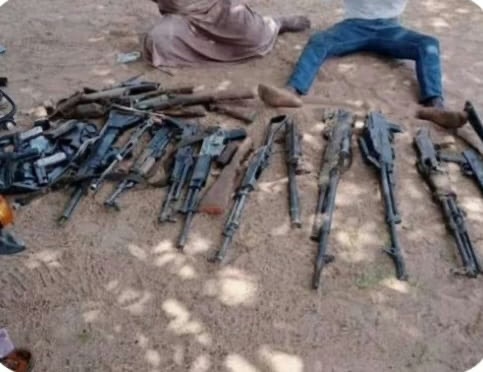
In a decisive and intelligence-driven security operation in Taraba State, Nigeria, troops from the Nigerian Army’s 6 Brigade, Sector 3, Operation Whirl Stroke (OPWS), have apprehended suspected gun-runners and confiscated illegal arms and ammunition in January 2026. This breakthrough comes amid mounting concerns over the proliferation of illicit weapons that fuel violent crime, banditry, and insurgent activity across Nigeria’s Northeast.
The joint raids were carried out over several days in Mayo Dassa, Jalingo Local Government Area, and Ardo-Kola Local Government Area, targeting a trafficking network allegedly circulating unlawful arms within Taraba and neighbouring regions. Those detained include Christopher Adamu and James Yangyang, arrested at Sebos Joint in Jalingo and Tautre Village, respectively. Military sources indicated that the suspects were intercepted as part of sustained surveillance and meticulous operational planning aimed at dismantling the criminal supply chain.
In a follow-up cordon-and-search operation in Murubai Village, troops recovered at least one AK-47 rifle, a magazine, and four rounds of live ammunition from the residence of another suspected arms trafficker, Mr. Bazoe John, who is currently at large, and the subject of an ongoing manhunt.
Earlier incidents in Taraba’s security landscape include an intelligence-led raid on November 12, 2025, that resulted in the arrest of 25-year-old Abdulmudallabi Audu in Shagada Village of Gassol Local Government Area. During that operation, troops recovered an AK-47 rifle, dual magazines, and 53 rounds of 7.62mm special ammunition concealed in his possession. The suspect remains in military custody pending further investigation and prosecution.
These arrests underscore the Nigerian Army’s commitment to curtail the flow of illegal small arms. Brigadier General Kingsley Chidiebere Uwa, Commander of the 6 Brigade and Sector 3 OPWS, praised the professionalism and discipline of the troops involved, describing the success as evidence of the effectiveness of intelligence-led operations.
“These operations highlight the military’s unwavering resolve to protect lives and property,” Brig. Gen. Uwa emphasised, urging residents to maintain a cooperative relationship with security agencies.
The significance of these operations extends beyond isolated arrests. Illegal arms trafficking has been identified by security analysts as a principal enabler of violence in Nigeria. Dr. Aisha Bello, a West African security expert at the University of Ibadan, noted, “Illicit weapons networks do not merely supply criminal actors; they exacerbate communal tensions, facilitate kidnappings, and widen the firepower gap between state forces and outlaw groups.”
As the Nigerian Army prepares to prosecute these cases and continue tracking other persons of interest, the broader question remains: can Nigeria dismantle the deeply entrenched arms network that fuels insecurity? The answer will hinge not just on military might but also on sustained political will, community cooperation, and targeted policy reforms aimed at stemming the tide of illicit weapons threatening peace across the region.




Leave a Reply