
By Paul Joseph
Fresh nuclear negotiations between Iran and the United States have ended without a breakthrough, as tensions escalated following a stark warning from Iran’s Supreme Leader, Ali Khamenei, who said Tehran has the capability to sink a U.S. warship in the Gulf.
The talks, mediated by Oman and held in Geneva, sought to ease mounting friction over Iran’s nuclear programme and avert potential U.S. military action. However, both sides emerged from the discussions maintaining firm positions.
The diplomatic deadlock comes amid increased U.S. military presence in the region. President Donald Trump recently ordered the deployment of two aircraft carriers, including the USS Abraham Lincoln, positioned roughly 700 kilometres from Iran’s coastline.
The carrier strike group is equipped with nearly 80 aircraft, including F-35 and F-18 fighter jets.
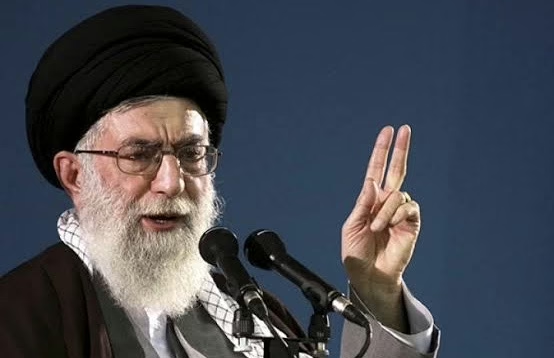
Responding to the buildup, Khamenei said that while American warships are formidable, Iran possesses weapons capable of destroying them. He also insisted that Washington would fail in any attempt to weaken the Islamic Republic.
Iran’s Position: Tehran insists negotiations should focus strictly on nuclear matters.
U.S. Demands: Washington wants discussions expanded to include Iran’s ballistic missile programme and its backing of armed groups across the Middle East.
Sanctions Relief: Iran’s Foreign Ministry stressed that lifting U.S. sanctions must form a central component of any agreement, citing severe economic strain.
President Trump has warned of consequences if diplomacy fails, including possible military action linked to Iran’s nuclear activities and its domestic crackdown on protesters.
Meanwhile, Iran’s Revolutionary Guard has launched military exercises in the Strait of Hormuz — a critical global oil transit route. State media indicated that sections of the waterway could be temporarily restricted during the drills, heightening concerns over global energy security.
Despite the sharp rhetoric, U.S. Secretary of State Marco Rubio expressed optimism that a peaceful resolution remains achievable, emphasizing that President Trump prefers negotiation over armed conflict.
Iran’s Foreign Minister, Abbas Araghchi, said he arrived in Geneva prepared with practical proposals for a fair agreement but made clear that Tehran would not yield to threats.
Western governments continue to voice concern that Iran’s nuclear activities could eventually lead to the development of a nuclear weapon — a charge Tehran firmly denies.
With both nations holding entrenched positions and military forces visibly deployed, the future of the negotiations remains uncertain, leaving the region on edge as diplomacy hangs in the balance.


Leave a Reply