
By Paul Joseph
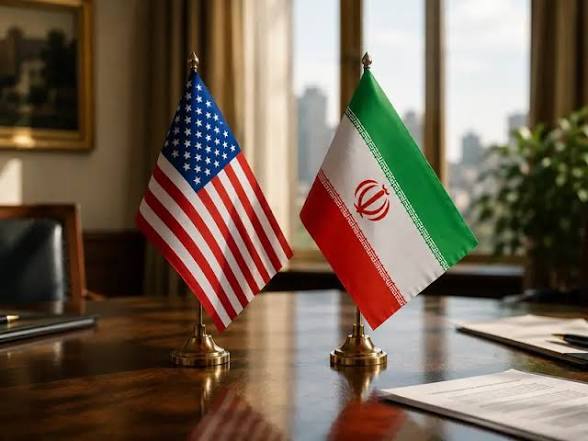
Iran has officially responded to proposals from the United States aimed at ending the ongoing conflict that erupted earlier this year between Tehran, Washington, and Israel as president Trump warns Iran of playing games with the United States.
Pakistan’s Prime Minister, Shehbaz Sharif, whose country has reportedly acted as a mediator in the negotiations, confirmed that Islamabad had received Iran’s response.
However, he declined to reveal details or confirm whether the document had already been forwarded to Washington.
The latest development comes amid a fragile ceasefire that has largely held despite occasional exchanges of fire in the Gulf region.
According to reports by US outlet Axios, the American proposal was contained in a one-page, 14-point memo outlining conditions for ending the war.
The proposals reportedly include suspension of Iran’s nuclear enrichment programme, gradual lifting of sanctions, and restoration of safe passage through the Strait of Hormuz.
Iranian state-linked ISNA news agency said Tehran’s response focused heavily on ending hostilities and ensuring maritime security in the Gulf and the Strait of Hormuz, a crucial global oil shipping route currently facing severe disruptions.
The crisis has significantly impacted global energy markets, as Iran continues to restrict traffic through the strategic waterway, causing oil prices to surge worldwide.
Meanwhile, the United States has intensified pressure on Tehran through a blockade of Iranian ports, a move Iranian officials have condemned as provocative and illegal.
Iranian President Masoud Pezeshkian said his country would never surrender under pressure.
“We will never bow our heads before the enemy,” Pezeshkian declared, insisting that negotiations should not be interpreted as weakness or retreat.
US President Donald Trump maintained that the conflict would end “quickly,” while warning Iran against what he described as decades of hostility toward America.
Israeli Prime Minister Benjamin Netanyahu also insisted that Iran’s enriched uranium stockpiles and nuclear facilities must be dismantled before the war can officially be considered over.
“There are still enrichment sites that have to be dismantled,” Netanyahu said during an interview excerpt released ahead of a CBS “60 Minutes” broadcast.
Tensions in the region remain high as Iran warned neighbouring countries and foreign naval forces against cooperating with US sanctions or military operations in the Strait of Hormuz.
Iranian military spokesman Mohammad Akraminia warned that vessels failing to coordinate with Tehran before crossing the waterway could face “severe consequences.”
The Strait of Hormuz handles nearly one-fifth of the world’s oil and natural gas supply, making the conflict a major concern for global economies.
In response to rising threats to commercial shipping, Britain announced plans to deploy a Royal Navy warship to the Middle East as part of a proposed international maritime protection mission led jointly with France.
However, Tehran warned that any British or French military deployment in the strait would trigger an “immediate and decisive response.”
Meanwhile, several security incidents were reported across the Gulf region over the weekend.
The UK Maritime Trade Operations Centre confirmed that a cargo vessel near Qatar was struck by an unidentified projectile, causing a minor fire but no casualties. Iran’s Fars news agency later claimed the ship was operating under the US flag.
Kuwait also reported unidentified drones entering its airspace, while the United Arab Emirates announced that its air defence systems intercepted two drones allegedly launched from Iran.
Defence ministers from over 40 countries are expected to meet to discuss plans for protecting commercial shipping routes in the Gulf once hostilities subside.




Leave a Reply